Bioartificial Liver Therapeutic Technology Market Overview and Analysis
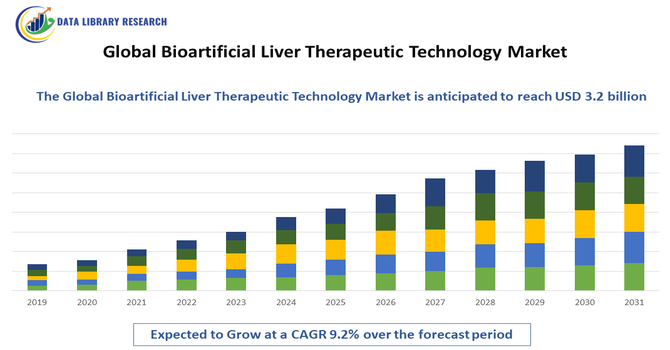
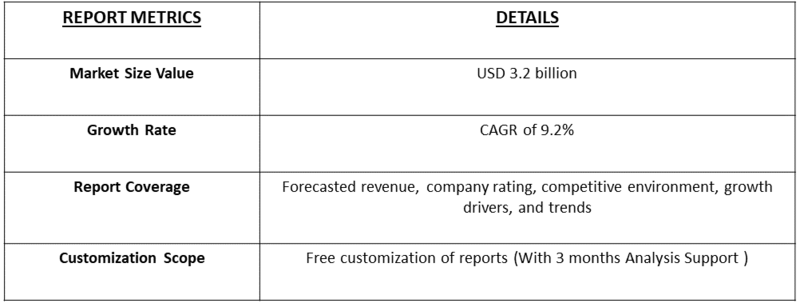
- The Global Bioartificial Liver Therapeutic Technology Market is expected to reach approximately USD 1.7 billion in 2025 and expand to nearly USD 3.2 billion by 2032, growing with a CAGR of 9.2% from 2025-2032.
Get Complete Analysis Of The Report - Download Updated Free Sample PDF
The Global Bioartificial Liver Therapeutic Technology Market encompasses advanced medical systems designed to temporarily replicate liver functions for patients suffering from acute or chronic liver failure. These technologies combine biological components, such as hepatocytes, with mechanical devices to detoxify blood, support metabolism, and promote recovery or bridge patients to transplantation. Growing liver disease prevalence, organ donor shortages, and advancements in cell-based therapies and bioreactor technologies are key factors driving market growth worldwide.
The growth of the Global Bioartificial Liver Therapeutic Technology Market is driven by the increasing incidence of liver diseases, including hepatitis, cirrhosis, and acute liver failure, creating an urgent need for effective treatment alternatives to organ transplantation. Rising organ donor shortages have accelerated demand for artificial and bioengineered liver support systems. Technological advancements in cell-based therapies, biomaterials, and bioreactor designs have improved device performance and clinical outcomes.
Bioartificial Liver Therapeutic Technology Market Latest Trends
The Global Bioartificial Liver Therapeutic Technology Market is witnessing rapid innovation driven by advancements in tissue engineering, stem cell research, and bioreactor technology. Integration of human-derived hepatocytes with 3D scaffolds and perfusion systems is improving the functionality and longevity of bioartificial liver devices. There is a growing trend toward developing fully implantable or wearable liver assist systems to reduce dependency on donor transplants. Additionally, collaborations between biotech firms, academic institutions, and research organizations are accelerating product development, while increasing regulatory support and clinical validation are boosting market confidence and paving the way for commercialization of next-generation bioartificial liver technologies.
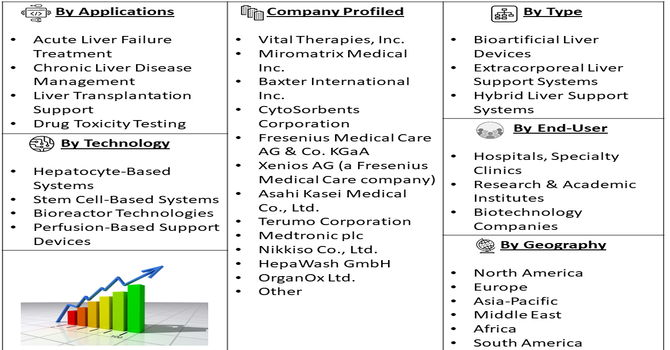
Segmentation: The Global Bioartificial Liver Therapeutic Technology Market is segmented Type (Bioartificial Liver Devices, Extracorporeal Liver Support Systems, and Hybrid Liver Support Systems), Technology (Hepatocyte-Based Systems, Stem Cell-Based Systems, Bioreactor Technologies, and Perfusion-Based Support Devices), Application (Acute Liver Failure Treatment, Chronic Liver Disease Management, Liver Transplantation Support, and Drug Toxicity Testing), End-User (Hospitals, Specialty Clinics, Research & Academic Institutes, and Biotechnology Companies) and Geography (North America, Europe, Asia-Pacific, Middle East and Africa, and South America). The report provides the value (in USD million) for the above segments.
For Detailed Market Segmentation - Get a Free Sample PDF
Market Drivers:
- Rising Prevalence of Liver Diseases and Organ Donor Shortage
The increasing global burden of liver diseases such as cirrhosis, hepatitis, and acute liver failure has significantly driven demand for bioartificial liver technologies. With millions affected worldwide and liver transplants remaining the only curative option, the growing shortage of donor organs has created an urgent need for alternative treatments. Bioartificial liver systems provide a life-saving bridge therapy for patients awaiting transplantation or recovery. This demand is further fueled by rising alcohol consumption, obesity, and non-alcoholic fatty liver disease (NAFLD) rates, particularly in developing economies. Consequently, healthcare systems are increasingly adopting bioengineered solutions to reduce mortality and improve treatment accessibility.
- Advancements in Cell-Based and Bioreactor Technologies
Technological innovations in hepatocyte culture, stem cell therapy, and bioreactor design are major drivers of the bioartificial liver therapeutic technology market. Modern bioreactor systems now enable prolonged hepatocyte viability and efficient detoxification processes, closely mimicking natural liver functions. The integration of 3D scaffolds, microfluidic systems, and AI-assisted modeling has enhanced performance, safety, and scalability. Additionally, ongoing collaborations between biotechnology firms and research institutes have accelerated the translation of laboratory breakthroughs into clinical applications. These advancements are making bioartificial liver devices more effective, affordable, and accessible, thereby supporting market expansion and improving outcomes for patients with end-stage liver diseases.
Market Restraint:
- High Cost and Technical Complexity of Bioartificial Liver Systems
Despite promising advancements, the high cost and technical complexity of bioartificial liver devices remain major barriers to widespread adoption. Manufacturing these systems requires advanced bioreactors, high-quality hepatocytes, and sophisticated bioengineering processes, driving up production costs. Furthermore, challenges in cell sourcing, device biocompatibility, and large-scale clinical validation hinder commercialization. Limited reimbursement frameworks and the need for specialized healthcare infrastructure further restrict accessibility, especially in low- and middle-income regions. These factors collectively slow market penetration, emphasizing the need for cost optimization, regulatory support, and technological simplification to make bioartificial liver therapies more feasible and globally available.
Socio Economic Impact on Bioartificial Liver Therapeutic Technology Market
The bioartificial liver technology market has significant socioeconomic implications, as it addresses the global shortage of donor organs and reduces the mortality rate associated with acute and chronic liver failure. These technologies not only save lives but also decrease long-term healthcare costs by reducing hospital stays and the need for lifelong immunosuppressive therapy. For developing countries, bioartificial liver systems offer a cost-effective bridge therapy solution, enhancing healthcare accessibility. Moreover, the market’s growth fosters employment in biotechnology, clinical research, and manufacturing sectors, while contributing to improved patient productivity, quality of life, and economic stability in affected populations worldwide.
Segmental Analysis:
- Bioartificial Liver Devices Segment is Expected to Witness Significant Growth Over the Forecast Period
The Bioartificial Liver (BAL) Devices Segment is poised for high growth because it represents the most sophisticated and effective treatment modality. Unlike non-biological systems that only detoxify the blood, BAL devices incorporate functional living liver cells (hepatocytes) within a specialized bioreactor. This technology allows them to perform complex metabolic, synthetic, and regulatory functions, which is crucial for reversing severe liver failure. As continuous advancements in cell sourcing, bioreactor materials, and engineering improve system efficacy and reduce the risk of biological complications, BAL devices will become the preferred bridge therapy, driving strong market adoption and investment.
- Hepatocyte-Based Systems Segment is Expected to Witness Significant Growth Over the Forecast Period
The Hepatocyte-Based Systems Segment is a key growth area because hepatocytes (the primary functional cells of the liver) are essential for carrying out the complex chemical processes of the human liver. The ability to use lab-grown or stem cell-derived hepatocytes in artificial liver devices is solving the major problem of biological component scarcity and safety. Ongoing research is focused on optimizing these cells for long-term viability and function within the extracorporeal circuit. Successful development in this area will lead to more robust, reliable, and standardized BAL therapies, making them commercially viable and highly scalable globally, thereby fueling massive market expansion.
- Acute Liver Failure Treatment Segment is Expected to Witness Significant Growth Over the Forecast Period
The Acute Liver Failure (ALF) Treatment Segment is slated for rapid expansion because ALF is a catastrophic condition requiring immediate, life-sustaining intervention. The window for finding a suitable donor organ is often non-existent, making artificial liver support the only immediate option. These technologies serve as a crucial bridge to transplant or, ideally, a bridge to recovery, allowing the patient's native liver time to regenerate without the body succumbing to toxic overload. The high mortality associated with ALF and the urgent clinical demand for effective interim care guarantees sustained, high-priority investment and deployment of artificial liver technologies in this application area.
- Hospitals Segment is Expected to Witness Significant Growth Over the Forecast Period
The Hospitals Segment is expected to dominate and drive growth due to the critical nature of liver failure treatment. Artificial liver devices are complex, large-scale, and require intensive infrastructure, specialized equipment, and highly trained clinical staff to operate. These resources are primarily centralized in major hospital centers and transplant units. Furthermore, hospitals are the main points of care where patients are diagnosed with and treated for severe liver conditions. As the prevalence of liver disease rises, hospitals will continue to be the biggest end-users, investing significantly in these technologies to manage critically ill patients and improve their overall transplant success rates.
- North America Region is Expected to Witness Significant Growth Over the Forecast Period
North America is projected to lead the market growth due to several reinforcing factors. The region, especially the U.S., benefits from high healthcare expenditure, a well-established regulatory framework that streamlines approval for innovative medical devices, and a strong presence of leading biotech and medical device companies. Critically, North America faces a substantial burden of chronic liver diseases and has high awareness regarding advanced therapies. Coupled with favorable reimbursement policies and substantial government and private funding for research, the market infrastructure is perfectly positioned to rapidly adopt, commercialize, and scale expensive, cutting-edge artificial liver technologies.
To Learn More About This Report - Request a Free Sample Copy
Bioartificial Liver Therapeutic Technology Market Competitive Analysis
The competitive landscape of the Global Bioartificial Liver Therapeutic Technology Market is defined by a mix of established medical device companies and emerging biotechnology firms. Key players are focusing on strategic collaborations, mergers, and acquisitions to strengthen their portfolios and accelerate innovation. Companies such as Vital Therapies, Baxter International, and Miromatrix Medical are leading through advancements in cell-based liver assist devices. Continuous R&D efforts toward scalable production, regulatory approvals, and clinical trial success are crucial differentiators. Moreover, competition is intensifying as new entrants explore stem cell-derived hepatocytes and hybrid liver systems, further driving technological progress and market expansion.
The major players for above market are:
- Vital Therapies, Inc.
- Miromatrix Medical Inc.
- Baxter International Inc.
- CytoSorbents Corporation
- Fresenius Medical Care AG & Co. KGaA
- Xenios AG (a Fresenius Medical Care company)
- Asahi Kasei Medical Co., Ltd.
- Terumo Corporation
- Medtronic plc
- Nikkiso Co., Ltd.
- HepaWash GmbH
- OrganOx Ltd.
- HepaLife Technologies, Inc.
- ALung Technologies, Inc.
- Guangzhou Newlife Regenerative Medicine Co., Ltd.
- Cellartis AB (Takara Bio Group)
- Shanghai CELLIVER Biotechnology Co., Ltd.
- Guanhao Biotech Co., Ltd.
- Liver4Life (University of Zurich Spin-off)
- Qihan Biotech Co., Ltd.
Recent Development
- The 2025 6th International Conference on Mobile Computing and Sustainable Informatics reported that advanced machine learning algorithms and feature selection techniques, including LASSO-ANOVA and ensemble fusion models, to classify liver disease with 96.67% accuracy. The study demonstrated that AI-driven data analysis could significantly improve early detection and diagnosis of liver disorders. Its findings positively impacted the Global Bioartificial Liver Therapeutic Technology Market by promoting precision diagnostics and enhancing treatment planning for liver failure management.
- In April 2025, eGenesis and OrganOx received FDA clearance for their investigational drug EGEN-5784, a genetically engineered porcine liver combined with the OrganOx extracorporeal liver system, to treat acute-on-chronic liver failure. This breakthrough marked a major step toward xenotransplantation-based therapies, significantly advancing innovation and clinical potential in the Global Bioartificial Liver Therapeutic Technology Market by improving treatment options for critical liver conditions.
Frequently Asked Questions (FAQ) :
Q1. What the main growth driving factors for this market?
The main factors driving the growth of the Global Bioartificial Liver Therapeutic Technology Market include the rising cases of liver diseases and the shortage of organ donors. Technological advancements in cell-based therapies and bioreactor systems are improving treatment outcomes. Increasing healthcare investments and government support for regenerative medicine are also boosting market expansion worldwide.
Q2. What are the main restraining factors for this market?
The major restraining factors for this market are the high cost of bioartificial liver devices and the complexity of their manufacturing process. Limited availability of skilled professionals, challenges in large-scale production, and lack of strong reimbursement policies make it difficult for many hospitals and patients to access these advanced treatment technologies globally.
Q3. Which segment is expected to witness high growth?
The bioartificial liver (BAL) systems segment is expected to witness the highest growth in the coming years. These systems combine living liver cells with mechanical devices to perform detoxification and metabolic functions. Their ability to support patients awaiting transplants or recovering from liver failure makes them highly valuable, driving strong demand across hospitals and research institutions.
Q4. Who are the top major players for this market?
The top major players in the Global Bioartificial Liver Therapeutic Technology Market include Vital Therapies, Baxter International, Miromatrix Medical, Fresenius Medical Care, CytoSorbents Corporation, Asahi Kasei Medical, Terumo Corporation, and HepaWash GmbH. These companies focus on innovation, partnerships, and clinical research to develop advanced bioartificial liver systems and strengthen their global presence.
Q5. Which country is the largest player?
The United States is the largest player in the Global Bioartificial Liver Therapeutic Technology Market. Its dominance is driven by advanced healthcare infrastructure, strong research funding, and the presence of leading biotechnology companies and research institutions. Supportive regulatory frameworks and high adoption of innovative therapies also contribute to the country’s leading position in this market.
List of Figures
Figure 1: Global Bioartificial Liver Therapeutic Technology Market Revenue Breakdown (USD Billion, %) by Region, 2022 & 2029
Figure 2: Global Bioartificial Liver Therapeutic Technology Market Value Share (%), By Segment 1, 2022 & 2029
Figure 3: Global Bioartificial Liver Therapeutic Technology Market Forecast (USD Billion), by Sub-Segment 1, 2018-2029
Figure 4: Global Bioartificial Liver Therapeutic Technology Market Forecast (USD Billion), by Sub-Segment 2, 2018-2029
Figure 5: Global Bioartificial Liver Therapeutic Technology Market Value Share (%), By Segment 2, 2022 & 2029
Figure 6: Global Bioartificial Liver Therapeutic Technology Market Forecast (USD Billion), by Sub-Segment 1, 2018-2029
Figure 7: Global Bioartificial Liver Therapeutic Technology Market Forecast (USD Billion), by Sub-Segment 2, 2018-2029
Figure 8: Global Bioartificial Liver Therapeutic Technology Market Forecast (USD Billion), by Sub-Segment 3, 2018-2029
Figure 9: Global Bioartificial Liver Therapeutic Technology Market Forecast (USD Billion), by Others, 2018-2029
Figure 10: Global Bioartificial Liver Therapeutic Technology Market Value Share (%), By Segment 3, 2022 & 2029
Figure 11: Global Bioartificial Liver Therapeutic Technology Market Forecast (USD Billion), by Sub-Segment 1, 2018-2029
Figure 12: Global Bioartificial Liver Therapeutic Technology Market Forecast (USD Billion), by Sub-Segment 2, 2018-2029
Figure 13: Global Bioartificial Liver Therapeutic Technology Market Forecast (USD Billion), by Sub-Segment 3, 2018-2029
Figure 14: Global Bioartificial Liver Therapeutic Technology Market Forecast (USD Billion), by Others, 2018-2029
Figure 15: Global Bioartificial Liver Therapeutic Technology Market Value (USD Billion), by Region, 2022 & 2029
Figure 16: North America Bioartificial Liver Therapeutic Technology Market Value Share (%), By Segment 1, 2022 & 2029
Figure 17: North America Bioartificial Liver Therapeutic Technology Market Forecast (USD Billion), by Sub-Segment 1, 2018-2029
Figure 18: North America Bioartificial Liver Therapeutic Technology Market Forecast (USD Billion), by Sub-Segment 2, 2018-2029
Figure 19: North America Bioartificial Liver Therapeutic Technology Market Value Share (%), By Segment 2, 2022 & 2029
Figure 20: North America Bioartificial Liver Therapeutic Technology Market Forecast (USD Billion), by Sub-Segment 1, 2018-2029
Figure 21: North America Bioartificial Liver Therapeutic Technology Market Forecast (USD Billion), by Sub-Segment 2, 2018-2029
Figure 22: North America Bioartificial Liver Therapeutic Technology Market Forecast (USD Billion), by Sub-Segment 3, 2018-2029
Figure 23: North America Bioartificial Liver Therapeutic Technology Market Forecast (USD Billion), by Others, 2018-2029
Figure 24: North America Bioartificial Liver Therapeutic Technology Market Value Share (%), By Segment 3, 2022 & 2029
Figure 25: North America Bioartificial Liver Therapeutic Technology Market Forecast (USD Billion), by Sub-Segment 1, 2018-2029
Figure 26: North America Bioartificial Liver Therapeutic Technology Market Forecast (USD Billion), by Sub-Segment 2, 2018-2029
Figure 27: North America Bioartificial Liver Therapeutic Technology Market Forecast (USD Billion), by Sub-Segment 3, 2018-2029
Figure 28: North America Bioartificial Liver Therapeutic Technology Market Forecast (USD Billion), by Others, 2018-2029
Figure 29: North America Bioartificial Liver Therapeutic Technology Market Forecast (USD Billion), by U.S., 2018-2029
Figure 30: North America Bioartificial Liver Therapeutic Technology Market Forecast (USD Billion), by Canada, 2018-2029
Figure 31: Latin America Bioartificial Liver Therapeutic Technology Market Value Share (%), By Segment 1, 2022 & 2029
Figure 32: Latin America Bioartificial Liver Therapeutic Technology Market Forecast (USD Billion), by Sub-Segment 1, 2018-2029
Figure 33: Latin America Bioartificial Liver Therapeutic Technology Market Forecast (USD Billion), by Sub-Segment 2, 2018-2029
Figure 34: Latin America Bioartificial Liver Therapeutic Technology Market Value Share (%), By Segment 2, 2022 & 2029
Figure 35: Latin America Bioartificial Liver Therapeutic Technology Market Forecast (USD Billion), by Sub-Segment 1, 2018-2029
Figure 36: Latin America Bioartificial Liver Therapeutic Technology Market Forecast (USD Billion), by Sub-Segment 2, 2018-2029
Figure 37: Latin America Bioartificial Liver Therapeutic Technology Market Forecast (USD Billion), by Sub-Segment 3, 2018-2029
Figure 38: Latin America Bioartificial Liver Therapeutic Technology Market Forecast (USD Billion), by Others, 2018-2029
Figure 39: Latin America Bioartificial Liver Therapeutic Technology Market Value Share (%), By Segment 3, 2022 & 2029
Figure 40: Latin America Bioartificial Liver Therapeutic Technology Market Forecast (USD Billion), by Sub-Segment 1, 2018-2029
Figure 41: Latin America Bioartificial Liver Therapeutic Technology Market Forecast (USD Billion), by Sub-Segment 2, 2018-2029
Figure 42: Latin America Bioartificial Liver Therapeutic Technology Market Forecast (USD Billion), by Sub-Segment 3, 2018-2029
Figure 43: Latin America Bioartificial Liver Therapeutic Technology Market Forecast (USD Billion), by Others, 2018-2029
Figure 44: Latin America Bioartificial Liver Therapeutic Technology Market Forecast (USD Billion), by Brazil, 2018-2029
Figure 45: Latin America Bioartificial Liver Therapeutic Technology Market Forecast (USD Billion), by Mexico, 2018-2029
Figure 46: Latin America Bioartificial Liver Therapeutic Technology Market Forecast (USD Billion), by Rest of Latin America, 2018-2029
Figure 47: Europe Bioartificial Liver Therapeutic Technology Market Value Share (%), By Segment 1, 2022 & 2029
Figure 48: Europe Bioartificial Liver Therapeutic Technology Market Forecast (USD Billion), by Sub-Segment 1, 2018-2029
Figure 49: Europe Bioartificial Liver Therapeutic Technology Market Forecast (USD Billion), by Sub-Segment 2, 2018-2029
Figure 50: Europe Bioartificial Liver Therapeutic Technology Market Value Share (%), By Segment 2, 2022 & 2029
Figure 51: Europe Bioartificial Liver Therapeutic Technology Market Forecast (USD Billion), by Sub-Segment 1, 2018-2029
Figure 52: Europe Bioartificial Liver Therapeutic Technology Market Forecast (USD Billion), by Sub-Segment 2, 2018-2029
Figure 53: Europe Bioartificial Liver Therapeutic Technology Market Forecast (USD Billion), by Sub-Segment 3, 2018-2029
Figure 54: Europe Bioartificial Liver Therapeutic Technology Market Forecast (USD Billion), by Others, 2018-2029
Figure 55: Europe Bioartificial Liver Therapeutic Technology Market Value Share (%), By Segment 3, 2022 & 2029
Figure 56: Europe Bioartificial Liver Therapeutic Technology Market Forecast (USD Billion), by Sub-Segment 1, 2018-2029
Figure 57: Europe Bioartificial Liver Therapeutic Technology Market Forecast (USD Billion), by Sub-Segment 2, 2018-2029
Figure 58: Europe Bioartificial Liver Therapeutic Technology Market Forecast (USD Billion), by Sub-Segment 3, 2018-2029
Figure 59: Europe Bioartificial Liver Therapeutic Technology Market Forecast (USD Billion), by Others, 2018-2029
Figure 60: Europe Bioartificial Liver Therapeutic Technology Market Forecast (USD Billion), by U.K., 2018-2029
Figure 61: Europe Bioartificial Liver Therapeutic Technology Market Forecast (USD Billion), by Germany, 2018-2029
Figure 62: Europe Bioartificial Liver Therapeutic Technology Market Forecast (USD Billion), by France, 2018-2029
Figure 63: Europe Bioartificial Liver Therapeutic Technology Market Forecast (USD Billion), by Italy, 2018-2029
Figure 64: Europe Bioartificial Liver Therapeutic Technology Market Forecast (USD Billion), by Spain, 2018-2029
Figure 65: Europe Bioartificial Liver Therapeutic Technology Market Forecast (USD Billion), by Russia, 2018-2029
Figure 66: Europe Bioartificial Liver Therapeutic Technology Market Forecast (USD Billion), by Rest of Europe, 2018-2029
Figure 67: Asia Pacific Bioartificial Liver Therapeutic Technology Market Value Share (%), By Segment 1, 2022 & 2029
Figure 68: Asia Pacific Bioartificial Liver Therapeutic Technology Market Forecast (USD Billion), by Sub-Segment 1, 2018-2029
Figure 69: Asia Pacific Bioartificial Liver Therapeutic Technology Market Forecast (USD Billion), by Sub-Segment 2, 2018-2029
Figure 70: Asia Pacific Bioartificial Liver Therapeutic Technology Market Value Share (%), By Segment 2, 2022 & 2029
Figure 71: Asia Pacific Bioartificial Liver Therapeutic Technology Market Forecast (USD Billion), by Sub-Segment 1, 2018-2029
Figure 72: Asia Pacific Bioartificial Liver Therapeutic Technology Market Forecast (USD Billion), by Sub-Segment 2, 2018-2029
Figure 73: Asia Pacific Bioartificial Liver Therapeutic Technology Market Forecast (USD Billion), by Sub-Segment 3, 2018-2029
Figure 74: Asia Pacific Bioartificial Liver Therapeutic Technology Market Forecast (USD Billion), by Others, 2018-2029
Figure 75: Asia Pacific Bioartificial Liver Therapeutic Technology Market Value Share (%), By Segment 3, 2022 & 2029
Figure 76: Asia Pacific Bioartificial Liver Therapeutic Technology Market Forecast (USD Billion), by Sub-Segment 1, 2018-2029
Figure 77: Asia Pacific Bioartificial Liver Therapeutic Technology Market Forecast (USD Billion), by Sub-Segment 2, 2018-2029
Figure 78: Asia Pacific Bioartificial Liver Therapeutic Technology Market Forecast (USD Billion), by Sub-Segment 3, 2018-2029
Figure 79: Asia Pacific Bioartificial Liver Therapeutic Technology Market Forecast (USD Billion), by Others, 2018-2029
Figure 80: Asia Pacific Bioartificial Liver Therapeutic Technology Market Forecast (USD Billion), by China, 2018-2029
Figure 81: Asia Pacific Bioartificial Liver Therapeutic Technology Market Forecast (USD Billion), by India, 2018-2029
Figure 82: Asia Pacific Bioartificial Liver Therapeutic Technology Market Forecast (USD Billion), by Japan, 2018-2029
Figure 83: Asia Pacific Bioartificial Liver Therapeutic Technology Market Forecast (USD Billion), by Australia, 2018-2029
Figure 84: Asia Pacific Bioartificial Liver Therapeutic Technology Market Forecast (USD Billion), by Southeast Asia, 2018-2029
Figure 85: Asia Pacific Bioartificial Liver Therapeutic Technology Market Forecast (USD Billion), by Rest of Asia Pacific, 2018-2029
Figure 86: Middle East & Africa Bioartificial Liver Therapeutic Technology Market Value Share (%), By Segment 1, 2022 & 2029
Figure 87: Middle East & Africa Bioartificial Liver Therapeutic Technology Market Forecast (USD Billion), by Sub-Segment 1, 2018-2029
Figure 88: Middle East & Africa Bioartificial Liver Therapeutic Technology Market Forecast (USD Billion), by Sub-Segment 2, 2018-2029
Figure 89: Middle East & Africa Bioartificial Liver Therapeutic Technology Market Value Share (%), By Segment 2, 2022 & 2029
Figure 90: Middle East & Africa Bioartificial Liver Therapeutic Technology Market Forecast (USD Billion), by Sub-Segment 1, 2018-2029
Figure 91: Middle East & Africa Bioartificial Liver Therapeutic Technology Market Forecast (USD Billion), by Sub-Segment 2, 2018-2029
Figure 92: Middle East & Africa Bioartificial Liver Therapeutic Technology Market Forecast (USD Billion), by Sub-Segment 3, 2018-2029
Figure 93: Middle East & Africa Bioartificial Liver Therapeutic Technology Market Forecast (USD Billion), by Others, 2018-2029
Figure 94: Middle East & Africa Bioartificial Liver Therapeutic Technology Market Value Share (%), By Segment 3, 2022 & 2029
Figure 95: Middle East & Africa Bioartificial Liver Therapeutic Technology Market Forecast (USD Billion), by Sub-Segment 1, 2018-2029
Figure 96: Middle East & Africa Bioartificial Liver Therapeutic Technology Market Forecast (USD Billion), by Sub-Segment 2, 2018-2029
Figure 97: Middle East & Africa Bioartificial Liver Therapeutic Technology Market Forecast (USD Billion), by Sub-Segment 3, 2018-2029
Figure 98: Middle East & Africa Bioartificial Liver Therapeutic Technology Market Forecast (USD Billion), by Others, 2018-2029
Figure 99: Middle East & Africa Bioartificial Liver Therapeutic Technology Market Forecast (USD Billion), by GCC, 2018-2029
Figure 100: Middle East & Africa Bioartificial Liver Therapeutic Technology Market Forecast (USD Billion), by South Africa, 2018-2029
Figure 101: Middle East & Africa Bioartificial Liver Therapeutic Technology Market Forecast (USD Billion), by Rest of Middle East & Africa, 2018-2029
List of Tables
Table 1: Global Bioartificial Liver Therapeutic Technology Market Revenue (USD Billion) Forecast, by Segment 1, 2018-2029
Table 2: Global Bioartificial Liver Therapeutic Technology Market Revenue (USD Billion) Forecast, by Segment 2, 2018-2029
Table 3: Global Bioartificial Liver Therapeutic Technology Market Revenue (USD Billion) Forecast, by Segment 3, 2018-2029
Table 4: Global Bioartificial Liver Therapeutic Technology Market Revenue (USD Billion) Forecast, by Region, 2018-2029
Table 5: North America Bioartificial Liver Therapeutic Technology Market Revenue (USD Billion) Forecast, by Segment 1, 2018-2029
Table 6: North America Bioartificial Liver Therapeutic Technology Market Revenue (USD Billion) Forecast, by Segment 2, 2018-2029
Table 7: North America Bioartificial Liver Therapeutic Technology Market Revenue (USD Billion) Forecast, by Segment 3, 2018-2029
Table 8: North America Bioartificial Liver Therapeutic Technology Market Revenue (USD Billion) Forecast, by Country, 2018-2029
Table 9: Europe Bioartificial Liver Therapeutic Technology Market Revenue (USD Billion) Forecast, by Segment 1, 2018-2029
Table 10: Europe Bioartificial Liver Therapeutic Technology Market Revenue (USD Billion) Forecast, by Segment 2, 2018-2029
Table 11: Europe Bioartificial Liver Therapeutic Technology Market Revenue (USD Billion) Forecast, by Segment 3, 2018-2029
Table 12: Europe Bioartificial Liver Therapeutic Technology Market Revenue (USD Billion) Forecast, by Country, 2018-2029
Table 13: Latin America Bioartificial Liver Therapeutic Technology Market Revenue (USD Billion) Forecast, by Segment 1, 2018-2029
Table 14: Latin America Bioartificial Liver Therapeutic Technology Market Revenue (USD Billion) Forecast, by Segment 2, 2018-2029
Table 15: Latin America Bioartificial Liver Therapeutic Technology Market Revenue (USD Billion) Forecast, by Segment 3, 2018-2029
Table 16: Latin America Bioartificial Liver Therapeutic Technology Market Revenue (USD Billion) Forecast, by Country, 2018-2029
Table 17: Asia Pacific Bioartificial Liver Therapeutic Technology Market Revenue (USD Billion) Forecast, by Segment 1, 2018-2029
Table 18: Asia Pacific Bioartificial Liver Therapeutic Technology Market Revenue (USD Billion) Forecast, by Segment 2, 2018-2029
Table 19: Asia Pacific Bioartificial Liver Therapeutic Technology Market Revenue (USD Billion) Forecast, by Segment 3, 2018-2029
Table 20: Asia Pacific Bioartificial Liver Therapeutic Technology Market Revenue (USD Billion) Forecast, by Country, 2018-2029
Table 21: Middle East & Africa Bioartificial Liver Therapeutic Technology Market Revenue (USD Billion) Forecast, by Segment 1, 2018-2029
Table 22: Middle East & Africa Bioartificial Liver Therapeutic Technology Market Revenue (USD Billion) Forecast, by Segment 2, 2018-2029
Table 23: Middle East & Africa Bioartificial Liver Therapeutic Technology Market Revenue (USD Billion) Forecast, by Segment 3, 2018-2029
Table 24: Middle East & Africa Bioartificial Liver Therapeutic Technology Market Revenue (USD Billion) Forecast, by Country, 2018-2029
Research Process
Data Library Research are conducted by industry experts who offer insight on
industry structure, market segmentations technology assessment and competitive landscape (CL), and penetration, as well as on emerging trends. Their analysis is based on primary interviews (~ 80%) and secondary research (~ 20%) as well as years of professional expertise in their respective industries. Adding to this, by analysing historical trends and current market positions, our analysts predict where the market will be headed for the next five years. Furthermore, the varying trends of segment & categories geographically presented are also studied and the estimated based on the primary & secondary research.
In this particular report from the supply side Data Library Research has conducted primary surveys (interviews) with the key level executives (VP, CEO’s, Marketing Director, Business Development Manager
and SOFT) of the companies that active & prominent as well as the midsized organization
FIGURE 1: DLR RESEARH PROCESS
![research-methodology1]()
Primary Research
Extensive primary research was conducted to gain a deeper insight of the market and industry performance. The analysis is based on both primary and secondary research as well as years of professional expertise in the respective industries.
In addition to analysing current and historical trends, our analysts predict where the market is headed over the next five years.
It varies by segment for these categories geographically presented in the list of market tables. Speaking about this particular report we have conducted primary surveys (interviews) with the key level executives (VP, CEO’s, Marketing Director, Business Development Manager and many more) of the major players active in the market.
Secondary Research
Secondary research was mainly used to collect and identify information useful for the extensive, technical, market-oriented, and Friend’s study of the Global Extra Neutral Alcohol. It was also used to obtain key information about major players, market classification and segmentation according to the industry trends, geographical markets, and developments related to the market and technology perspectives. For this study, analysts have gathered information from various credible sources, such as annual reports, sec filings, journals, white papers, SOFT presentations, and company web sites.
Market Size Estimation
Both, top-down and bottom-up approaches were used to estimate and validate the size of the Global market and to estimate the size of various other dependent submarkets in the overall Extra Neutral Alcohol. The key players in the market were identified through secondary research and their market contributions in the respective geographies were determined through primary and secondary research.
Forecast Model
![research-methodology2]()