
Get Complete Analysis Of The Report - Download Updated Free Sample PDF
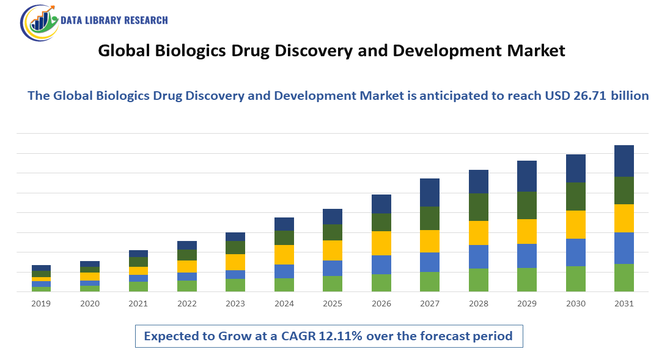
The Global Biologics Drug Discovery and Development Market focuses on the research, design, and production of biologic drugs derived from living organisms, such as monoclonal antibodies, vaccines, and recombinant proteins. It plays a vital role in treating chronic and complex diseases. Rising demand for targeted therapies, technological advancements, and increasing R&D investments are key factors driving this market’s growth worldwide.
The growth of the Global Biologics Drug Discovery and Development Market is primarily driven by the increasing prevalence of chronic and life-threatening diseases such as cancer, autoimmune disorders, and diabetes, which has accelerated the demand for advanced therapeutic solutions. The rising adoption of monoclonal antibodies, recombinant proteins, and cell- and gene-based therapies is fueling innovation in biologics research.
The Global Biologics Drug Discovery and Development Market is witnessing several emerging trends that are reshaping the landscape of modern therapeutics. One major trend is the growing adoption of artificial intelligence (AI) and machine learning (ML) to accelerate target discovery, optimize biologic design, and predict clinical outcomes more accurately. The integration of advanced technologies such as single-cell analysis, CRISPR gene editing, and 3D cell culture models is enhancing the precision and efficiency of biologics development. Additionally, there is a rising focus on next-generation biologics, including bispecific antibodies, antibody-drug conjugates (ADCs), and fusion proteins, aimed at improving therapeutic efficacy and reducing side effects.
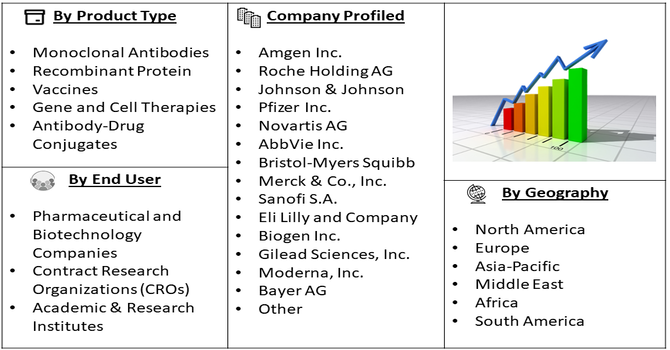
Segmentation: Global Biologics Drug Discovery and Development Market is segmented By Product Type (Monoclonal Antibodies, Recombinant Proteins, Vaccines, Gene and Cell Therapies, and Antibody-Drug Conjugates), Therapeutic Area (Oncology, Autoimmune Diseases, Cardiovascular Diseases, Infectious Diseases, Neurological Disorders), End User (Pharmaceutical and Biotechnology Companies, Contract Research Organizations (CROs), and Academic & Research Institutes), and Geography (North America, Europe, Asia-Pacific, Middle East and Africa, and South America). The report provides the value (in USD million) for the above segments.
For Detailed Market Segmentation - Get a Free Sample PDF
Market Drivers:
The increasing global burden of chronic and life-threatening diseases such as cancer, autoimmune disorders, diabetes, and cardiovascular conditions is a key driver of the biologics drug discovery and development market. Biologics, with their high specificity and ability to target disease mechanisms at the molecular level, offer superior therapeutic outcomes compared to conventional small-molecule drugs. The growing need for effective, long-term treatment options with minimal side effects is accelerating demand for innovative biologic therapies, including monoclonal antibodies, recombinant proteins, and gene-based treatments. This has led pharmaceutical and biotechnology companies to expand their biologics pipelines and invest heavily in advanced R&D platforms.
Rapid technological progress in biotechnology tools and platforms is significantly boosting biologics discovery and development. Innovations such as next-generation sequencing (NGS), CRISPR-based genome editing, high-throughput screening, and AI-driven drug discovery are enabling faster target identification, protein engineering, and predictive modeling of drug efficacy. These technologies are not only reducing development timelines but also improving the precision, stability, and scalability of biologics.
In September 2025, Enlaza Therapeutics and Vertex Pharmaceuticals entered a four-year collaboration to advance Enlaza’s War-Lock platform, which uses covalent biologic technology to develop targeted therapies for hematologic, oncologic, and autoimmune diseases. This partnership expanded the platform’s clinical potential and therapeutic scope. The collaboration significantly impacted the Global Biologics Drug Discovery and Development Market by accelerating innovation, enabling next-generation biologic drug design, and fostering growth in precision medicine applications. Additionally, advances in bioprocessing, such as single-use bioreactors and continuous manufacturing, are enhancing production efficiency and lowering costs, further driving the growth of the global biologics market.
Market Restraints
The development of biologic drugs is a highly complex and capital-intensive process, involving sophisticated technologies, specialized manufacturing facilities, and rigorous clinical trials. The high cost of research, development, and regulatory compliance often limits the number of new entrants and constrains smaller biotechnology firms from competing effectively. Additionally, the production of biologics requires stringent quality control, cold-chain logistics, and skilled personnel, all of which contribute to increased operational costs and longer development timelines.
The Global Biologics Drug Discovery and Development Market creates a profound socioeconomic impact by offering life-changing therapies for previously untreatable conditions like many cancers and autoimmune diseases, thereby reducing long-term chronic disease burdens and significantly improving patient longevity and quality of life. Economically, the market is a powerful engine, fueling massive global R&D investment, creating a large number of high-skill, high-wage jobs in biotechnology clusters, and driving substantial revenue growth for the pharmaceutical sector. However, the resulting high cost of these complex drugs presents a major socioeconomic challenge, exacerbating healthcare equity issues as governments and payers struggle to make these effective, advanced treatments accessible and affordable to all populations.
Segmental Analysis:
The Monoclonal Antibodies segment is expected to dominate the market due to their widespread use in treating cancer, autoimmune disorders, and infectious diseases. Monoclonal antibodies offer high specificity and targeted action, which reduces side effects compared to traditional therapies. The increasing number of FDA-approved monoclonal antibody therapies and the growing focus on targeted biologics for precision medicine are driving growth in this segment. For instance, in June 2025 Merck (MSD) announced that the U.S. Food and Drug Administration (FDA) had approved ENFLONSIA for preventing respiratory syncytial virus (RSV) lower respiratory tract disease in neonates and infants during or entering their first RSV season. ENFLONSIA, a long-acting monoclonal antibody, was designed to provide direct, rapid, and durable protection for up to five months with a single 105 mg dose, irrespective of the infant’s weight.
The Oncology segment holds the largest share within therapeutic areas. The rising prevalence of various cancers worldwide and the development of targeted biologics, such as monoclonal antibodies, antibody-drug conjugates, and checkpoint inhibitors, are fueling demand. Oncology biologics offer improved efficacy and safety profiles, making them a preferred choice in cancer treatment regimens. For instance, Reports from the American Cancer Society and other sources highlighted that new diagnoses and cancer-related deaths remained significant global health challenges. The source highlighted in 2022, approximately 20 million new cancer cases were reported globally, with lung, breast, colon, and prostate cancers being the most common. The number of cases was projected to rise due to factors such as lifestyle choices, aging populations, and environmental exposures.
These companies are heavily investing in biologics research and development, expanding their pipelines, and leveraging advanced technologies such as gene editing and high-throughput screening. The focus on novel therapeutics and personalized medicine drives adoption of biologics drug discovery platforms among these entities.
Major pharmaceutical and biotechnology companies continued to strengthen their positions in the biologics market by forming strategic collaborations, licensing agreements, and partnerships with innovative startups. This enabled access to cutting-edge technologies, including AI-driven drug design, organoid-based screening, and synthetic biology platforms. Such initiatives accelerated drug discovery timelines, reduced development costs, and enhanced the probability of success, further propelling growth in the Global Biologics Drug Discovery and Development Market.
This growth is driven by the presence of advanced healthcare infrastructure, extensive R&D investments by pharmaceutical and biotechnology companies, and strong adoption of cutting-edge biologics research technologies. The region benefits from supportive regulatory frameworks, well-established clinical trial networks, and high healthcare expenditure, which facilitate faster development and commercialization of innovative biologic therapies. For instance, in September 2025, GSK announced a USD 30 billion investment across the United States to strengthen R&D and supply chain infrastructure, including USD 1.2 billion for advanced biomanufacturing facilities and AI-driven technologies. This strategic move reinforced GSK’s innovation capabilities and domestic production capacity. The investment significantly boosted the U.S. Biologics Drug Discovery and Development Market by promoting technological advancement, enhancing drug development efficiency, and encouraging further investments in the biopharmaceutical sector.
Additionally, the rising prevalence of chronic and complex diseases such as cancer, autoimmune disorders, and genetic conditions is fueling demand for targeted and personalized biologics, further supporting North America’s leading position in the market. For instance, in January 2024, the NCBI published an article that reported, in 2020, around 523 million people worldwide were affected by cardiovascular diseases (CVD), causing approximately 19 million deaths—about 32% of global fatalities and an 18.7% rise since 2010. In the U.S., 934,509 people died of CVD in 2021, including 162,890 from stroke. Significant racial disparities persisted, with Black adults twice as likely to die from stroke as White adults.
Thus, such factors are driving the growth of above market in North American region.
To Learn More About This Report - Request a Free Sample Copy
The Global Biologics Drug Discovery and Development Market is highly competitive, comprising leading pharmaceutical and biotechnology companies that focus on innovation, strategic collaborations, and expansion of biologics pipelines. Key players compete through advanced R&D capabilities, novel biologic therapies, and partnerships with academic institutions and contract research organizations to accelerate drug discovery and commercialization.
Key Players
Recent Development
Q1. What are the main growth-driving factors for this market?
The main growth driver is the rising global prevalence of chronic diseases like cancer, autoimmune disorders, and diabetes, which often require highly targeted therapies. Biologics, such as therapeutic proteins and antibodies, offer superior efficacy and reduced side effects compared to traditional small-molecule drugs because they mimic natural biological processes. Furthermore, significant advancements in genomics, proteomics, and high-throughput screening are accelerating the discovery and optimization of novel biologic candidates, encouraging massive investment from pharmaceutical and biotech companies worldwide.
Q2. What are the main restraining factors for this market?
The market faces substantial constraints due primarily to the high cost and complexity inherent in developing and manufacturing biologics. Unlike chemical drugs, biologics require complex and expensive mammalian cell culture systems and rigorous quality control protocols. This results in hefty R&D expenditures and production costs, translating to high final drug prices that challenge patient accessibility and healthcare budgets. Additionally, the stringent and uncertain regulatory landscape for novel biologic entities and their biosimilar versions slows down market entry and profitability, increasing the time to market.
Q3. Which segment is expected to witness high growth?
The Monoclonal Antibodies (mAbs) segment is expected to maintain its leadership and witness significant growth. mAbs are highly targeted therapeutic proteins used extensively across oncology, immunology, and infectious diseases. Advances in antibody engineering, bispecific and trispecific formats, and antibody-drug conjugates (ADCs) are expanding their clinical utility. This segment benefits from a proven track record, regulatory familiarity, and the expiration of patents on key reference products, which drives the development of biosimilars and fuels further market competition and innovation.
Q4. Who are the top major players for this market?
The biologics market is dominated by global biopharmaceutical giants with extensive R&D pipelines and manufacturing capabilities. Top players include companies like Roche, Amgen, AbbVie, Johnson & Johnson, and Pfizer. These companies invest heavily in cutting-edge technologies like gene editing and cell therapy platforms. They maintain their market position through continuous strategic acquisitions, massive investment in clinical trials, and establishing robust partnerships to commercialize complex, next-generation biologics across diverse therapeutic areas.
Q5. Which country is the largest player?
North America, particularly the United States, is the largest regional market for biologics drug discovery and development. This dominance is attributed to several key factors, including the presence of the world's leading biotech hubs (like Boston and San Francisco), high investment in R&D, and a favorable regulatory environment supported by the FDA. Furthermore, robust government funding, strong intellectual property protection, and high patient affordability and acceptance of expensive, cutting-edge therapies ensure North America remains the primary engine of innovation and revenue generation.
Data Library Research are conducted by industry experts who offer insight on industry structure, market segmentations technology assessment and competitive landscape (CL), and penetration, as well as on emerging trends. Their analysis is based on primary interviews (~ 80%) and secondary research (~ 20%) as well as years of professional expertise in their respective industries. Adding to this, by analysing historical trends and current market positions, our analysts predict where the market will be headed for the next five years. Furthermore, the varying trends of segment & categories geographically presented are also studied and the estimated based on the primary & secondary research.
In this particular report from the supply side Data Library Research has conducted primary surveys (interviews) with the key level executives (VP, CEO’s, Marketing Director, Business Development Manager and SOFT) of the companies that active & prominent as well as the midsized organization
FIGURE 1: DLR RESEARH PROCESS
Extensive primary research was conducted to gain a deeper insight of the market and industry performance. The analysis is based on both primary and secondary research as well as years of professional expertise in the respective industries.
In addition to analysing current and historical trends, our analysts predict where the market is headed over the next five years.
It varies by segment for these categories geographically presented in the list of market tables. Speaking about this particular report we have conducted primary surveys (interviews) with the key level executives (VP, CEO’s, Marketing Director, Business Development Manager and many more) of the major players active in the market.
Secondary ResearchSecondary research was mainly used to collect and identify information useful for the extensive, technical, market-oriented, and Friend’s study of the Global Extra Neutral Alcohol. It was also used to obtain key information about major players, market classification and segmentation according to the industry trends, geographical markets, and developments related to the market and technology perspectives. For this study, analysts have gathered information from various credible sources, such as annual reports, sec filings, journals, white papers, SOFT presentations, and company web sites.
Market Size EstimationBoth, top-down and bottom-up approaches were used to estimate and validate the size of the Global market and to estimate the size of various other dependent submarkets in the overall Extra Neutral Alcohol. The key players in the market were identified through secondary research and their market contributions in the respective geographies were determined through primary and secondary research.
Forecast Model