
Get Complete Analysis Of The Report - Download Updated Free Sample PDF
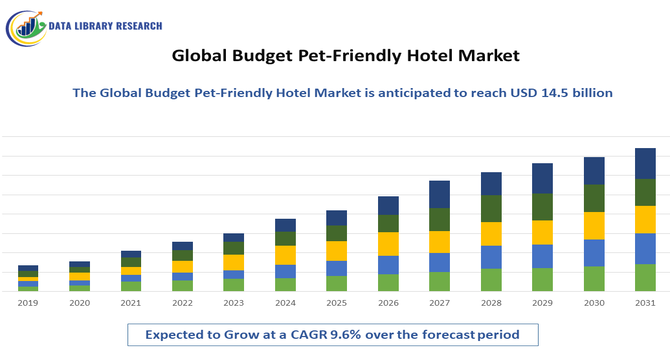
The Global Budget Pet-Friendly Hotel Market refers to the worldwide segment of the hospitality industry offering affordable lodging options that welcome guests traveling with pets. It encompasses hotels and inns that provide basic services at lower price points while accommodating animals through pet-friendly policies, designated amenities, and additional fees or packages. This market responds to rising pet ownership and demand for inclusive travel experiences, balancing cost sensitivity with comfort for both humans and pets. The growth drivers include increased pet humanization, budget travel trends, and expanding pet services.
The global budget pet-friendly hotel market is shaped by increasing pet ownership and travelers seeking affordable, inclusive stays. Demand grows for basic amenities such as designated pet areas, easy-clean rooms, and local pet service tie-ups. Technological integration—online booking filters for pet policies and real-time reviews—boosts visibility. The sustainability and wellness trends inspire eco-friendly, pet-safe products. Flexible cancellation and loyalty programs encourage repeat business. Partnerships with pet care brands and adoption events enhance guest appeal.
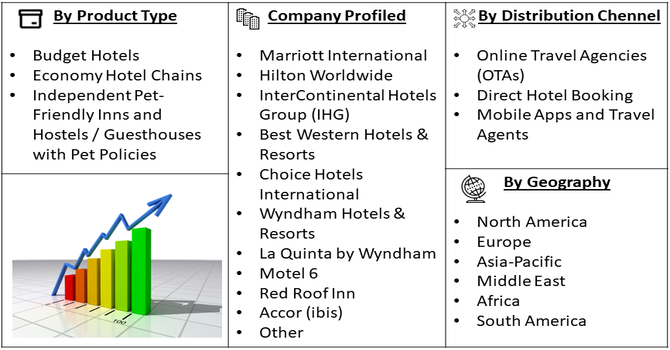
Segmentation: The Global Budget Pet-Friendly Hotel Market is segmented by Type (Budget Hotels, Economy Hotel Chains, Independent Pet-Friendly Inns and Hostels / Guesthouses with Pet Policies), Service Type (Standard Pet Accommodation, Package Pet Services (e.g., grooming, walking) and Premium Pet Add-Ons (e.g., pet welcome kits)), Pet Type (Dogs, Cats and Other Pets), Customer Type (Solo Travelers, Families, Business Travelers and Long-Stay Guests), Distribution Channel (Online Travel Agencies (OTAs), Direct Hotel Booking, Mobile Apps and Travel Agents), and Geography (North America, Europe, Asia-Pacific, Middle East and Africa, and South America). The report provides the value (in USD million) for the above segments.
For Detailed Market Segmentation - Get a Free Sample PDF
Market Drivers:
The global increase in pet ownership, coupled with the growing trend of pet humanization, is a key driver of the budget pet-friendly hotel market. Pets are increasingly viewed as family members, encouraging owners to travel with them rather than leave them behind. This shift creates strong demand for affordable accommodation that allows pets without premium pricing. Budget-conscious travelers, including millennials and retirees, actively seek hotels offering pet-friendly policies at reasonable rates. As travel resumes and expands globally, hotels that accommodate pets gain higher occupancy, repeat visits, and customer loyalty, driving sustained market growth.
The expansion of budget travel and domestic tourism significantly drives the global budget pet-friendly hotel market. Economic uncertainty, rising travel costs, and changing consumer behavior have increased demand for cost-effective lodging options. Travelers opting for road trips, short stays, and regional travel often bring pets along, increasing the need for pet-friendly accommodations.
In 2023, Village Pet Care, led by Shane Kelly and backed by General Atlantic, launched a network of 17 pet care centers across six states, offering boarding, daycare, grooming, and training. Its expansion through acquisitions and service enhancements strengthened the pet-travel ecosystem, increasing convenience for pet owners. This development supported growth in the global budget pet-friendly hotel market by boosting demand for affordable, pet-inclusive accommodations.
Moreover, the budget hotels offering flexible pet policies attract a broader customer base, especially families and long-stay guests. Additionally, improved online booking platforms make it easier to filter pet-friendly options, boosting visibility and bookings. This alignment of affordability and convenience strengthens market demand worldwide.
Market Restraints:
Despite growing demand, operational challenges restrain the global budget pet-friendly hotel market. Accommodating pets increases maintenance, cleaning, and sanitation costs, which can strain low-margin budget hotels. Risks of property damage, noise complaints, and allergies among non-pet guests further complicate operations. Establishing clear pet policies, insurance coverage, and staff training adds administrative burden. Smaller properties may struggle to balance affordability with service quality while ensuring compliance with local regulations. These challenges can limit adoption of pet-friendly practices or lead to higher pet fees, potentially discouraging price-sensitive travelers and slowing overall market expansion.
The budget pet-friendly hotel sector fosters economic inclusion by broadening travel access for pet owners of diverse income levels. Hotels that welcome pets contribute to local economies by increasing occupancy rates, stimulating spending at nearby restaurants, parks, and pet services such as veterinary clinics and grooming businesses. Job creation rises across hospitality and ancillary pet-related roles. Communities with pet-inclusive tourism often see higher social engagement and improved quality of life for residents and visitors alike. Additionally, affordable pet-travel options support mental well-being by reducing owner stress and encouraging mobility. The trend also drives small business collaborations, boosting overall regional economic resilience.
Segmental Analysis:
The budget hotels segment is expected to witness the highest growth over the forecast period due to rising cost-conscious travel and increasing pet ownership. Travelers seek affordable accommodations that allow pets without premium pricing, making budget hotels an attractive choice. These properties benefit from simplified pet policies, roadside and suburban locations, and strong demand from domestic travelers. Budget hotel chains are increasingly standardizing pet-friendly offerings, improving cleanliness protocols, and adding low-cost amenities to enhance appeal. As economic pressures influence travel decisions globally, budget hotels that balance affordability with pet inclusivity are well positioned to capture a growing customer base.
The standard pet accommodation segment is expected to witness the highest growth over the forecast period as most pet owners prioritize basic comfort, safety, and affordability over premium services. This segment includes essentials such as pet-allowed rooms, designated relief areas, and clear pet policies without high fees. Budget travelers prefer simple, reliable offerings that meet pet needs without increasing room rates. Hotels benefit from lower operational costs compared to premium pet services, enabling wider adoption. The scalability and ease of implementation make standard pet accommodation the most viable option for budget hotels, supporting strong and sustained growth globally.
The dogs segment is expected to witness the highest growth over the forecast period, driven by the dominance of dogs in global pet ownership and their frequent inclusion in travel plans. Dog owners are more likely to seek pet-friendly hotels, particularly for road trips and domestic travel. Budget hotels increasingly tailor policies to dogs by offering size flexibility, outdoor access, and nearby walking areas. Growing awareness of dog-friendly travel and improved online filtering options further support demand. As dogs remain the most traveled-with pets worldwide, hotels accommodating them effectively gain higher occupancy and repeat bookings.
The business travelers segment is expected to witness the highest growth over the forecast period as work patterns evolve toward flexible, remote, and hybrid models. Professionals increasingly combine business trips with personal travel and prefer bringing pets along for longer stays. Budget pet-friendly hotels near business hubs, highways, and industrial zones attract this segment by offering affordability, convenience, and pet acceptance. Extended-stay formats further support demand among traveling professionals. As work-life integration continues to reshape travel behavior, business travelers seeking pet-friendly, cost-effective lodging are becoming a key growth driver for the market.
The online travel agencies (OTAs) segment is expected to witness the highest growth over the forecast period due to increasing reliance on digital booking platforms. OTAs offer advanced filters for pet-friendly hotels, transparent pet policies, and user reviews, making them the preferred choice for pet owners. Budget travelers benefit from price comparisons, discounts, and last-minute deals available on these platforms. Hotels gain wider visibility and higher booking volumes through OTA partnerships. As mobile usage and online trip planning continue to rise, OTAs play a critical role in connecting pet owners with budget-friendly accommodations.
The North American region is expected to witness the highest growth over the forecast period, supported by high pet ownership rates and strong pet humanization trends. The region has a well-established budget hotel infrastructure and widespread acceptance of pet-friendly travel.
Traveling with pets, once considered restrictive and largely reserved for owners of smaller animals, is rapidly reshaping travel preferences across North America. For instance, in 2022 a recent survey by American Express Travel, 43 percent of respondents expressed interest in booking trips to destinations where they can bring their pets, signaling a strong shift in consumer behavior. This growing preference has fueled a surge in pet-friendly accommodations, particularly within the budget hotel segment. Increased flexibility around pet size, breed, and type, along with affordable packages, has made pet-inclusive travel more accessible to a wider audience.
Domestic tourism, road trips, and extended stays are particularly common, increasing demand for affordable pet-accommodating hotels. Major hotel chains in the U.S. and Canada actively promote pet-friendly policies, enhancing market penetration. Additionally, advanced digital booking systems and consumer awareness further accelerate growth, positioning North America as a leading market for budget pet-friendly hotels.
| Report Matrics | Details |
| Market Size Value | USD 14.5 billion |
| Growth Rate | CAGR of 9.6 % |
| Forecast | 2026-2033 |
| Historical data | 2021-2024 |
| Base Year | 2025 |
| Report Coverage | Forecasted revenue, company rating, competitive environment, growth drivers, and trends |
| Segment Coverage | Type, Application, End-User, Geography |
| Regional Scope | North America, Europe, Asia Pacific, Middle East |
| Customized scope | Free customization of reports (With 3 months' analysis support) |
| To Learn More About This Report | Request a Free Sample Copy |
The competitive landscape in the budget pet-friendly hotel market is dynamic, marked by independent inns and chain budget brands vying to attract pet owners. Key differentiators include transparent pet policies, minimal or tiered pet fees, and value-added services such as on-site pet play areas and partnerships with local pet businesses. Online travel platforms and user reviews heavily influence choice, pushing hotels to maintain high cleanliness and safety standards. Smaller properties often compete on personalized service, while larger budget chains leverage broad networks and loyalty programs. Price sensitivity drives innovation in cost-effective pet amenities. Strategic marketing and clear communication of pet offerings remain critical for standing out.
The major players for above market are:
Recent Development
Q1. What are the main growth-driving factors for this market?
The market is primarily driven by the "humanization" of pets, where travelers increasingly view pets as family members. Rising pet ownership rates globally, coupled with the expansion of budget-conscious travel, encourage hotels to eliminate restrictive policies. Social media influence and digital platforms specialized in pet travel further stimulate this growing demand.
Q2. What are the main restraining factors for this market?
Growth is often hindered by high maintenance costs and potential property damage associated with animal guests. Stringent health and safety regulations, concerns regarding guest allergies, and noise complaints present operational challenges. Additionally, the lack of standardized pet-friendly certifications across budget brands can lead to inconsistent service quality and customer dissatisfaction.
Q3. Which segment is expected to witness high growth?
The "Short-Stay/Weekend Getaway" segment is expected to witness the highest growth. Local and regional tourism has surged as pet owners prefer shorter driving distances over long-haul flights to avoid pet transport stress. Budget hotels offering basic amenities like designated relief areas and "pet-welcome" kits are capturing this lucrative frequent-traveler demographic.
Q4. Who are the top major players for this market?
Leading players include Choice Hotels International, Wyndham Hotels & Resorts, and InterContinental Hotels Group (IHG) through their budget-friendly brands. Other significant contributors are Marriott International with its Aloft and Moxy labels, Hilton Worldwide, and Motel 6, all of which have standardized pet policies to attract diverse, cost-conscious animal lovers.
Q5. Which country is the largest player?
The United States is the largest player in the global market. This dominance is supported by a deeply ingrained pet culture, high disposable income, and an extensive network of interstate budget motels. American travelers lead the trend in domestic road trips with pets, supported by favorable nationwide regulations and infrastructure.
Data Library Research are conducted by industry experts who offer insight on industry structure, market segmentations technology assessment and competitive landscape (CL), and penetration, as well as on emerging trends. Their analysis is based on primary interviews (~ 80%) and secondary research (~ 20%) as well as years of professional expertise in their respective industries. Adding to this, by analysing historical trends and current market positions, our analysts predict where the market will be headed for the next five years. Furthermore, the varying trends of segment & categories geographically presented are also studied and the estimated based on the primary & secondary research.
In this particular report from the supply side Data Library Research has conducted primary surveys (interviews) with the key level executives (VP, CEO’s, Marketing Director, Business Development Manager and SOFT) of the companies that active & prominent as well as the midsized organization
FIGURE 1: DLR RESEARH PROCESS
Extensive primary research was conducted to gain a deeper insight of the market and industry performance. The analysis is based on both primary and secondary research as well as years of professional expertise in the respective industries.
In addition to analysing current and historical trends, our analysts predict where the market is headed over the next five years.
It varies by segment for these categories geographically presented in the list of market tables. Speaking about this particular report we have conducted primary surveys (interviews) with the key level executives (VP, CEO’s, Marketing Director, Business Development Manager and many more) of the major players active in the market.
Secondary ResearchSecondary research was mainly used to collect and identify information useful for the extensive, technical, market-oriented, and Friend’s study of the Global Extra Neutral Alcohol. It was also used to obtain key information about major players, market classification and segmentation according to the industry trends, geographical markets, and developments related to the market and technology perspectives. For this study, analysts have gathered information from various credible sources, such as annual reports, sec filings, journals, white papers, SOFT presentations, and company web sites.
Market Size EstimationBoth, top-down and bottom-up approaches were used to estimate and validate the size of the Global market and to estimate the size of various other dependent submarkets in the overall Extra Neutral Alcohol. The key players in the market were identified through secondary research and their market contributions in the respective geographies were determined through primary and secondary research.
Forecast Model