
Get Complete Analysis Of The Report - Download Updated Free Sample PDF
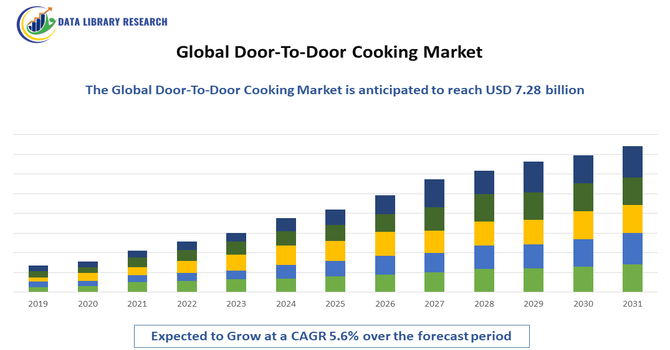
The Global Door-to-Door Cooking Market involves services that deliver freshly prepared meals or cooking kits directly to consumers' homes. This market caters to busy individuals seeking convenient, healthy, and homemade-style food without visiting restaurants or grocery stores. It includes meal kit delivery, ready-to-eat meals, and chef-prepared dishes. Growth is driven by changing lifestyles, rising demand for time-saving food solutions, and increasing interest in diverse cuisines. The market benefits from advances in packaging, logistics, and digital ordering platforms, enhancing customer convenience and experience.
The global door-to-door cooking market is witnessing rapid growth due to increasing consumer demand for convenience, health-conscious meals, and diverse cuisines. Meal kit deliveries, ready-to-eat gourmet options, and chef-prepared meals are becoming popular among urban populations with busy lifestyles. Digital platforms and mobile apps have streamlined ordering, tracking, and subscription management. Sustainability trends, such as eco-friendly packaging and locally sourced ingredients, are gaining traction. Additionally, the rise of personalized meal plans and diet-specific options, including keto, vegan, and gluten-free meals, is attracting health-conscious consumers and fueling the market’s expansion globally.
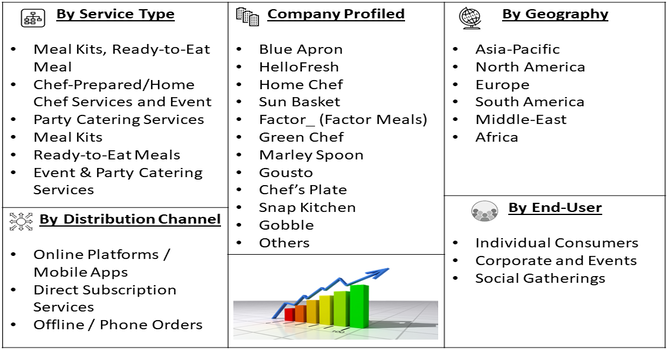
Segmentation: The Global Door-to-Door Cooking Market is segmented by Service Type (Meal Kits, Ready-to-Eat Meals, Chef-Prepared/Home Chef Services and Event & Party Catering Services), Distribution Channel (Online Platforms / Mobile Apps, Direct Subscription Services and Offline / Phone Orders), Service Type (Meal Kits, Ready-to-Eat Meals, and Event & Party Catering Services), End User (Individual Consumers, Corporate and Events & Social Gatherings), and Geography (North America, Europe, Asia-Pacific, Middle East and Africa, and South America). The report provides the value (in USD million) for the above segments.
For Detailed Market Segmentation - Get a Free Sample PDF
Market Drivers:
Busy lifestyles, dual-income households, and urbanization have significantly increased demand for convenient, home-delivered cooking solutions. Consumers seek ready-to-cook meals, meal kits, and chef-prepared dishes to save time while enjoying quality, homemade-style food. Door-to-door cooking services offer flexibility, customizable menus, and subscription options that fit modern routines. Digital ordering platforms and mobile apps simplify meal planning, payment, and delivery tracking. The desire for hassle-free meal preparation combined with growing awareness of health and dietary preferences is fueling adoption, positioning convenience-driven home-cooking services as a key growth driver in the global market.
Rising health consciousness is driving consumers toward personalized meal solutions, creating opportunities for door-to-door cooking providers. People prefer fresh, portion-controlled meals catering to specific dietary needs such as keto, vegan, gluten-free, or low-calorie plans. Meal kit and home-delivery services emphasize high-quality ingredients, locally sourced produce, and balanced nutrition, appealing to health-focused consumers. Integration of AI and technology allows for personalized meal recommendations and efficient diet tracking. As health and wellness trends continue to grow globally, the demand for customized, nutritionally optimized, home-delivered meals accelerates, making it a key driver for market expansion.
Market Restraints:
The door-to-door cooking market faces significant operational and logistical challenges that may restrain growth. Maintaining food quality and safety during transport, managing cold-chain storage, and ensuring timely deliveries increase operational complexity and costs. Additionally, packaging, fuel, and labor expenses contribute to high overheads, impacting profitability for service providers. Scaling operations across multiple cities or regions requires significant investment in technology, staff, and infrastructure. Competition among local and global players further pressures margins. These operational and logistical challenges can hinder rapid expansion, limiting accessibility and affordability of home-cooking services, particularly in developing markets.
The door-to-door cooking market positively impacts economies by creating employment in food preparation, delivery logistics, technology, and packaging industries. It supports local farmers, suppliers, and small-scale food producers by sourcing ingredients. Consumers benefit from time savings, healthier meal options, and improved work-life balance. Urbanization and dual-income households drive demand, while tech-enabled services enhance accessibility. Additionally, subscription models promote consistent consumption patterns, stabilizing revenue streams for providers. Thus, the market contributes to economic growth, stimulates innovation in food services, and promotes sustainable consumption habits, improving quality of life for both consumers and service providers.
Segmental Analysis:
The Meal Kits segment is projected to witness the highest growth as consumers increasingly seek convenient, home-cooked meals without the hassle of grocery shopping. Pre-portioned ingredients with easy-to-follow recipes appeal to busy households, health-conscious individuals, and cooking enthusiasts. Rising popularity of diet-specific kits, such as keto, vegan, and gluten-free options, further drives adoption. Subscription models ensure repeat business and enhance customer loyalty. Technological integration in apps, AI-based meal recommendations, and efficient logistics networks are supporting seamless delivery. These factors collectively position meal kits as the fastest-growing segment in the global door-to-door cooking market.
The Online Platforms and Mobile Apps segment is expected to experience significant growth due to the increasing reliance on digital ordering and convenience. Consumers prefer app-based services for easy menu browsing, ordering, payment, and real-time tracking of meal deliveries. Integration of AI, personalized recommendations, and subscription management enhances user experience. The widespread adoption of smartphones, internet penetration, and social media marketing further fuels growth. Digital platforms also enable providers to expand reach, optimize logistics, and reduce operational costs, positioning online platforms and mobile apps as the leading distribution channel in the global door-to-door cooking market.
The Ready-to-Eat Meals segment is projected to grow rapidly as urban consumers seek instant, convenient meal solutions without compromising on taste or nutrition. These meals cater to busy professionals, students, and households looking for time-saving alternatives to traditional cooking. Increasing demand for healthy, fresh, and diet-specific ready-to-eat options supports segment growth. Advances in packaging, cold-chain logistics, and shelf-life extension enhance quality and accessibility. Providers offering diverse cuisine options and subscription plans are gaining market share. Collectively, these trends make ready-to-eat meals one of the fastest-growing segments in the global door-to-door cooking market.
The Corporate / Office Catering segment is anticipated to witness high growth due to rising demand for convenient and nutritious meal solutions in workplaces. Companies increasingly provide meal services to improve employee satisfaction, productivity, and retention. Door-to-door cooking providers cater to corporate clients with customizable meal plans, diet-specific menus, and bulk delivery options. Integration of digital ordering, subscription-based services, and AI-powered menu personalization enhances service efficiency. The shift toward hybrid work models and corporate wellness initiatives further fuels demand. These factors position the corporate segment as a key growth driver in the global door-to-door cooking market.
The Asia-Pacific region is expected to witness the highest growth in the door-to-door cooking market due to rapid urbanization, rising disposable incomes, and increasing smartphone penetration. Busy lifestyles and growing middle-class populations are driving demand for convenient meal solutions, including meal kits, ready-to-eat meals, and chef-prepared services.
The growth of major startups in this region is fuelling the growth of this region. For instance, Cookr, a mobile app-based platform, enables home chefs to deliver freshly cooked meals directly to customers. With 500 chefs onboard and INR 8.25 Crores (USD 1 Million) raised in a 2023 pre-seed round, Cookr expanded access to home-cooked meal services, boosting the Asia-Pacific door-to-door cooking market by enhancing convenience, local entrepreneurship, and digital adoption.
Governments’ support for food startups, digital platforms, and e-commerce infrastructure further accelerates market expansion. Countries such as India, China, Japan, and Southeast Asian nations are witnessing a surge in online food delivery and subscription-based meal services. These factors make the Asia-Pacific a key growth hub for the global market.
| Report Matrics | Details |
| Market Size Value | USD 7.28 billion |
| Growth Rate | CAGR of 5.6 % |
| Forecast | 2026-2033 |
| Historical data | 2021-2024 |
| Base Year | 2025 |
| Report Coverage | Forecasted revenue, company rating, competitive environment, growth drivers, and trends |
| Segment Coverage | Type, Application, End-User, Geography |
| Regional Scope | North America, Europe, Asia Pacific, Middle East |
| Customized scope | Free customization of reports (With 3 months' analysis support) |
| To Learn More About This Report | Request a Free Sample Copy |
The competitive landscape of the door-to-door cooking market is fragmented, comprising global meal kit providers, local startups, and traditional food service companies adapting to home delivery. Key players differentiate through menu variety, subscription flexibility, pricing, quality, and digital platform efficiency. Strategic partnerships with local farms, grocery suppliers, and logistics providers enhance service reliability. Continuous innovation in packaging, meal customization, and technology-driven ordering solutions strengthens market positioning. Companies focus on building brand loyalty, offering promotions, and expanding into new regions. Competition is intensifying as demand rises, driving providers to enhance convenience, quality, and sustainability to maintain market share.
The major players for above market are:
Recent Development
Q1. What are the main growth-driving factors for this market?
The market is expanding because busy professionals and families have less time to prepare healthy, home-cooked meals. There is a growing preference for personalized nutrition and "experience-based" dining at home. Additionally, the rise of gig-economy apps has made it easier than ever for consumers to book local private chefs for everything from daily meal prep to special dinner parties.
Q2. What are the main restraining factors for this market?
Growth is limited by the high cost of personalized services compared to meal kits or standard food delivery. Safety and privacy concerns regarding letting strangers into one's home can also deter some customers. Furthermore, strict food safety regulations and the challenge of maintaining consistent quality across a decentralized workforce of independent cooks present significant operational hurdles.
Q3. Which segment is expected to witness high growth?
The Subscription-Based Meal Prep segment is expected to see the highest growth. Instead of one-off events, more households are hiring cooks to visit once or twice a week to prepare several days' worth of healthy meals. This "set and forget" convenience appeals to health-conscious families who want the benefits of a private chef at a more accessible, recurring price point.
Q4. Who are the top major players for this market?
The market is led by digital platforms that connect independent chefs with local clients. Key players include TakeChefs, Mise En Place, Cozymeal, The Private Chef Direct, and Hire A Chef. these platforms dominate by handling the marketing, booking, and insurance for the cooks, providing a trustworthy marketplace that simplifies the hiring process for the end consumer.
Q5. Which country is the largest player?
China is the largest player in the door-to-door cooking market. This dominance is driven by a high percentage of dual-income households with high disposable income and a strong "on-demand" service culture. Major urban hubs like India have high densities of culinary talent and a massive consumer base seeking premium, personalized lifestyle services.
Data Library Research are conducted by industry experts who offer insight on industry structure, market segmentations technology assessment and competitive landscape (CL), and penetration, as well as on emerging trends. Their analysis is based on primary interviews (~ 80%) and secondary research (~ 20%) as well as years of professional expertise in their respective industries. Adding to this, by analysing historical trends and current market positions, our analysts predict where the market will be headed for the next five years. Furthermore, the varying trends of segment & categories geographically presented are also studied and the estimated based on the primary & secondary research.
In this particular report from the supply side Data Library Research has conducted primary surveys (interviews) with the key level executives (VP, CEO’s, Marketing Director, Business Development Manager and SOFT) of the companies that active & prominent as well as the midsized organization
FIGURE 1: DLR RESEARH PROCESS
Extensive primary research was conducted to gain a deeper insight of the market and industry performance. The analysis is based on both primary and secondary research as well as years of professional expertise in the respective industries.
In addition to analysing current and historical trends, our analysts predict where the market is headed over the next five years.
It varies by segment for these categories geographically presented in the list of market tables. Speaking about this particular report we have conducted primary surveys (interviews) with the key level executives (VP, CEO’s, Marketing Director, Business Development Manager and many more) of the major players active in the market.
Secondary ResearchSecondary research was mainly used to collect and identify information useful for the extensive, technical, market-oriented, and Friend’s study of the Global Extra Neutral Alcohol. It was also used to obtain key information about major players, market classification and segmentation according to the industry trends, geographical markets, and developments related to the market and technology perspectives. For this study, analysts have gathered information from various credible sources, such as annual reports, sec filings, journals, white papers, SOFT presentations, and company web sites.
Market Size EstimationBoth, top-down and bottom-up approaches were used to estimate and validate the size of the Global market and to estimate the size of various other dependent submarkets in the overall Extra Neutral Alcohol. The key players in the market were identified through secondary research and their market contributions in the respective geographies were determined through primary and secondary research.
Forecast Model