
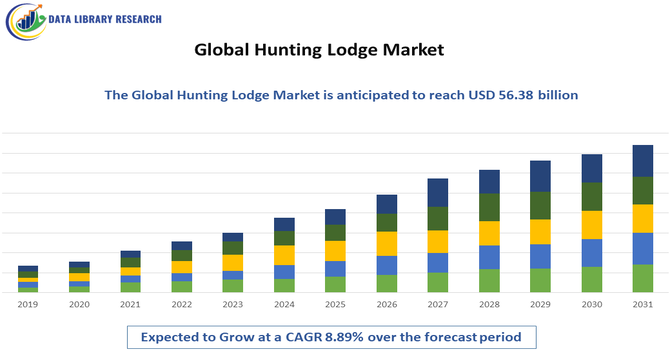
The Global Hunting Lodge Market size at USD 27.8 billion in 2026 and is projected to USD 56.38 billion by 2033, growing with a CAGR of 8.89% from 2026-2033.
Get Complete Analysis Of The Report - Download Updated Free Sample PDF
The Global Hunting Lodge Market refers to the international industry of specialized accommodations designed for hunting enthusiasts, offering lodging, guided hunting experiences, and associated services in wildlife-rich regions. These lodges provide guests with access to game reserves, expert guides, equipment rentals, meals, and sometimes luxury amenities such as spas and fine dining demand is driven by interest in outdoor sports, wildlife conservation tourism, and customizable hunting packages. Hunting lodges vary from rustic cabins to premium estates, combining recreation with cultural and ecological experiences.
The Global Hunting Lodge Market is shaped by trends toward sustainable and ethical hunting tourism, with operators promoting conservation and regulated game access. Increasing demand for luxury experiential travel has encouraged lodges to offer high-end amenities such as gourmet cuisine, wellness facilities, and bespoke guiding services. Digital marketing and online reservation platforms have expanded global reach, attracting international visitors. There’s also growing interest in eco-friendly practices, encouraging habitat preservation and community engagement. Adventure seekers increasingly blend hunting with broader wildlife tourism, including photography and bird watching.
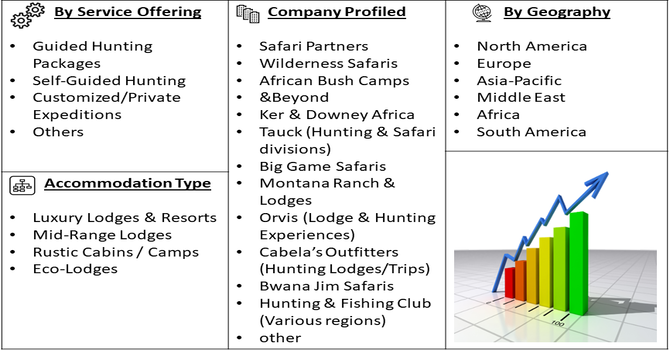
Segmentation: The Global Hunting Lodge Market is segmented by Type of Hunting Experience (Big Game Hunting Lodges, Small Game Hunting Lodges, Bird Hunting Lodges, Fishing + Hunting Combined Lodges and Trophy Hunting Lodges), Accommodation Type (Luxury Lodges & Resorts, Mid-Range Lodges, Rustic Cabins / Camps and Eco-Lodges), Service Offering (Guided Hunting Packages, Self-Guided Hunting, Customized/Private Expeditions and Others), and Geography (North America, Europe, Asia-Pacific, Middle East and Africa, and South America). The report provides the value (in USD million) for the above segments.
For Detailed Market Segmentation - Get a Free Sample PDF
Market Drivers:
key driver of the Global Hunting Lodge Market is the increasing demand for outdoor and experiential tourism. As travelers seek authentic, adventure-based holidays, hunting lodges offer a blend of sport, nature immersion, and cultural engagement. Higher disposable incomes, interest in sustainable wildlife experiences, and growing popularity of niche travel segments further fuel demand.
For instance, Active Adventures and Austin Adventures rebranded in December 2022 to unify their offerings and emphasize sustainable, community-based travel. This strengthened the adventure tourism sector, increasing interest in responsible and immersive outdoor experiences. As a result, hunting lodges aligned with eco-friendly practices and curated packages saw higher demand, expanding the Global Hunting Lodge Market through improved credibility and broader traveler appeal.
Technological advancements, including online reservations and global marketing, make it easier for international hunters to discover and book lodges. Additionally, investments in wildlife management and infrastructure in regions like North America and Africa improve accessibility, safety, and quality of services, encouraging repeat visits and longer stays.
Another key driver is the growing investment in wildlife conservation and habitat management funded through regulated hunting tourism. Many hunting lodges operate in partnership with conservancies and protected areas, using fees and permits to support anti-poaching efforts, habitat restoration, and community development. This creates a sustainable revenue model that aligns tourism with conservation goals.
In January 2024, Lao officials held an ASEAN Tourism Seminar and launched a platform for experts to develop adventure tourism. This initiative boosted collaboration and funding for conservation and wildlife management, strengthening sustainable tourism. Consequently, hunting lodges in the region gained better support and credibility, increasing demand and growth in the Global Hunting Lodge Market. As governments and NGOs promote responsible wildlife management, well-regulated hunting lodges gain credibility and attract international visitors. The funding cycle helps maintain healthy wildlife populations, improves biodiversity, and supports long-term lodge operations, reinforcing market expansion in key regions.
Market Restraints:
A significant restraint on the Global Hunting Lodge Market is regulatory and ethical concerns related to wildlife conservation. Stricter hunting regulations, international bans on certain species, and growing public opposition to trophy hunting create uncertainties for operators. Compliance with diverse regional laws increases operational complexity and costs. Ethical debates about hunting tourism impact marketing and customer perceptions, potentially reducing participation. Additionally, ecological changes, poaching threats, and habitat loss can limit game populations, reducing available hunting opportunities. These factors make it challenging for some lodges to sustain consistent offerings, deterring investment and expansion in certain regions.
The Global Hunting Lodge Market contributes significantly to local economies by generating employment in hospitality, guiding, conservation, and support services. Lodges often operate in rural and wildlife-rich areas, providing income for communities through jobs, local sourcing of food, transportation, and cultural exchanges. Well-managed hunting tourism can fund conservation efforts, habitat protection, and anti-poaching initiatives through fees and partnerships. Additionally, the presence of international visitors boosts regional tourism revenue. However, socioeconomic benefits depend on responsible wildlife management and equitable profit-sharing with local stakeholders. When integrated with conservation goals, hunting lodges can support both ecological preservation and sustainable economic development in host regions.
Segmental Analysis:
The Fishing + Hunting Combined Lodges segment is expected to witness the highest growth over the forecast period due to rising demand for diverse outdoor experiences. Travelers increasingly prefer multi-activity vacations that offer both hunting and fishing in one destination, maximizing value and adventure. Combined lodges appeal to families and groups with mixed interests, improving occupancy rates and seasonal stability. They also attract repeat visitors who enjoy varied experiences without switching locations. As eco-tourism and adventure travel grow, these lodges offer comprehensive packages with guided trips, equipment rentals, and all-inclusive services, strengthening market growth through broader customer appeal and longer stays.
The Luxury Lodges & Resorts segment is expected to witness the highest growth over the forecast period as high-net-worth travelers seek premium hunting experiences with upscale amenities. Luxury lodges offer personalized guides, gourmet dining, spa services, and exclusive access to private reserves, catering to clients willing to pay premium rates. Growing interest in experiential luxury travel has pushed operators to enhance comfort and privacy while maintaining authentic outdoor adventure. Additionally, corporate retreats and high-end group travel demand exclusive hunting experiences. As disposable incomes rise globally, luxury hunting lodges are becoming more popular, driving market expansion through high-margin offerings and brand reputation.
The Guided Hunting Packages segment is expected to witness the highest growth over the forecast period due to increasing demand for safe, convenient, and expert-led experiences. Many hunters prefer guided trips that provide local knowledge, equipment, and structured itineraries, ensuring higher success rates and compliance with regulations. Guided packages are particularly attractive for international travelers unfamiliar with local terrains and rules. Operators often include permits, lodging, meals, and transportation, offering a hassle-free experience. As hunting tourism grows, lodges are expanding guided services for diverse game types, improving customer satisfaction and repeat bookings. This trend strengthens the segment’s growth and market dominance.
The North American region is expected to witness the highest growth over the forecast period due to strong hunting traditions, extensive wildlife habitats, and developed tourism infrastructure.
The region offers diverse hunting opportunities, including big game, waterfowl, and upland birds, attracting both domestic and international hunters. For instance, in 2024, Modern Adventure invested USD 4.8 million to expand its U.S. services, strengthening adventure tourism infrastructure and promoting responsible outdoor experiences. This investment supported conservation funding through increased tourism revenues and partnerships with local wildlife initiatives. Consequently, North America’s hunting lodge market benefited from higher visitor interest, improved sustainability programs, and greater demand for eco-conscious hunting accommodations.
Well-established conservation programs and regulated hunting systems enhance sustainability and trust among tourists. Additionally, the growing popularity of adventure travel and outdoor recreation drives demand for hunting lodges with high-quality amenities. With increasing disposable income and strong domestic travel trends, North America’s hunting lodge market benefits from robust consumer interest and consistent year-round demand.
| Report Matrics | Details |
| Market Size Value | USD 56.38 billion |
| Growth Rate | CAGR of 8.89% |
| Forecast | 2026-2033 |
| Historical data | 2021-2024 |
| Base Year | 2025 |
| Report Coverage | Forecasted revenue, company rating, competitive environment, growth drivers, and trends |
| Segment Coverage | Type, Application, End-User, Geography |
| Regional Scope | North America, Europe, Asia Pacific, Middle East |
| Customized scope | Free customization of reports (With 3 months Analysis Support ) |
| To Learn More About This Report | Request a Free Sample Copy |
The competitive landscape of the Global Hunting Lodge Market includes luxury resort chains, independent boutique lodges, and specialist adventure tourism operators. Larger brands differentiate through comprehensive packages, international marketing, and high-end amenities, while smaller lodges focus on niche experiences, personalized service, and local authenticity. Strategic partnerships with wildlife conservancies and travel agencies enhance visibility and booking reach. Technology, including online booking platforms and virtual tours, plays a growing role in competition. Sustainability credentials and conservation commitments also influence customer preferences. Competitive advantages often stem from reputation, guide expertise, diversity of game species, accommodation quality, and alignment with regulatory requirements in key hunting regions.
The major players for above market are:
Recent Development
Q1. What are the main growth-driving factors for this market?
The market is primarily driven by the rising popularity of adventure tourism and "glamping" experiences. Increasingly, high-net-worth individuals are seeking remote, luxury outdoor retreats that offer a blend of traditional hunting and premium hospitality. Additionally, government-led wildlife management programs and the expansion of private game reserves are creating more commercial opportunities.
Q2. What are the main restraining factors for this market?
Strict environmental regulations and ethical concerns regarding trophy hunting act as significant deterrents. Growing animal rights advocacy and tighter international trade laws on wildlife products can limit market expansion. Furthermore, hunting lodges are highly susceptible to seasonal fluctuations and environmental changes, such as wildfires or disease outbreaks among local animal populations.
Q3. Which segment is expected to witness high growth?
The luxury/premium lodge segment is expected to witness the highest growth. Modern travelers increasingly demand high-end amenities, including gourmet dining, spa services, and guided eco-tours, alongside traditional hunting activities. This shift toward "all-inclusive" outdoor luxury allows lodge operators to command higher price points and attract a more diverse international clientele.
Q4. Who are the top major players for this market?
The market is fragmented, featuring specialized luxury brands and large-scale game reserves. Key players include high-end operators like Singita, &Beyond, and various North American outfits such as Legendary Alaska and several premier Texas ranch lodges. These organizations lead by offering integrated conservation efforts combined with world-class hospitality and professional guiding.
Q5. Which country is the largest player?
The United States is the largest player in the global hunting lodge market. This dominance is supported by a deeply rooted hunting culture, expansive public and private lands, and a well-established infrastructure for sportsmanship. States like Texas, Montana, and Alaska host a high density of lodges catering to diverse game.
Data Library Research are conducted by industry experts who offer insight on industry structure, market segmentations technology assessment and competitive landscape (CL), and penetration, as well as on emerging trends. Their analysis is based on primary interviews (~ 80%) and secondary research (~ 20%) as well as years of professional expertise in their respective industries. Adding to this, by analysing historical trends and current market positions, our analysts predict where the market will be headed for the next five years. Furthermore, the varying trends of segment & categories geographically presented are also studied and the estimated based on the primary & secondary research.
In this particular report from the supply side Data Library Research has conducted primary surveys (interviews) with the key level executives (VP, CEO’s, Marketing Director, Business Development Manager and SOFT) of the companies that active & prominent as well as the midsized organization
FIGURE 1: DLR RESEARH PROCESS
Extensive primary research was conducted to gain a deeper insight of the market and industry performance. The analysis is based on both primary and secondary research as well as years of professional expertise in the respective industries.
In addition to analysing current and historical trends, our analysts predict where the market is headed over the next five years.
It varies by segment for these categories geographically presented in the list of market tables. Speaking about this particular report we have conducted primary surveys (interviews) with the key level executives (VP, CEO’s, Marketing Director, Business Development Manager and many more) of the major players active in the market.
Secondary ResearchSecondary research was mainly used to collect and identify information useful for the extensive, technical, market-oriented, and Friend’s study of the Global Extra Neutral Alcohol. It was also used to obtain key information about major players, market classification and segmentation according to the industry trends, geographical markets, and developments related to the market and technology perspectives. For this study, analysts have gathered information from various credible sources, such as annual reports, sec filings, journals, white papers, SOFT presentations, and company web sites.
Market Size EstimationBoth, top-down and bottom-up approaches were used to estimate and validate the size of the Global market and to estimate the size of various other dependent submarkets in the overall Extra Neutral Alcohol. The key players in the market were identified through secondary research and their market contributions in the respective geographies were determined through primary and secondary research.
Forecast Model