
New Energy Vehicle AVAS Market Overview and Analysis

The global acoustic vehicle alerting system market size was valued at USD 470.8 million in 2026 and is expected to grow at a compound annual growth rate (CAGR) of 13.34% from 2026-2033, reaching USD 1.87 billion in 20233.
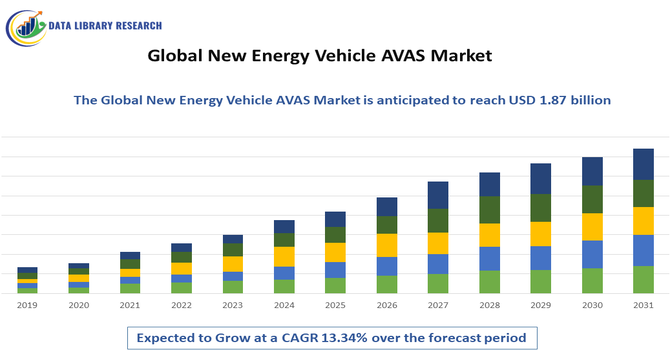
The Global New Energy Vehicle (NEV) Acoustic Vehicle Alerting System (AVAS) Market includes electronic sound systems designed to emit artificial noise for electric and hybrid vehicles at low speeds to alert pedestrians and cyclists. Because NEVs operate quietly, AVAS enhances safety by reducing collision risks, especially in urban and congested environments. Systems vary in sound type, volume control, and integration with vehicle electronics. Regulatory mandates in many countries require AVAS compliance for new electric and hybrid models.

New Energy Vehicle AVAS Market Latest Trends

The NEV AVAS market is being driven by rising global electric vehicle adoption and increasingly stringent safety regulations requiring audible alerts for pedestrian protection. Governments in North America, Europe, and Asia-Pacific have mandated AVAS installation at low speeds, prompting OEMs to integrate compliant systems in new models. Technological advancements, including customizable sound profiles, directional alerts, and integration with vehicle sensors, are shaping product innovation. Consumers and regulators are also pushing for enhanced sound design that balances safety with noise pollution concerns.

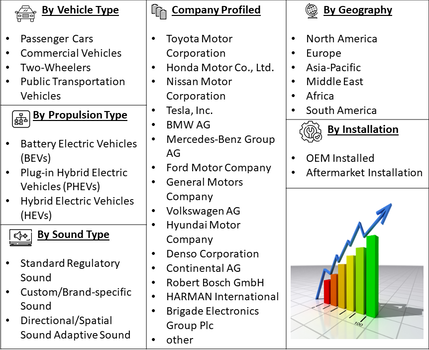
Segmentation: The Global New Energy Vehicle (NEV) Acoustic Vehicle Alerting System (AVAS) Market is segmented by Vehicle Type (Passenger Cars, Commercial Vehicles (Light Commercial Vehicles (LCVs) and Heavy Commercial Vehicles (HCVs)), Two-Wheelers and Public Transportation Vehicles), Propulsion Type (Battery Electric Vehicles (BEVs), Plug-in Hybrid Electric Vehicles (PHEVs), Hybrid Electric Vehicles (HEVs) and Fuel Cell Electric Vehicles (FCEVs)), AVAS Type (Internal Speaker-Based AVAS, External Speaker-Based AVAS, Integrated AVAS (Vehicle’s existing audio system) and Stand-alone AVAS Modules), Sound Type (Standard Regulatory Sound, Custom/Brand-specific Sound, Directional/Spatial Sound and Adaptive Sound (Speed & Environment-based)), Installation (OEM Installed and Aftermarket Installation), and Geography (North America, Europe, Asia-Pacific, Middle East and Africa, and South America). The report provides the value (in USD million) for the above segments.
Market Drivers:

  • Stringent Global Safety Regulations

The main drivers of the NEV AVAS market is the growing number of global regulations mandating pedestrian alert systems for electric and hybrid vehicles. Since NEVs operate quietly at low speeds, governments in Europe, North America, and Asia have introduced rules requiring artificial noise to protect pedestrians and cyclists. Automakers must comply with these standards, leading to widespread AVAS adoption across new vehicle models. Regulatory enforcement has accelerated integration of AVAS into production lines, creating steady demand for compliant systems and supporting market expansion as NEV sales continue to rise worldwide.

  • Rising Electric Vehicle Adoption

The rapid growth of electric and hybrid vehicle adoption is a major driver for the NEV AVAS market. As more consumers switch to NEVs for environmental and economic reasons, the demand for safety technologies that address quiet operation increases. AVAS is essential for pedestrian safety, especially in urban and high-foot-traffic areas.

In July 2024, Stellantis’ rapid expansion of hybrid models and eDCT technology in Europe supported rising electric vehicle adoption by offering more accessible electrified options. This growth also strengthened the global NEV AVAS market, as increased hybrid vehicle production drove demand for pedestrian alert systems to meet safety regulations, accelerating AVAS integration across a broader range of electrified vehicle platforms worldwide. The expansion of public charging infrastructure, government incentives, and declining battery costs are accelerating NEV sales, thereby boosting the need for AVAS integration across various vehicle types, including passenger cars, commercial vehicles, and public transport fleets.

Market Restraints

  • Consumer Noise Pollution Concerns

A key restraint for the NEV AVAS market is the growing concern over noise pollution and public acceptance of artificial vehicle sounds. While AVAS enhances safety, some consumers and urban residents oppose loud or intrusive alerts, especially in quiet residential areas. Poorly designed or overly loud AVAS systems can lead to complaints and regulatory pushback, forcing manufacturers to balance safety with acceptable sound levels. Additionally, variability in sound standards across regions can complicate product development and increase costs. These challenges can slow market growth as companies work to develop effective yet socially acceptable AVAS solutions.

Socioeconomic Impact on New Energy Vehicle AVAS Market

NEV AVAS adoption enhances public safety by reducing pedestrian and cyclist accidents in urban areas where electric vehicles operate quietly. This contributes to safer mobility environments and encourages broader electric vehicle acceptance. The market also supports job creation in manufacturing, software development, and vehicle integration services. As AVAS becomes standard in electric and hybrid vehicles, it fosters innovation in audio engineering and sensor technologies. Compliance with safety standards also reduces litigation risks for automakers and can lower societal costs from traffic injuries. Moreover, by addressing safety without increasing harmful emissions, AVAS supports sustainable urban transport and public health objectives in growing metropolitan regions.

Segmental Analysis:

  • Heavy Commercial Vehicles (HCVs) segment is expected to witness highest growth over the forecast period

The Heavy Commercial Vehicles (HCVs) segment is expected to witness the highest growth over the forecast period due to increasing adoption of electric trucks and buses for logistics and public transport. As commercial fleets expand in urban areas, safety concerns for pedestrians and cyclists have become more prominent, driving demand for AVAS solutions. HCVs also face stricter safety regulations and higher compliance pressure, encouraging OEMs to integrate AVAS systems during manufacturing. Additionally, fleet operators prioritize reliable and durable AVAS units that can withstand heavy usage, boosting growth in the HCV segment as electrification accelerates in the commercial sector.

  • Plug-in Hybrid Electric Vehicles (PHEVs) segment is expected to witness highest growth over the forecast period

The Plug-in Hybrid Electric Vehicles (PHEVs) segment is expected to witness the highest growth over the forecast period as PHEVs continue to gain popularity among consumers seeking a balance between electric driving and longer range. Since PHEVs operate quietly in electric mode, AVAS systems are essential for pedestrian safety, especially in city driving conditions. Growing government incentives and stricter emission norms are encouraging PHEV adoption, which in turn increases AVAS demand. Automakers are increasingly integrating AVAS in PHEV models to meet regulatory requirements and enhance safety, supporting strong growth in this segment.

  • Integrated AVAS (Vehicle’s existing audio system) segment is expected to witness highest growth over the forecast period

The integrated AVAS segment is expected to witness the highest growth over the forecast period due to its cost-efficiency and seamless integration with existing vehicle systems. Automakers are increasingly adopting integrated AVAS solutions that utilize the vehicle’s existing audio components, reducing the need for additional hardware and simplifying installation. This approach also allows for better control and customization of sound profiles through the vehicle’s software. As OEMs seek scalable, affordable solutions to meet global regulations, integrated AVAS systems offer a practical option that supports efficient manufacturing and maintenance, driving strong adoption across passenger and commercial NEVs.

  • Standard Regulatory Sound segment is expected to witness highest growth over the forecast period

The standard regulatory sound segment is expected to witness the highest growth over the forecast period as most countries mandate specific AVAS sound requirements for pedestrian safety. Standardized sound profiles ensure consistent alerting performance and simplify compliance for automakers across regions. These sounds are typically designed to be easily recognizable and effective at low speeds without causing excessive noise pollution. As NEV production increases, manufacturers prioritize regulatory-compliant AVAS systems to avoid penalties and meet safety standards. The demand for standard sound solutions remains strong, especially for mass-market vehicles and fleets, driving growth in this segment.

  • Aftermarket Installation segment is expected to witness highest growth over the forecast period

The aftermarket installation segment is expected to witness the highest growth over the forecast period due to rising retrofitting demand for existing NEVs and hybrid vehicles. As regulatory standards evolve, many older electric and hybrid models require AVAS upgrades to remain compliant. Fleet operators and individual vehicle owners are increasingly opting for aftermarket solutions to enhance safety without replacing vehicles. Additionally, the growth of used NEV markets and conversion of traditional vehicles to electric powertrains is boosting aftermarket AVAS demand. With more affordable and customizable retrofit options available, the aftermarket segment is poised for strong growth.

  • Asia-Pacific Region is expected to witness highest growth over the forecast period

The Asia-Pacific region is expected to witness the highest growth over the forecast period due to rapid electric vehicle adoption and expanding urbanization. Countries such as China, India, Japan, and South Korea are investing heavily in NEV infrastructure and offering incentives to accelerate electrification. For instance, in 2026, Mitsubishi Motors’ production of the Navara for Oceania and the Rogue Plug-in Hybrid for North America strengthened Asia-Pacific’s NEV AVAS market by accelerating electrified vehicle manufacturing and cross-border OEM collaboration. The Alliance’s expanded EV and PHEV lineup increased demand for AVAS integration in regional vehicles, supporting broader adoption of pedestrian safety systems across Asia-Pacific’s growing electric mobility sector.

Increasing awareness of pedestrian safety in densely populated cities is driving regulatory adoption of AVAS systems. The region’s growing manufacturing capabilities and strong presence of automotive OEMs and suppliers also support rapid AVAS integration. As NEV sales surge and regulations tighten, Asia-Pacific is expected to lead growth in the global AVAS market.

New Energy Vehicle AVAS Market Competitive Landscape

The NEV AVAS market features established automotive suppliers, specialized audio technology firms, and emerging sound design innovators competing for partnerships with electric vehicle manufacturers. Key players differentiate through advanced sound synthesis, regulatory compliance expertise, and integration capabilities with vehicle electronic systems. Competition also revolves around customization options, system reliability, and cost-effectiveness. Collaborations between OEMs and tech providers are common, as automakers seek scalable AVAS solutions for diverse vehicle platforms. Geographic expansion and local regulatory knowledge are strategic assets, especially in regions with evolving safety standards.

The major players for above market are:

  • Toyota Motor Corporation
  • Honda Motor Co., Ltd.
  • Nissan Motor Corporation
  • Tesla, Inc.
  • BMW AG
  • Mercedes-Benz Group AG
  • Ford Motor Company
  • General Motors Company
  • Volkswagen AG
  • Hyundai Motor Company
  • Denso Corporation
  • Continental AG
  • Robert Bosch GmbH
  • HARMAN International
  • Brigade Electronics Group Plc
  • Delphi Technologies (BorgWarner Inc.)
  • HELLA GmbH & Co. KGaA
  • Valeo S.A.
  • Mando Corporation

Recent Development

  • In January 2026, Sensata Technologies launched its STEV high-voltage contactor series to support evolving electric vehicle demands. The contactors combined efficiency, safety, and integration capabilities, addressing key challenges in BEV and PHEV platforms. They enabled safer and more reliable operation, helping OEMs meet high standards for performance and protection in electrified mobility.


  • In 2025, Harbinger unveiled a first-of-its-kind series hybrid medium-duty vehicle for fleets, combining an electric powertrain with a gas-powered range extender. The design allowed the battery to be charged on the go, enabling an estimated 500-mile range between charges. The model opened for customer pre-orders, with commercial deliveries planned to begin in 2026.


Frequently Asked Questions (FAQ) :

Q1. What are the main growth-driving factors for this market?

Strict government regulations mandating sound emitters for quiet electric vehicles primarily drive this market. As EV adoption surges globally, safety concerns for pedestrians and the visually impaired necessitate AVAS technology. Additionally, automotive manufacturers are leveraging sound branding to differentiate their electric models, creating unique auditory identities for high-end consumer vehicles.

Q2. What are the main restraining factors for this market?

High implementation costs for advanced, multi-directional sound systems act as a significant restraint. Manufacturers face challenges in balancing external noise pollution with safety requirements. Furthermore, a lack of global standardization regarding specific sound frequencies and decibel levels creates complexity for suppliers. Technical issues like electromagnetic interference can also complicate the integration process.

Q3. Which segment is expected to witness high growth?

The passenger car segment is expected to witness the highest growth. This is fueled by the massive global shift toward private electric vehicle ownership and increasingly stringent urban safety laws. Within this, the high-fidelity sound segment is expanding rapidly as premium brands invest in customizable acoustic signatures to enhance user experience.

Q4. Who are the top major players for this market?

The market is dominated by global Tier-1 automotive suppliers including Bosch, Denso Corporation, Continental AG, and HARMAN International. Other key players include Brigade Electronics, Hella GmbH, and Kendrion. These companies focus on developing smart acoustic solutions that integrate with vehicle sensors to adjust sound volume based on speed and environment.

Q5. Which country is the largest player?

China is the largest player in the AVAS market due to its position as the world's leading producer and consumer of electric vehicles. Strong government subsidies and early implementation of domestic safety standards for "quiet vehicles" have allowed Chinese manufacturers to scale production and lead in technological deployment for EVs.

New Energy Vehicle AVAS MARKET STUDY GLOBAL MARKET ANALYSIS, INSIGHTS AND FORECAST, 2022-2029

    1. Introduction

    • 1.1. Research Scope
    • 1.2. Market Segmentation
    • 1.3. Research Methodology
    • 1.4. Definitions and Assumptions

    2. Executive Summary

      3. Market Dynamics

      • 3.1. Market Drivers
      • 3.2. Market Restraints
      • 3.3. Market Opportunities

      4. Key Insights

      • 4.1. Key Emerging Trends – For Major Countries
      • 4.2. Latest Technological Advancement
      • 4.3. Regulatory Landscape
      • 4.4. Industry SWOT Analysis
      • 4.5. Porters Five Forces Analysis

      5. Global New Energy Vehicle AVAS Market Analysis (USD Billion), Insights and Forecast, 2018-2029

      • 5.1. Key Findings / Summary
      • 5.2. Market Analysis, Insights and Forecast – By Segment 1
        • 5.2.1. Sub-Segment 1
        • 5.2.2. Sub-Segment 2
      • 5.3. Market Analysis, Insights and Forecast – By Segment 2
        • 5.3.1. Sub-Segment 1
        • 5.3.2. Sub-Segment 2
        • 5.3.3. Sub-Segment 3
        • 5.3.4. Others
      • 5.4. Market Analysis, Insights and Forecast – By Segment 3
        • 5.4.1. Sub-Segment 1
        • 5.4.2. Sub-Segment 2
        • 5.4.3. Sub-Segment 3
        • 5.4.4. Others
      • 5.5. Market Analysis, Insights and Forecast – By Region
        • 5.5.1. North America
        • 5.5.2. Latin America
        • 5.5.3. Europe
        • 5.5.4. Asia Pacific
        • 5.5.5. Middle East and Africa

      6. North America New Energy Vehicle AVAS Market Analysis (USD Billion), Insights and Forecast, 2018-2029

      • 6.1. Key Findings / Summary
      • 6.2. Market Analysis, Insights and Forecast – By Segment 1
        • 6.2.1. Sub-Segment 1
        • 6.2.2. Sub-Segment 2
      • 6.3. Market Analysis, Insights and Forecast – By Segment 2
        • 6.3.1. Sub-Segment 1
        • 6.3.2. Sub-Segment 2
        • 6.3.3. Sub-Segment 3
        • 6.3.4. Others
      • 6.4. Market Analysis, Insights and Forecast – By Segment 3
        • 6.4.1. Sub-Segment 1
        • 6.4.2. Sub-Segment 2
        • 6.4.3. Sub-Segment 3
        • 6.4.4. Others
      • 6.5. Market Analysis, Insights and Forecast – By Country
        • 6.5.1. U.S.
        • 6.5.2. Canada

      7. Latin America New Energy Vehicle AVAS Market Analysis (USD Billion), Insights and Forecast, 2018-2029

      • 7.1. Key Findings / Summary
      • 7.2. Market Analysis, Insights and Forecast – By Segment 1
        • 7.2.1. Sub-Segment 1
        • 7.2.2. Sub-Segment 2
      • 7.3. Market Analysis, Insights and Forecast – By Segment 2
        • 7.3.1. Sub-Segment 1
        • 7.3.2. Sub-Segment 2
        • 7.3.3. Sub-Segment 3
        • 7.3.4. Others
      • 7.4. Market Analysis, Insights and Forecast – By Segment 3
        • 7.4.1. Sub-Segment 1
        • 7.4.2. Sub-Segment 2
        • 7.4.3. Sub-Segment 3
        • 7.4.4. Others
      • 7.5. Insights and Forecast – By Country
        • 7.5.1. Brazil
        • 7.5.2. Mexico
        • 7.5.3. Rest of Latin America

      8. Europe New Energy Vehicle AVAS Market Analysis (USD Billion), Insights and Forecast, 2018-2029

      • 8.1. Key Findings / Summary
      • 8.2. Market Analysis, Insights and Forecast – By Segment 1
        • 8.2.1. Sub-Segment 1
        • 8.2.2. Sub-Segment 2
      • 8.3. Market Analysis, Insights and Forecast – By Segment 2
        • 8.3.1. Sub-Segment 1
        • 8.3.2. Sub-Segment 2
        • 8.3.3. Sub-Segment 3
        • 8.3.4. Others
      • 8.4. Market Analysis, Insights and Forecast – By Segment 3
        • 8.4.1. Sub-Segment 1
        • 8.4.2. Sub-Segment 2
        • 8.4.3. Sub-Segment 3
        • 8.4.4. Others
      • 8.5. Market Analysis, Insights and Forecast – By Country
        • 8.5.1. UK
        • 8.5.2. Germany
        • 8.5.3. France
        • 8.5.4. Italy
        • 8.5.5. Spain
        • 8.5.6. Russia
        • 8.5.7. Rest of Europe

      9. Asia Pacific New Energy Vehicle AVAS Market Analysis (USD Billion), Insights and Forecast, 2018-2029

      • 9.1. Key Findings / Summary
      • 9.2. Market Analysis, Insights and Forecast – By Segment 1
        • 9.2.1. Sub-Segment 1
        • 9.2.2. Sub-Segment 2
      • 9.3. Market Analysis, Insights and Forecast – By Segment 2
        • 9.3.1. Sub-Segment 1
        • 9.3.2. Sub-Segment 2
        • 9.3.3. Sub-Segment 3
        • 9.3.4. Others
      • 9.4. Market Analysis, Insights and Forecast – By Segment 3
        • 9.4.1. Sub-Segment 1
        • 9.4.2. Sub-Segment 2
        • 9.4.3. Sub-Segment 3
        • 9.4.4. Others
      • 9.5. Market Analysis, Insights and Forecast – By Country
        • 9.5.1. China
        • 9.5.2. India
        • 9.5.3. Japan
        • 9.5.4. Australia
        • 9.5.5. South East Asia
        • 9.5.6. Rest of Asia Pacific

      10. Middle East & Africa New Energy Vehicle AVAS Market Analysis (USD Billion), Insights and Forecast, 2018-2029

      • 10.1. Key Findings / Summary
      • 10.2. Market Analysis, Insights and Forecast – By Segment 1
        • 10.2.1. Sub-Segment 1
        • 10.2.2. Sub-Segment 2
      • 10.3. Market Analysis, Insights and Forecast – By Segment 2
        • 10.3.1. Sub-Segment 1
        • 10.3.2. Sub-Segment 2
        • 10.3.3. Sub-Segment 3
        • 10.3.4. Others
      • 10.4. Market Analysis, Insights and Forecast – By Segment 3
        • 10.4.1. Sub-Segment 1
        • 10.4.2. Sub-Segment 2
        • 10.4.3. Sub-Segment 3
        • 10.4.4. Others
      • 10.5. Market Analysis, Insights and Forecast – By Country
        • 10.5.1. GCC
        • 10.5.2. South Africa
        • 10.5.3. Rest of Middle East & Africa

      11. Competitive Analysis

      • 11.1. Company Market Share Analysis, 2018
      • 11.2. Key Industry Developments
      • 11.3. Company Profile
        • 11.3.1. Company 1
          • 11.3.1.1. Business Overview
          • 11.3.1.2. Segment 1 & Service Offering
          • 11.3.1.3. Overall Revenue
          • 11.3.1.4. Geographic Presence
          • 11.3.1.5. Recent Development
        *Similar details will be provided for the following companies
        • 11.3.2. Company 2
        • 11.3.3. Company 3
        • 11.3.4. Company 4
        • 11.3.5. Company 5
        • 11.3.6. Company 6
        • 11.3.7. Company 7
        • 11.3.8. Company 8
        • 11.3.9. Company 9
        • 11.3.10. Company 10
        • 11.3.11. Company 11
        • 11.3.12. Company 12
      List of Figures

      Figure 1: Global New Energy Vehicle AVAS Market Revenue Breakdown (USD Billion, %) by Region, 2022 & 2029
      Figure 2: Global New Energy Vehicle AVAS Market Value Share (%), By Segment 1, 2022 & 2029
      Figure 3: Global New Energy Vehicle AVAS Market Forecast (USD Billion), by Sub-Segment 1, 2018-2029
      Figure 4: Global New Energy Vehicle AVAS Market Forecast (USD Billion), by Sub-Segment 2, 2018-2029
      Figure 5: Global New Energy Vehicle AVAS Market Value Share (%), By Segment 2, 2022 & 2029
      Figure 6: Global New Energy Vehicle AVAS Market Forecast (USD Billion), by Sub-Segment 1, 2018-2029
      Figure 7: Global New Energy Vehicle AVAS Market Forecast (USD Billion), by Sub-Segment 2, 2018-2029
      Figure 8: Global New Energy Vehicle AVAS Market Forecast (USD Billion), by Sub-Segment 3, 2018-2029
      Figure 9: Global New Energy Vehicle AVAS Market Forecast (USD Billion), by Others, 2018-2029
      Figure 10: Global New Energy Vehicle AVAS Market Value Share (%), By Segment 3, 2022 & 2029
      Figure 11: Global New Energy Vehicle AVAS Market Forecast (USD Billion), by Sub-Segment 1, 2018-2029
      Figure 12: Global New Energy Vehicle AVAS Market Forecast (USD Billion), by Sub-Segment 2, 2018-2029
      Figure 13: Global New Energy Vehicle AVAS Market Forecast (USD Billion), by Sub-Segment 3, 2018-2029
      Figure 14: Global New Energy Vehicle AVAS Market Forecast (USD Billion), by Others, 2018-2029
      Figure 15: Global New Energy Vehicle AVAS Market Value (USD Billion), by Region, 2022 & 2029
      Figure 16: North America New Energy Vehicle AVAS Market Value Share (%), By Segment 1, 2022 & 2029
      Figure 17: North America New Energy Vehicle AVAS Market Forecast (USD Billion), by Sub-Segment 1, 2018-2029
      Figure 18: North America New Energy Vehicle AVAS Market Forecast (USD Billion), by Sub-Segment 2, 2018-2029
      Figure 19: North America New Energy Vehicle AVAS Market Value Share (%), By Segment 2, 2022 & 2029
      Figure 20: North America New Energy Vehicle AVAS Market Forecast (USD Billion), by Sub-Segment 1, 2018-2029
      Figure 21: North America New Energy Vehicle AVAS Market Forecast (USD Billion), by Sub-Segment 2, 2018-2029
      Figure 22: North America New Energy Vehicle AVAS Market Forecast (USD Billion), by Sub-Segment 3, 2018-2029
      Figure 23: North America New Energy Vehicle AVAS Market Forecast (USD Billion), by Others, 2018-2029
      Figure 24: North America New Energy Vehicle AVAS Market Value Share (%), By Segment 3, 2022 & 2029
      Figure 25: North America New Energy Vehicle AVAS Market Forecast (USD Billion), by Sub-Segment 1, 2018-2029
      Figure 26: North America New Energy Vehicle AVAS Market Forecast (USD Billion), by Sub-Segment 2, 2018-2029
      Figure 27: North America New Energy Vehicle AVAS Market Forecast (USD Billion), by Sub-Segment 3, 2018-2029
      Figure 28: North America New Energy Vehicle AVAS Market Forecast (USD Billion), by Others, 2018-2029
      Figure 29: North America New Energy Vehicle AVAS Market Forecast (USD Billion), by U.S., 2018-2029
      Figure 30: North America New Energy Vehicle AVAS Market Forecast (USD Billion), by Canada, 2018-2029
      Figure 31: Latin America New Energy Vehicle AVAS Market Value Share (%), By Segment 1, 2022 & 2029
      Figure 32: Latin America New Energy Vehicle AVAS Market Forecast (USD Billion), by Sub-Segment 1, 2018-2029
      Figure 33: Latin America New Energy Vehicle AVAS Market Forecast (USD Billion), by Sub-Segment 2, 2018-2029
      Figure 34: Latin America New Energy Vehicle AVAS Market Value Share (%), By Segment 2, 2022 & 2029
      Figure 35: Latin America New Energy Vehicle AVAS Market Forecast (USD Billion), by Sub-Segment 1, 2018-2029
      Figure 36: Latin America New Energy Vehicle AVAS Market Forecast (USD Billion), by Sub-Segment 2, 2018-2029
      Figure 37: Latin America New Energy Vehicle AVAS Market Forecast (USD Billion), by Sub-Segment 3, 2018-2029
      Figure 38: Latin America New Energy Vehicle AVAS Market Forecast (USD Billion), by Others, 2018-2029
      Figure 39: Latin America New Energy Vehicle AVAS Market Value Share (%), By Segment 3, 2022 & 2029
      Figure 40: Latin America New Energy Vehicle AVAS Market Forecast (USD Billion), by Sub-Segment 1, 2018-2029
      Figure 41: Latin America New Energy Vehicle AVAS Market Forecast (USD Billion), by Sub-Segment 2, 2018-2029
      Figure 42: Latin America New Energy Vehicle AVAS Market Forecast (USD Billion), by Sub-Segment 3, 2018-2029
      Figure 43: Latin America New Energy Vehicle AVAS Market Forecast (USD Billion), by Others, 2018-2029
      Figure 44: Latin America New Energy Vehicle AVAS Market Forecast (USD Billion), by Brazil, 2018-2029
      Figure 45: Latin America New Energy Vehicle AVAS Market Forecast (USD Billion), by Mexico, 2018-2029
      Figure 46: Latin America New Energy Vehicle AVAS Market Forecast (USD Billion), by Rest of Latin America, 2018-2029
      Figure 47: Europe New Energy Vehicle AVAS Market Value Share (%), By Segment 1, 2022 & 2029
      Figure 48: Europe New Energy Vehicle AVAS Market Forecast (USD Billion), by Sub-Segment 1, 2018-2029
      Figure 49: Europe New Energy Vehicle AVAS Market Forecast (USD Billion), by Sub-Segment 2, 2018-2029
      Figure 50: Europe New Energy Vehicle AVAS Market Value Share (%), By Segment 2, 2022 & 2029
      Figure 51: Europe New Energy Vehicle AVAS Market Forecast (USD Billion), by Sub-Segment 1, 2018-2029
      Figure 52: Europe New Energy Vehicle AVAS Market Forecast (USD Billion), by Sub-Segment 2, 2018-2029
      Figure 53: Europe New Energy Vehicle AVAS Market Forecast (USD Billion), by Sub-Segment 3, 2018-2029
      Figure 54: Europe New Energy Vehicle AVAS Market Forecast (USD Billion), by Others, 2018-2029
      Figure 55: Europe New Energy Vehicle AVAS Market Value Share (%), By Segment 3, 2022 & 2029
      Figure 56: Europe New Energy Vehicle AVAS Market Forecast (USD Billion), by Sub-Segment 1, 2018-2029
      Figure 57: Europe New Energy Vehicle AVAS Market Forecast (USD Billion), by Sub-Segment 2, 2018-2029
      Figure 58: Europe New Energy Vehicle AVAS Market Forecast (USD Billion), by Sub-Segment 3, 2018-2029
      Figure 59: Europe New Energy Vehicle AVAS Market Forecast (USD Billion), by Others, 2018-2029
      Figure 60: Europe New Energy Vehicle AVAS Market Forecast (USD Billion), by U.K., 2018-2029
      Figure 61: Europe New Energy Vehicle AVAS Market Forecast (USD Billion), by Germany, 2018-2029
      Figure 62: Europe New Energy Vehicle AVAS Market Forecast (USD Billion), by France, 2018-2029
      Figure 63: Europe New Energy Vehicle AVAS Market Forecast (USD Billion), by Italy, 2018-2029
      Figure 64: Europe New Energy Vehicle AVAS Market Forecast (USD Billion), by Spain, 2018-2029
      Figure 65: Europe New Energy Vehicle AVAS Market Forecast (USD Billion), by Russia, 2018-2029
      Figure 66: Europe New Energy Vehicle AVAS Market Forecast (USD Billion), by Rest of Europe, 2018-2029
      Figure 67: Asia Pacific New Energy Vehicle AVAS Market Value Share (%), By Segment 1, 2022 & 2029
      Figure 68: Asia Pacific New Energy Vehicle AVAS Market Forecast (USD Billion), by Sub-Segment 1, 2018-2029
      Figure 69: Asia Pacific New Energy Vehicle AVAS Market Forecast (USD Billion), by Sub-Segment 2, 2018-2029
      Figure 70: Asia Pacific New Energy Vehicle AVAS Market Value Share (%), By Segment 2, 2022 & 2029
      Figure 71: Asia Pacific New Energy Vehicle AVAS Market Forecast (USD Billion), by Sub-Segment 1, 2018-2029
      Figure 72: Asia Pacific New Energy Vehicle AVAS Market Forecast (USD Billion), by Sub-Segment 2, 2018-2029
      Figure 73: Asia Pacific New Energy Vehicle AVAS Market Forecast (USD Billion), by Sub-Segment 3, 2018-2029
      Figure 74: Asia Pacific New Energy Vehicle AVAS Market Forecast (USD Billion), by Others, 2018-2029
      Figure 75: Asia Pacific New Energy Vehicle AVAS Market Value Share (%), By Segment 3, 2022 & 2029
      Figure 76: Asia Pacific New Energy Vehicle AVAS Market Forecast (USD Billion), by Sub-Segment 1, 2018-2029
      Figure 77: Asia Pacific New Energy Vehicle AVAS Market Forecast (USD Billion), by Sub-Segment 2, 2018-2029
      Figure 78: Asia Pacific New Energy Vehicle AVAS Market Forecast (USD Billion), by Sub-Segment 3, 2018-2029
      Figure 79: Asia Pacific New Energy Vehicle AVAS Market Forecast (USD Billion), by Others, 2018-2029
      Figure 80: Asia Pacific New Energy Vehicle AVAS Market Forecast (USD Billion), by China, 2018-2029
      Figure 81: Asia Pacific New Energy Vehicle AVAS Market Forecast (USD Billion), by India, 2018-2029
      Figure 82: Asia Pacific New Energy Vehicle AVAS Market Forecast (USD Billion), by Japan, 2018-2029
      Figure 83: Asia Pacific New Energy Vehicle AVAS Market Forecast (USD Billion), by Australia, 2018-2029
      Figure 84: Asia Pacific New Energy Vehicle AVAS Market Forecast (USD Billion), by Southeast Asia, 2018-2029
      Figure 85: Asia Pacific New Energy Vehicle AVAS Market Forecast (USD Billion), by Rest of Asia Pacific, 2018-2029
      Figure 86: Middle East & Africa New Energy Vehicle AVAS Market Value Share (%), By Segment 1, 2022 & 2029
      Figure 87: Middle East & Africa New Energy Vehicle AVAS Market Forecast (USD Billion), by Sub-Segment 1, 2018-2029
      Figure 88: Middle East & Africa New Energy Vehicle AVAS Market Forecast (USD Billion), by Sub-Segment 2, 2018-2029
      Figure 89: Middle East & Africa New Energy Vehicle AVAS Market Value Share (%), By Segment 2, 2022 & 2029
      Figure 90: Middle East & Africa New Energy Vehicle AVAS Market Forecast (USD Billion), by Sub-Segment 1, 2018-2029
      Figure 91: Middle East & Africa New Energy Vehicle AVAS Market Forecast (USD Billion), by Sub-Segment 2, 2018-2029
      Figure 92: Middle East & Africa New Energy Vehicle AVAS Market Forecast (USD Billion), by Sub-Segment 3, 2018-2029
      Figure 93: Middle East & Africa New Energy Vehicle AVAS Market Forecast (USD Billion), by Others, 2018-2029
      Figure 94: Middle East & Africa New Energy Vehicle AVAS Market Value Share (%), By Segment 3, 2022 & 2029
      Figure 95: Middle East & Africa New Energy Vehicle AVAS Market Forecast (USD Billion), by Sub-Segment 1, 2018-2029
      Figure 96: Middle East & Africa New Energy Vehicle AVAS Market Forecast (USD Billion), by Sub-Segment 2, 2018-2029
      Figure 97: Middle East & Africa New Energy Vehicle AVAS Market Forecast (USD Billion), by Sub-Segment 3, 2018-2029
      Figure 98: Middle East & Africa New Energy Vehicle AVAS Market Forecast (USD Billion), by Others, 2018-2029
      Figure 99: Middle East & Africa New Energy Vehicle AVAS Market Forecast (USD Billion), by GCC, 2018-2029
      Figure 100: Middle East & Africa New Energy Vehicle AVAS Market Forecast (USD Billion), by South Africa, 2018-2029
      Figure 101: Middle East & Africa New Energy Vehicle AVAS Market Forecast (USD Billion), by Rest of Middle East & Africa, 2018-2029 
      List of Tables
      Table 1: Global New Energy Vehicle AVAS Market Revenue (USD Billion) Forecast, by Segment 1, 2018-2029
      Table 2: Global New Energy Vehicle AVAS Market Revenue (USD Billion) Forecast, by Segment 2, 2018-2029
      Table 3: Global New Energy Vehicle AVAS Market Revenue (USD Billion) Forecast, by Segment 3, 2018-2029
      Table 4: Global New Energy Vehicle AVAS Market Revenue (USD Billion) Forecast, by Region, 2018-2029
      Table 5: North America New Energy Vehicle AVAS Market Revenue (USD Billion) Forecast, by Segment 1, 2018-2029
      Table 6: North America New Energy Vehicle AVAS Market Revenue (USD Billion) Forecast, by Segment 2, 2018-2029
      Table 7: North America New Energy Vehicle AVAS Market Revenue (USD Billion) Forecast, by Segment 3, 2018-2029
      Table 8: North America New Energy Vehicle AVAS Market Revenue (USD Billion) Forecast, by Country, 2018-2029
      Table 9: Europe New Energy Vehicle AVAS Market Revenue (USD Billion) Forecast, by Segment 1, 2018-2029
      Table 10: Europe New Energy Vehicle AVAS Market Revenue (USD Billion) Forecast, by Segment 2, 2018-2029
      Table 11: Europe New Energy Vehicle AVAS Market Revenue (USD Billion) Forecast, by Segment 3, 2018-2029
      Table 12: Europe New Energy Vehicle AVAS Market Revenue (USD Billion) Forecast, by Country, 2018-2029
      Table 13: Latin America New Energy Vehicle AVAS Market Revenue (USD Billion) Forecast, by Segment 1, 2018-2029
      Table 14: Latin America New Energy Vehicle AVAS Market Revenue (USD Billion) Forecast, by Segment 2, 2018-2029
      Table 15: Latin America New Energy Vehicle AVAS Market Revenue (USD Billion) Forecast, by Segment 3, 2018-2029
      Table 16: Latin America New Energy Vehicle AVAS Market Revenue (USD Billion) Forecast, by Country, 2018-2029
      Table 17: Asia Pacific New Energy Vehicle AVAS Market Revenue (USD Billion) Forecast, by Segment 1, 2018-2029
      Table 18: Asia Pacific New Energy Vehicle AVAS Market Revenue (USD Billion) Forecast, by Segment 2, 2018-2029
      Table 19: Asia Pacific New Energy Vehicle AVAS Market Revenue (USD Billion) Forecast, by Segment 3, 2018-2029
      Table 20: Asia Pacific New Energy Vehicle AVAS Market Revenue (USD Billion) Forecast, by Country, 2018-2029
      Table 21: Middle East & Africa New Energy Vehicle AVAS Market Revenue (USD Billion) Forecast, by Segment 1, 2018-2029
      Table 22: Middle East & Africa New Energy Vehicle AVAS Market Revenue (USD Billion) Forecast, by Segment 2, 2018-2029
      Table 23: Middle East & Africa New Energy Vehicle AVAS Market Revenue (USD Billion) Forecast, by Segment 3, 2018-2029
      Table 24: Middle East & Africa New Energy Vehicle AVAS Market Revenue (USD Billion) Forecast, by Country, 2018-2029
      Research Process

      Data Library Research are conducted by industry experts who offer insight on industry structure, market segmentations technology assessment and competitive landscape (CL), and penetration, as well as on emerging trends. Their analysis is based on primary interviews (~ 80%) and secondary research (~ 20%) as well as years of professional expertise in their respective industries. Adding to this, by analysing historical trends and current market positions, our analysts predict where the market will be headed for the next five years. Furthermore, the varying trends of segment & categories geographically presented are also studied and the estimated based on the primary & secondary research.

      In this particular report from the supply side Data Library Research has conducted primary surveys (interviews) with the key level executives (VP, CEO’s, Marketing Director, Business Development Manager and SOFT) of the companies that active & prominent as well as the midsized organization

      FIGURE 1: DLR RESEARH PROCESS

      research-methodology1

      Primary Research

      Extensive primary research was conducted to gain a deeper insight of the market and industry performance. The analysis is based on both primary and secondary research as well as years of professional expertise in the respective industries.

      In addition to analysing current and historical trends, our analysts predict where the market is headed over the next five years.

      It varies by segment for these categories geographically presented in the list of market tables. Speaking about this particular report we have conducted primary surveys (interviews) with the key level executives (VP, CEO’s, Marketing Director, Business Development Manager and many more) of the major players active in the market.

      Secondary Research

      Secondary research was mainly used to collect and identify information useful for the extensive, technical, market-oriented, and Friend’s study of the Global Extra Neutral Alcohol. It was also used to obtain key information about major players, market classification and segmentation according to the industry trends, geographical markets, and developments related to the market and technology perspectives. For this study, analysts have gathered information from various credible sources, such as annual reports, sec filings, journals, white papers, SOFT presentations, and company web sites.

      Market Size Estimation

      Both, top-down and bottom-up approaches were used to estimate and validate the size of the Global market and to estimate the size of various other dependent submarkets in the overall Extra Neutral Alcohol. The key players in the market were identified through secondary research and their market contributions in the respective geographies were determined through primary and secondary research.

      Forecast Model

      research-methodology2