
Get Complete Analysis Of The Report - Download Updated Free Sample PDF
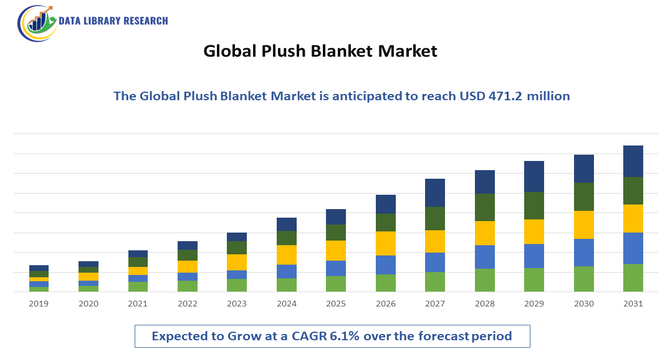
The Global Plush Blanket Market refers to the worldwide industry involved in the production, distribution, and sale of soft, thick, and luxurious blankets made primarily from plush materials such as polyester, microfiber, and fleece. Driven by consumer demand for comfort, home décor trends, and gift purchases, the market encompasses manufacturers, retailers, and e-commerce platforms. Key factors influencing growth include rising disposable incomes, seasonal demand, and innovations in design and sustainability. Competitive dynamics involve brand positioning, pricing strategies, and geographic expansion.
The global plush blanket market has been on a steady growth trajectory, driven by rising consumer preference for premium, soft, and decorative home textiles that enhance comfort and aesthetics. Demand is expanding across residential and commercial segments, with e-commerce platforms facilitating wider accessibility and variety, including customizable and themed offerings. Luxury and eco-friendly materials such as recycled polyester, bamboo fiber, and organic cotton are gaining traction as sustainability becomes a priority for buyers. Technological advances in fabric manufacturing have improved softness, durability, and functional properties like hypoallergenic finishes, further fueling market appeal.
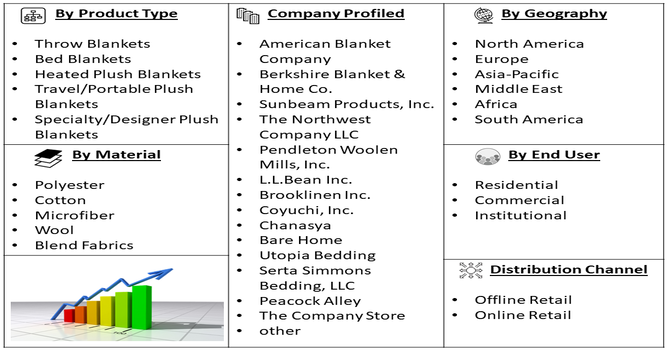
Segmentation: The Global Plush Blanket Market is segmented by Product Type (Throw Blankets, Bed Blankets, Heated Plush Blankets, Travel/Portable Plush Blankets and Specialty/Designer Plush Blankets), Material (Polyester, Cotton, Microfiber, Wool, Blend Fabrics (e.g., polyester-cotton) and Eco-friendly/Biodegradable Materials), End User (Residential, Commercial (Hotels, Resorts, Hospitals, etc.) and Institutional (Schools, Dormitories)), Distribution Channel (Offline Retail and Online Retail), and Geography (North America, Europe, Asia-Pacific, Middle East and Africa, and South America). The report provides the value (in USD million) for the above segments.
For Detailed Market Segmentation - Get a Free Sample PDF
Market Drivers:
Consumer preferences are shifting toward premium home textiles that offer both comfort and aesthetic appeal, driving strong demand for plush blankets. Urbanization and changing lifestyles have increased the focus on cozy living spaces, while the rise of work-from-home culture has boosted spending on home décor and comfort products. Plush blankets, known for their softness and warmth, are increasingly seen as essential household items rather than seasonal luxury purchases. The growing trend of gifting high-quality blankets during festivals and special occasions also supports market growth, especially in regions with rising disposable incomes and evolving consumer tastes.
The rapid growth of e-commerce has significantly expanded market reach for plush blankets, enabling brands to sell directly to consumers worldwide. Online marketplaces offer wide product variety, competitive pricing, and convenient home delivery, making it easier for consumers to compare and purchase plush blankets. Social media and influencer marketing further boost visibility and demand, especially among younger demographics. Additionally, improved logistics and global shipping have allowed regional manufacturers to enter new markets without heavy investment in physical retail. This expansion of distribution channels has accelerated market penetration and supported consistent growth across both developed and emerging economies.
Market Restraints:
Despite growing demand, the plush blanket market faces challenges related to sustainability and environmental impact. Many plush blankets are made from synthetic fibers such as polyester, which rely on fossil fuels and contribute to microplastic pollution when washed. Increasing consumer awareness about eco-friendly products is pressuring manufacturers to shift toward sustainable materials and production methods, which can raise costs and affect profit margins. Moreover, strict regulations on waste management and textile recycling in several regions add compliance complexity. As a result, some consumers may opt for natural or certified eco-products, potentially limiting demand for traditional plush blankets made from non-sustainable materials.
The plush blanket market reflects broader socioeconomic shifts including rising disposable incomes, urbanization, and lifestyle changes emphasizing home comfort and wellness. As middle classes expand in Asia Pacific, Latin America, and other emerging economies, consumers are spending more on quality home products, supporting demand for premium textiles. Growth in hospitality, vacation rentals, and real estate development also increases blanket consumption. The market’s expansion contributes to job creation across textile manufacturing, design, logistics, and online retail sectors. Meanwhile, environmental awareness is prompting investments in sustainable materials and production, aligning with global goals to reduce waste and carbon footprints.
Segmental Analysis:
Heated plush blankets are expected to record the fastest growth due to rising consumer focus on comfort, wellness, and energy-efficient heating solutions. As electricity prices fluctuate, many households prefer heated blankets as a cost-effective alternative to central heating during cold seasons. Advancements in safety features such as auto shut-off, overheating protection, and low-voltage technology have increased consumer trust. Additionally, the growing elderly population and increased awareness of therapeutic benefits—such as improved circulation and pain relief—are boosting demand. Expansion in smart home integration and remote control functions is also attracting tech-savvy buyers, supporting rapid segment growth.
Blend fabrics like polyester-cotton are expected to grow fastest due to their balanced combination of comfort, durability, and affordability. Polyester improves strength, wrinkle resistance, and color retention, while cotton enhances breathability and softness, making blends ideal for year-round use. Manufacturers are increasingly adopting these fabrics to meet consumer demand for low-maintenance yet premium-feel blankets. Blend textiles also support mass production at lower costs, enabling competitive pricing without compromising quality. As consumers seek practical and long-lasting home textiles, polyester-cotton blends are becoming a preferred choice, especially in emerging markets where value and performance drive purchasing decisions.
Online retail is poised for the highest growth due to the continued expansion of e-commerce platforms and increasing consumer preference for digital shopping. Plush blankets are frequently purchased online because of easy access to diverse designs, customer reviews, and competitive pricing. Brands are leveraging social media marketing, influencer collaborations, and targeted ads to boost visibility and drive sales. Enhanced logistics, faster delivery, and improved return policies are increasing consumer confidence in online purchases. Moreover, rising smartphone penetration and digital payment adoption in developing regions are expanding the customer base. As retail continues shifting online, plush blanket sales via e-commerce are expected to surge significantly.
The commercial segment, including hotels, resorts, hospitals, and hospitality services, is expected to witness the highest growth due to expanding travel and tourism activities globally. Increasing investments in luxury and boutique accommodations are driving demand for high-quality, durable, and aesthetically pleasing plush blankets. Hospitality operators seek products that offer both comfort and easy maintenance, leading to bulk purchases and long-term vendor partnerships. The growth of healthcare facilities and senior living centers also boosts demand for warm, hypoallergenic, and easy-to-clean blankets. As service sectors recover and expand post-pandemic, the commercial segment is projected to remain a key growth driver for the plush blanket market.
Asia-Pacific is expected to witness the fastest growth owing to rising disposable incomes, urbanization, and increasing home décor spending in countries such as China, India, and Southeast Asian nations. Growing middle-class populations are increasingly prioritizing comfort and lifestyle upgrades, which drives demand for premium home textiles, including plush blankets. Also, consumers increasingly sought premium and branded products, while rising temperatures in some areas drove demand for lightweight yet luxurious blankets. Strong investments in textile technology and local sourcing helped reduce costs and improve quality.
Furthermore, the expansion of modern retail and e-commerce platforms is improving product availability across urban and semi-urban areas. Additionally, rapid growth in the hospitality sector and tourism in the region is boosting commercial demand. As manufacturers expand production capabilities and invest in local distribution,the Asia-Pacific is poised to lead market growth during the forecast period.
| Report Matrics | Details |
| Market Size Value | USD 471.2 million |
| Growth Rate | CAGR of 6.1% |
| Forecast | 2026-2033 |
| Historical data | 2021-2024 |
| Base Year | 2025 |
| Report Coverage | Forecasted revenue, company rating, competitive environment, growth drivers, and trends |
| Segment Coverage | Type, Application, End-User, Geography |
| Regional Scope | North America, Europe, Asia Pacific, Middle East |
| Customized scope | Free customization of reports (With 3 months Analysis Support ) |
| To Learn More About This Report | Request a Free Sample Copy |
Competition in the global plush blanket market is robust and fragmented, with numerous international and regional players vying for market share through product innovation, branding, and distribution strategies. Key industry participants include established home textile manufacturers and retailers such as American Blanket Company, Berkshire Blanket & Home Co., FleecePro, Shannon Fabrics, and The Home Depot, among others, offering a diverse range of plush products. Firms are investing in digital marketing, social media engagement, and e-commerce expansion to reach digitally savvy consumers. Price competition from low-cost producers, especially in Asia, continues to shape competitive dynamics, pushing brands to differentiate through quality, sustainable materials, and unique designs.
The major players for above market are:
Recent Development
Q1. What are the main growth-driving factors for this market?
The market is primarily driven by the rising demand for premium home textiles and the growing "cocooning" trend, where consumers invest in home comfort. Increased urbanization, rising disposable incomes, and the expansion of e-commerce platforms have made diverse, high-quality plush products more accessible. Seasonal demand during winters further accelerates global sales.
Q2. What are the main restraining factors for this market?
Growth is hampered by the volatile prices of raw materials, such as polyester and synthetic fibers, which fluctuate based on global oil prices. Additionally, increasing environmental concerns regarding microplastic shedding from synthetic plush materials are pushing some consumers toward natural alternatives. Competition from low-cost, unbranded manufacturers also creates significant pricing pressure for major brands.
Q3. Which segment is expected to witness high growth ?
The online retail segment is expected to grow fastest due to increasing e-commerce adoption and consumer preference for convenient, home-delivered shopping. Online platforms offer wide product variety, competitive pricing, and easy comparison, while improved logistics and return policies enhance buyer confidence. Social media marketing and influencer promotions also boost demand, especially among younger consumers, driving rapid growth in online plush blanket sales.
Q4. Who are the top major players for this market?
Key players dominating the global landscape include American Blanket Company, Berkshire Blanket & Home Co., and WestPoint Home. Other significant contributors are Hudson's Bay Company, Sunbeam (Newell Brands), and various private label brands from retailers like Target and IKEA. These companies focus on material innovation, such as eco-friendly recycled fibers.
Q5. Which country is the largest player?
China is the largest player in the global plush blanket market, serving as both the leading producer and a massive consumer hub. Its dominance stems from a robust manufacturing infrastructure, vast textile industrial parks, and significant exports to Western markets. However, the United States remains the largest per-capita consumer of premium plush products.
Data Library Research are conducted by industry experts who offer insight on industry structure, market segmentations technology assessment and competitive landscape (CL), and penetration, as well as on emerging trends. Their analysis is based on primary interviews (~ 80%) and secondary research (~ 20%) as well as years of professional expertise in their respective industries. Adding to this, by analysing historical trends and current market positions, our analysts predict where the market will be headed for the next five years. Furthermore, the varying trends of segment & categories geographically presented are also studied and the estimated based on the primary & secondary research.
In this particular report from the supply side Data Library Research has conducted primary surveys (interviews) with the key level executives (VP, CEO’s, Marketing Director, Business Development Manager and SOFT) of the companies that active & prominent as well as the midsized organization
FIGURE 1: DLR RESEARH PROCESS
Extensive primary research was conducted to gain a deeper insight of the market and industry performance. The analysis is based on both primary and secondary research as well as years of professional expertise in the respective industries.
In addition to analysing current and historical trends, our analysts predict where the market is headed over the next five years.
It varies by segment for these categories geographically presented in the list of market tables. Speaking about this particular report we have conducted primary surveys (interviews) with the key level executives (VP, CEO’s, Marketing Director, Business Development Manager and many more) of the major players active in the market.
Secondary ResearchSecondary research was mainly used to collect and identify information useful for the extensive, technical, market-oriented, and Friend’s study of the Global Extra Neutral Alcohol. It was also used to obtain key information about major players, market classification and segmentation according to the industry trends, geographical markets, and developments related to the market and technology perspectives. For this study, analysts have gathered information from various credible sources, such as annual reports, sec filings, journals, white papers, SOFT presentations, and company web sites.
Market Size EstimationBoth, top-down and bottom-up approaches were used to estimate and validate the size of the Global market and to estimate the size of various other dependent submarkets in the overall Extra Neutral Alcohol. The key players in the market were identified through secondary research and their market contributions in the respective geographies were determined through primary and secondary research.
Forecast Model