
Get Complete Analysis Of The Report - Download Updated Free Sample PDF
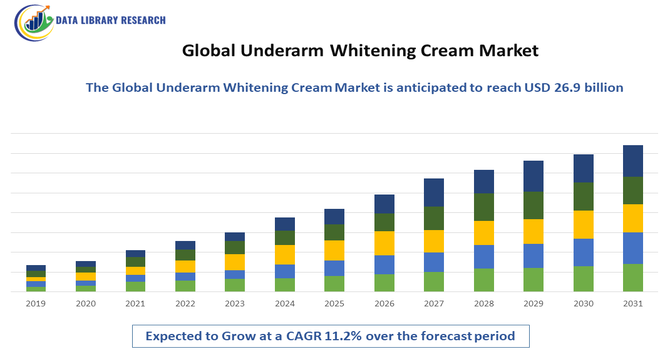
The growth of the global underarm whitening cream market is driven by rising consumer focus on personal grooming, increasing awareness of hyperpigmentation solutions, expanding product availability through e-commerce, aggressive marketing by cosmetic brands, demand for natural and dermatologically tested formulations, and growing adoption of targeted skincare products in emerging economies.
The Global Underarm Whitening Cream Market is shaped by rising demand for natural, plant-based, and dermatologically tested formulations as consumers become more cautious about harsh chemicals. Brands are shifting toward “brightening” and “tone-evening” claims to align with evolving beauty values and regulatory pressures. E-commerce expansion, influencer marketing, and personalization trends are boosting visibility and accessibility of niche products. Innovative ingredients such as niacinamide, vitamin C and botanical extracts are gaining popularity.
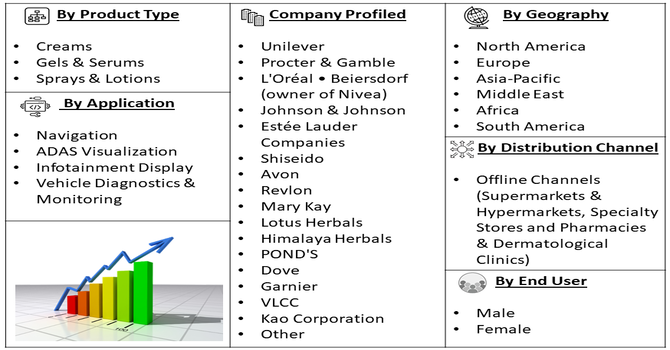
Segmentation: The Underarm Whitening Cream Market can be segmented by Product Type (Creams, Gels & Serums, and Sprays & Lotions), Ingredient Nature (Natural/Organic and Synthetic/Chemical-based), Distribution Channel (Offline Channels (Supermarkets & Hypermarkets, Specialty Stores and Pharmacies & Dermatological Clinics), Online Channels (E-commerce Platforms and Brand Websites/Direct-to-Consumer), End-User (Male and Female), and Geography (North America, Europe, Asia-Pacific, Middle East and Africa, and South America). The report provides the value (in USD million) for the above segments.
For Detailed Market Segmentation - Get a Free Sample PDF
Market Drivers:
A primary driver of the Global Underarm Whitening Cream Market is the heightened consumer emphasis on personal grooming and appearance refinement. Increasing awareness of skin concerns such as hyperpigmentation, discoloration and uneven tone—particularly in sensitive areas—has led to growing interest in targeted skincare solutions. Younger, appearance-conscious consumers are especially inclined toward specialized formulations that address underarm darkness. The influence of fashion trends, including widespread adoption of sleeveless clothing, further reinforces demand for products that enhance underarm aesthetics. Collectively, these behavioral and lifestyle shifts are strengthening market momentum and encouraging companies to introduce increasingly sophisticated brightening solutions.
Another significant growth driver is the rapid expansion of e-commerce channels and digital beauty platforms, which have transformed product accessibility and consumer purchasing behavior. Online marketplaces enable shoppers to explore a broad spectrum of underarm brightening products, assess ingredient transparency, and compare formulations across global and niche brands. Influencer-led content, targeted digital advertising, and personalized recommendations further heighten consumer engagement. In emerging economies, increased internet penetration and rising smartphone adoption continue to accelerate online beauty consumption. This digital shift enhances brand visibility, reduces market entry barriers, and substantially supports revenue growth for both established and emerging market participants.
Market Restraints:
A major restraint for the market arises from intensifying regulatory scrutiny and shifting societal attitudes toward skin-lightening products. Authorities in multiple regions are tightening regulations on ingredients associated with adverse effects, requiring substantial reformulation and compliance efforts by manufacturers. For instance, in September 2024, the Health Sciences Authority of Singapore issued an alert on 88 Total White Underarm Cream due to high levels of mercury and potent steroids, following a severe hypersensitivity incident. Regulatory scrutiny and public concern over safety and toxic ingredients heightened, negatively impacting the global underarm whitening market by reducing consumer trust and prompting stricter compliance and product monitoring. Simultaneously, growing awareness of colorism and changing beauty narratives is prompting consumers to question traditional whitening claims.
The underarm whitening cream market is influenced by rising disposable incomes, especially in developing regions where growing middle-class populations increasingly invest in personal grooming. Perceptions linking even-toned skin with confidence, attractiveness or social acceptance continue to shape demand, though these beauty norms are gradually evolving. The market supports employment across cosmetic manufacturing, retail, marketing and logistics. At the same time, concerns about colorism and unrealistic beauty standards prompt social debate and encourage shifts toward more inclusive messaging. Consumer awareness about skin health is increasing, driving demand for safer products, stricter regulations and educational efforts surrounding responsible skincare choices.
Segmental Analysis:
The gels and serums segment is expected to witness the highest growth over the forecast period, driven by increasing consumer preference for lightweight, fast-absorbing formulations that deliver targeted brightening effects with greater efficacy. These products often contain high concentrations of active ingredients such as niacinamide, vitamin C and botanical extracts, enabling faster visible results. Their non-greasy texture appeals to consumers in humid climates, further supporting demand. Additionally, premium positioning, innovative applicators and dermatologist-backed claims enhance consumer trust. As brands expand their advanced brightening portfolios, gels and serums are positioned as high-performance solutions, fueling strong market adoption and sustained growth.
The natural and organic segment is anticipated to record the highest growth due to rising consumer awareness of ingredient safety, sustainability and long-term skin health. Consumers increasingly prefer formulations free from parabens, sulfates, hydroquinone and synthetic fragrances—especially for sensitive areas like underarms. Products featuring botanical extracts, plant-based antioxidants and ethically sourced ingredients are gaining strong traction. The broader shift toward clean beauty and transparency further strengthens this segment’s momentum. Brands are responding by expanding their certified organic and vegan product lines, accompanied by marketing that emphasizes purity and skin-friendly benefits. This evolving preference is expected to drive robust segment expansion.
Supermarkets and hypermarkets are projected to experience the highest growth, supported by their extensive distribution networks, strong brand visibility and consumer trust in organized retail formats. These outlets offer a wide selection of underarm brightening products across price points, enabling convenient comparison and impulse purchasing. Attractive in-store promotions, product sampling and bundled offers further stimulate demand. As retail chains expand in developing regions, more consumers gain access to established skincare brands. The assurance of genuine products and the ability to physically assess packaging and claims strengthen customer confidence, positioning supermarkets and hypermarkets as dominant growth channels over the forecast period.
The female segment is expected to witness the highest growth, driven by stronger demand for underarm brightening solutions among women who are generally more engaged with personal grooming and targeted skincare routines. Social and cultural preferences emphasizing even-toned skin, along with fashion trends such as sleeveless apparel, further elevate product interest. Women also tend to seek multifunctional benefits, including hydration, odor control and smoother texture, boosting adoption of advanced formulations. Marketing campaigns for brightening and tone-correcting products predominantly target female consumers, reinforcing segment dominance. Rising disposable incomes and evolving beauty standards in developing markets are expected to further accelerate growth.
The Asia-Pacific region is projected to record the highest growth, supported by large population bases, rising disposable incomes and strong cultural emphasis on skincare and brightening products. Countries such as India, China, Indonesia and the Philippines exhibit particularly high demand for underarm brightening solutions. For instance, in 2024, Tom’s of Maine launched the “Smell Good, Good” campaign, promoting its new line of natural deodorants and antiperspirants, encouraging consumers to switch from conventional products. The initiative emphasized safe, eco-friendly underarm care, positively influencing the Asia-Pacific underarm whitening market by increasing awareness and adoption of natural, skin-friendly alternatives.
Expanding urbanization, exposure to global beauty trends and the influence of social media further enhance market penetration. For instance, in 2025, United Nations, reported that by 2025, 55% of the global population lived in urban areas, projected to reach 68% by 2050, adding an estimated 2.5 billion urban residents, with nearly 90% of this growth in Asia and Africa. Similarly, in September 2025, Journal of American Academy of Dermatology, reported that rapid urbanization, combined with heavy social media influence from platforms like Instagram, Snapchat, and TikTok, significantly shaped consumer beauty preferences, reinforcing demand for underarm whitening products as urban populations adopted trends promoted by influencers, accelerating market penetration and growth across the Asia-Pacific region.
Additionally, the region’s robust beauty and personal-care industry encourages rapid product innovation and competitive pricing. Increasing availability of both international and domestic brands across online and offline channels strengthens consumer access, positioning Asia-Pacific as the most dynamic growth market.
| Report Matrics | Details |
| Market Size Value | USD 26.9 billion |
| Growth Rate | CAGR of 11.2% |
| Forecast | 2026-2033 |
| Historical data | 2021-2024 |
| Base Year | 2025 |
| Report Coverage | Forecasted revenue, company rating, competitive environment, growth drivers, and trends |
| Segment Coverage | Type, Application, End-User, Geography |
| Regional Scope | North America, Europe, Asia Pacific, Middle East |
| Customized scope | Free customization of reports (With 3 months Analysis Support ) |
| To Learn More About This Report | Request a Free Sample Copy |
Competition in the Global Underarm Whitening Cream Market is intense, with global beauty corporations, regional skincare brands and numerous emerging labels vying for market share. Companies compete through product innovation, cleaner ingredient profiles, strategic pricing and targeted marketing. Many invest in R&D to enhance product efficacy and reduce irritation risks, incorporating milder actives and botanical ingredients. Branding strategies increasingly emphasize skin confidence and overall radiance rather than overt whitening claims. E-commerce and social media enable smaller brands to gain traction rapidly, while established players leverage strong distribution networks. Regulatory scrutiny regarding harmful ingredients continues to shape competitive strategies.
The major players for this market are
Recent Development
Q1. What are the main growth-driving factors for this market?
The market is primarily driven by heightened personal grooming awareness and increasing consumer concern over hyperpigmentation in sensitive areas. Societal emphasis on aesthetics, coupled with rising disposable incomes in emerging economies, allows more individuals to spend on specialized personal care products, thus fueling market expansion globally.
Q2. What are the main restraining factors for this market?
A major restraining factor is the potential health risk associated with certain whitening agents used in traditional formulations, leading to consumer skepticism. Additionally, stringent regulatory restrictions in some regions regarding specific chemical ingredients, along with ethical concerns about promoting skin whitening, can hinder market growth.
Q3. Which segment is expected to witness high growth?
The natural and organic formulations segment is anticipated to witness the highest growth. Consumers are increasingly seeking products free from harsh chemicals like parabens and alcohol, preferring mild, natural ingredients such as Vitamin C and licorice extract, driven by a global shift toward clean and safe beauty standards.
Q4. Who are the top major players for this market?
The market is led by major multinational cosmetic and personal care corporations. Key players include Unilever, Procter & Gamble, L'Oréal, and Beiersdorf AG (Nivea). These companies utilize their extensive distribution networks and invest heavily in product innovation and aggressive marketing campaigns, often leveraging social media influencers.
Q5. Which country is the largest player?
The Asia-Pacific region is the largest geographical player in the underarm whitening market due to strong cultural preferences for fair skin and a large population base with growing discretionary income. Countries like India, China, and South Korea exhibit exceptionally high demand for dedicated skin lightening and brightening products.
Data Library Research are conducted by industry experts who offer insight on industry structure, market segmentations technology assessment and competitive landscape (CL), and penetration, as well as on emerging trends. Their analysis is based on primary interviews (~ 80%) and secondary research (~ 20%) as well as years of professional expertise in their respective industries. Adding to this, by analysing historical trends and current market positions, our analysts predict where the market will be headed for the next five years. Furthermore, the varying trends of segment & categories geographically presented are also studied and the estimated based on the primary & secondary research.
In this particular report from the supply side Data Library Research has conducted primary surveys (interviews) with the key level executives (VP, CEO’s, Marketing Director, Business Development Manager and SOFT) of the companies that active & prominent as well as the midsized organization
FIGURE 1: DLR RESEARH PROCESS
Extensive primary research was conducted to gain a deeper insight of the market and industry performance. The analysis is based on both primary and secondary research as well as years of professional expertise in the respective industries.
In addition to analysing current and historical trends, our analysts predict where the market is headed over the next five years.
It varies by segment for these categories geographically presented in the list of market tables. Speaking about this particular report we have conducted primary surveys (interviews) with the key level executives (VP, CEO’s, Marketing Director, Business Development Manager and many more) of the major players active in the market.
Secondary ResearchSecondary research was mainly used to collect and identify information useful for the extensive, technical, market-oriented, and Friend’s study of the Global Extra Neutral Alcohol. It was also used to obtain key information about major players, market classification and segmentation according to the industry trends, geographical markets, and developments related to the market and technology perspectives. For this study, analysts have gathered information from various credible sources, such as annual reports, sec filings, journals, white papers, SOFT presentations, and company web sites.
Market Size EstimationBoth, top-down and bottom-up approaches were used to estimate and validate the size of the Global market and to estimate the size of various other dependent submarkets in the overall Extra Neutral Alcohol. The key players in the market were identified through secondary research and their market contributions in the respective geographies were determined through primary and secondary research.
Forecast Model