Urban Fruit and Vegetable Plantation Market Overview and analysis

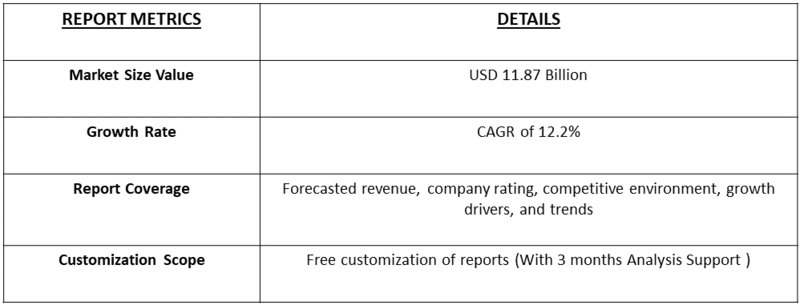
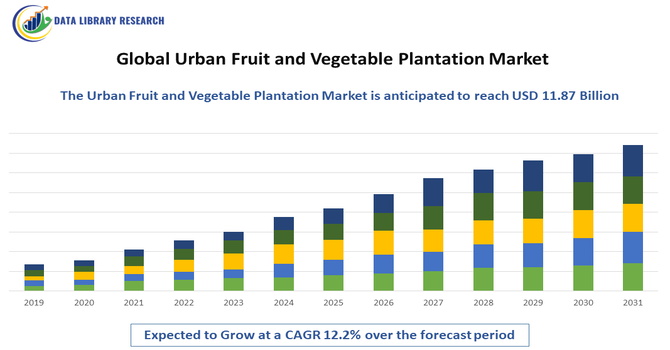
The Global Urban Fruit and Vegetable Plantation Market was valued at approximately USD 5.24 billion in 2025 and is expected to grow at a CAGR of 12.2% from 2025-2032, reaching USD 11.87 Billion in 2032.

The Global Urban Fruit and Vegetable Plantation Market involves the cultivation of fruits and vegetables within urban areas using innovative techniques like vertical farming, hydroponics, and rooftop gardens. Driven by rising urbanization, growing demand for fresh produce, and sustainability concerns, this market focuses on enhancing local food production, reducing supply chain costs, and promoting healthier lifestyles in cities worldwide.

The Global Urban Fruit and Vegetable Plantation Market is driven by several key factors. Rapid urbanization and population growth have increased demand for fresh, locally sourced produce, reducing reliance on long supply chains. Rising consumer awareness of health, nutrition, and organic food fuels the adoption of urban farming. Additionally, sustainability initiatives, limited arable land, and technological advancements such as vertical farming, hydroponics, and aeroponics make urban plantations more efficient and profitable, encouraging investment.

Urban Fruit and Vegetable Plantation Market Latest Trends

A dominant market trend is the shift toward high-tech, controlled environment agriculture (CEA), particularly in the vertical farming segment, which is increasingly adopting automation, IoT sensors, and AI to optimize crop yields and resource use. There is a strong movement towards reducing the reliance on external energy by integrating farms with renewable energy sources to address high operational costs.

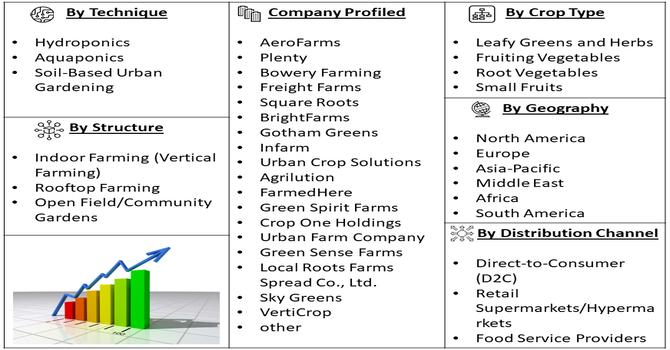
Segmentation: The Global Urban Fruit and Vegetable Plantation Market can be segmented by Farming Technique (Hydroponics, Aeroponics, Aquaponics, and Traditional Soil-Based Urban Gardening), Structure (Indoor Farming (Vertical Farming), Rooftop Farming, and Open Field/Community Gardens), Crop Type (Leafy Greens and Herbs, Fruiting Vegetables, Root Vegetables, and Small Fruits), Distribution Channel (Direct-to-Consumer (D2C), Retail Supermarkets/Hypermarkets, and Food Service Providers), and Geography (North America, Europe, Asia-Pacific, Middle East and Africa, and South America). The report provides the value (in USD million) for the above segments.
Market Drivers:

  • Rising Urbanization and Demand for Fresh Produce

Rapid urbanization and population growth have intensified the demand for fresh, locally grown fruits and vegetables. Urban consumers increasingly prefer produce with minimal transportation time, higher nutritional value, and reduced pesticide use. Traditional agriculture often struggles to meet these demands due to long supply chains, post-harvest losses, and seasonal limitations. Urban plantations, utilizing vertical farming, hydroponics, and rooftop cultivation, enable year-round production in space-constrained cities, ensuring consistent quality and supply. This shift supports healthier lifestyles, reduces carbon footprints, and aligns with sustainability goals. Consequently, the increasing need for reliable, high-quality urban produce acts as a strong driver, boosting investments and adoption of urban fruit and vegetable plantation technologies globally.

  • Technological Advancements and Sustainable Farming Practices

Technological innovations, such as hydroponics, aeroponics, vertical farming, IoT-enabled monitoring, and automated climate control systems, have significantly enhanced urban farming efficiency. These advancements allow optimal use of limited urban spaces, conserve water and energy, and improve crop yields and quality. The integration of smart sensors, AI, and precision agriculture tools enables real-time monitoring of plant health, nutrient levels, and environmental conditions, minimizing resource wastage and reducing operational costs. Additionally, increasing emphasis on sustainable agriculture and eco-friendly food production by governments, corporations, and urban communities supports urban plantation adoption. These technological and sustainability factors collectively drive growth by making urban fruit and vegetable cultivation more viable, profitable, and scalable.

Market Restraint:

  • High Initial Investment and Operational Costs

Despite the benefits, urban fruit and vegetable plantations face significant barriers due to high capital and operational expenditures. Vertical farms, hydroponic systems, rooftop setups, and climate-controlled environments require substantial upfront investment in infrastructure, technology, and skilled personnel. Energy consumption for artificial lighting, temperature control, and nutrient delivery systems further increases operating costs, making profitability challenging, particularly for small and medium-sized enterprises. Additionally, maintenance, system calibration, and technical expertise are crucial for consistent yields, adding to the complexity and expense. These financial and operational challenges can limit adoption in price-sensitive markets or regions with lower disposable income, restraining the overall growth of the global urban fruit and vegetable plantation market.

Socio Economic Impact on Urban Fruit and Vegetable Plantation Market

The Urban Fruit and Vegetable Plantation Market creates significant socioeconomic benefits by directly addressing issues of food security and nutrition in densely populated urban centers, especially in low-income "food desert" areas. It facilitates local job creation in advanced manufacturing, farm operations, and distribution. Socially, it promotes community cohesion through local food systems, educational initiatives, and hands-on community gardens. Furthermore, it contributes to environmental sustainability by reducing food miles, drastically cutting water consumption (up to 95% less than traditional farming), and repurposing underutilized urban real estate, which contributes to urban greening.

Segmental Analysis:

  • Hydroponics Segment is Expected to Witness Significant Growth Over the Forecast Period

The hydroponics segment is projected to witness substantial growth due to its efficient use of water and nutrients, which allows high-yield production in limited urban spaces. Its ability to deliver consistent, pesticide-free, and year-round produce appeals to health-conscious urban consumers. Technological innovations, such as automated nutrient delivery systems and IoT-enabled monitoring, further enhance productivity and reduce operational costs. The scalability of hydroponic farms—from small rooftop setups to large vertical systems—supports urban food security initiatives and commercial ventures, driving widespread adoption and making hydroponics a key growth driver in the urban fruit and vegetable plantation market.

  • Rooftop Farming Segment is Expected to Witness Significant Growth Over the Forecast Period

Rooftop farming is anticipated to expand significantly as urban planners and building owners seek to maximize underutilized rooftop spaces. This method supports local food production, reduces urban heat island effects, and contributes to sustainable city development. Government incentives, sustainability mandates, and growing consumer demand for organic produce have accelerated its adoption. Rooftop farms also provide opportunities for community engagement, educational initiatives, and commercial ventures in restaurants and local markets. With increasing urban population density and limited ground space, rooftop farming offers a practical, eco-friendly solution, positioning it as a rapidly growing segment in the global urban fruit and vegetable plantation market.

  • Leafy Greens and Herbs Segment is Expected to Witness Significant Growth Over the Forecast Period

The leafy greens and herbs segment is expected to grow rapidly due to rising consumer preference for fresh, nutritious, and easy-to-cook produce. Crops like lettuce, spinach, basil, and cilantro are ideal for urban farming techniques, including hydroponics and vertical farming, due to their fast growth cycles and high yield per square meter. Restaurants, supermarkets, and health-conscious households increasingly demand locally grown, pesticide-free greens and herbs. Their versatility in culinary, medicinal, and nutraceutical applications further enhances market potential. As urban populations seek convenient and healthy food options, the production and sale of leafy greens and herbs are projected to drive segment growth significantly.

  • Retail Supermarkets/Hypermarkets Segment is Expected to Witness Significant Growth Over the Forecast Period

The retail supermarkets and hypermarkets segment is projected to expand due to rising consumer demand for fresh, locally sourced, and high-quality urban produce. Large retail chains are increasingly partnering with urban farms and hydroponic suppliers to secure a steady supply of fruits, vegetables, and herbs throughout the year. This ensures product freshness, reduces transportation costs, and aligns with sustainability initiatives. Enhanced consumer awareness regarding nutrition and food safety drives frequent purchases from supermarkets and hypermarkets. Additionally, loyalty programs and in-store promotions by retailers encourage adoption of urban-grown produce, making this distribution channel a key growth driver for the urban fruit and vegetable plantation market.

  • North America Region is Expected to Witness Significant Growth Over the Forecast Period

North America is anticipated to lead growth in the urban fruit and vegetable plantation market due to strong technological adoption, environmental awareness, and government support for sustainable agriculture. Countries such as the U.S. and Canada invest heavily in vertical farming, hydroponics, and rooftop farming solutions to address urban food security and reduce carbon footprints.

Rising consumer preference for organic and locally sourced produce, along with corporate sustainability initiatives and urban farming incubators, fuels market expansion. For instance, In June 2025, GrowGeneration Corp. (“GrowGen”), the U.S. specialty retailer of hydroponic and organic gardening products, acquired Viagrow, a domestic supplier of gardening and hydroponic equipment, expanding its presence in home gardening and big-box retail segments. This acquisition enhanced GrowGen’s ability to provide professional-grade cultivation solutions, diversify revenue streams, and strengthen its CEA leadership, boosting adoption of hydroponics and home urban farming, thereby positively impacting growth in the global urban fruit and vegetable plantation market. Additionally, favorable funding policies, research advancements, and partnerships between startups and retailers accelerate commercialization, positioning North America as a major growth region for urban fruit and vegetable plantations.

Thus, such playersare driving the growth of market in this region.

Urban Fruit and Vegetable Plantation Market Competitive Analysis

The competitive landscape is defined by the rivalry between highly-funded technology-focused vertical farming startups (like AeroFarms and Plenty) and established agricultural/tech conglomerates that are entering the market. Competition hinges on technological efficiency—specifically, achieving the highest yield-per-square-foot with the lowest energy consumption. Key players compete to secure large contracts with major retailers and to establish scalable, proprietary automation systems. Traditional urban agriculture, such as community and rooftop gardens, operates as a complementary, smaller-scale segment focused more on local community value and education rather than commercial volume.

The major players for above market:

  • AeroFarms
  • Plenty
  • Bowery Farming
  • Freight Farms
  • Square Roots
  • BrightFarms
  • Gotham Greens
  • Infarm
  • Urban Crop Solutions
  • Agrilution
  • FarmedHere
  • Green Spirit Farms
  • Crop One Holdings
  • Future Farm Technologies
  • Spread Co., Ltd.
  • Sky Greens
  • VertiCrop
  • Urban Farm Company
  • Green Sense Farms
  • Local Roots Farms

Recent Development:

  • In October 2025, Gardyn, a smart indoor gardening system that enabled users to grow fresh, nutrient-rich produce at home year-round, announced the launch of Studio 2, the next generation of its award-winning compact hydroponic system. Utilizing automated watering, lighting, and AI-powered plant care, Studio 2 allowed users to easily cultivate greens, herbs, and vegetables indoors without requiring a green thumb. Designed for smaller spaces, Studio 2 brought the advanced technology of Gardyn Home’s system into a more compact, streamlined design, occupying just 1.4 square feet.


  • In June 2025, Berge Bulk, a leading global dry bulk ship owner, harvested over 1.2 metric tonnes of fresh vegetables at sea in 2024 through its fleetwide hydroponics program. The initiative aimed to enhance crew wellbeing and reduce food and packaging waste, supporting the YouMatter wellbeing program and Blue Matters environmental campaign. This effort demonstrated the scalability of hydroponics in nontraditional settings, encouraging adoption and driving growth in the global urban fruit and vegetable plantation market.


Frequently Asked Questions (FAQ) :

Q1. What the main growth driving factors for this market?

The primary growth driver is the escalating global urbanization and the subsequent demand for fresh, locally-sourced produce, which drastically reduces "food miles" and associated environmental impact. This is coupled with a rising consumer awareness of food safety and nutrition, driving demand for organic and pesticide-free fruits and vegetables. Furthermore, technological advancements in specialized urban farming techniques like vertical farming, hydroponics, and aeroponics have made high-yield cultivation viable in small, non-traditional urban spaces, making the business model increasingly efficient and attractive to investors.

Q2. What are the main restraining factors for this market?

A key restraining factor is the high initial capital expenditure required for setting up advanced indoor urban farms, especially those using vertical farming and controlled environment agriculture (CEA). This includes the cost of specialized LED lighting, climate control, and automation systems. Additionally, the scarcity and high cost of urban land and suitable space pose a significant challenge. Finally, the intensive energy consumption required for lighting and climate control in indoor farms can lead to high operating costs, impacting overall profitability compared to traditional agriculture.

Q3. Which segment is expected to witness high growth?

The Indoor Breeding Bases/Vertical Farming segment is expected to witness the highest growth. This is driven by its ability to provide year-round, consistent production regardless of external weather conditions or limited urban space. Techniques like hydroponics and aeroponics, central to indoor farming, use significantly less water and eliminate the need for pesticides. The demand for leafy greens and herbs is particularly high in this segment due to their rapid growth cycles and high commercial value in local urban markets.

Q4. Who are the top major players for this market?

The market is primarily led by companies specializing in advanced, high-tech urban farming solutions, often in the vertical farming space. Top major players include AeroFarms (known for its soil-free vertical farming technology), BrightFarms (specializing in indoor-grown packaged produce), and technology providers like InFarm and CubicFarms who offer modular and scalable farming systems. These companies compete by securing large funding rounds, optimizing crop yield per square foot, and establishing strong distribution partnerships with major urban food retailers.

Q5. Which country is the largest player?

North America, particularly the United States, currently holds the largest market share in terms of revenue, driven by massive investments in vertical farming technology and a strong consumer demand for locally grown, premium produce. However, the Asia-Pacific (APAC) region, led by countries like China and Japan, is the fastest-growing market. This growth is spurred by high population density, extremely limited arable land, and strong government support for developing food security and self-sufficiency through innovative urban agricultural solutions.

Urban Fruit and Vegetable Plantation MARKET STUDY GLOBAL MARKET ANALYSIS, INSIGHTS AND FORECAST, 2022-2029

    1. Introduction

    • 1.1. Research Scope
    • 1.2. Market Segmentation
    • 1.3. Research Methodology
    • 1.4. Definitions and Assumptions

    2. Executive Summary

      3. Market Dynamics

      • 3.1. Market Drivers
      • 3.2. Market Restraints
      • 3.3. Market Opportunities

      4. Key Insights

      • 4.1. Key Emerging Trends – For Major Countries
      • 4.2. Latest Technological Advancement
      • 4.3. Regulatory Landscape
      • 4.4. Industry SWOT Analysis
      • 4.5. Porters Five Forces Analysis

      5. Global Urban Fruit and Vegetable Plantation Market Analysis (USD Billion), Insights and Forecast, 2018-2029

      • 5.1. Key Findings / Summary
      • 5.2. Market Analysis, Insights and Forecast – By Segment 1
        • 5.2.1. Sub-Segment 1
        • 5.2.2. Sub-Segment 2
      • 5.3. Market Analysis, Insights and Forecast – By Segment 2
        • 5.3.1. Sub-Segment 1
        • 5.3.2. Sub-Segment 2
        • 5.3.3. Sub-Segment 3
        • 5.3.4. Others
      • 5.4. Market Analysis, Insights and Forecast – By Segment 3
        • 5.4.1. Sub-Segment 1
        • 5.4.2. Sub-Segment 2
        • 5.4.3. Sub-Segment 3
        • 5.4.4. Others
      • 5.5. Market Analysis, Insights and Forecast – By Region
        • 5.5.1. North America
        • 5.5.2. Latin America
        • 5.5.3. Europe
        • 5.5.4. Asia Pacific
        • 5.5.5. Middle East and Africa

      6. North America Urban Fruit and Vegetable Plantation Market Analysis (USD Billion), Insights and Forecast, 2018-2029

      • 6.1. Key Findings / Summary
      • 6.2. Market Analysis, Insights and Forecast – By Segment 1
        • 6.2.1. Sub-Segment 1
        • 6.2.2. Sub-Segment 2
      • 6.3. Market Analysis, Insights and Forecast – By Segment 2
        • 6.3.1. Sub-Segment 1
        • 6.3.2. Sub-Segment 2
        • 6.3.3. Sub-Segment 3
        • 6.3.4. Others
      • 6.4. Market Analysis, Insights and Forecast – By Segment 3
        • 6.4.1. Sub-Segment 1
        • 6.4.2. Sub-Segment 2
        • 6.4.3. Sub-Segment 3
        • 6.4.4. Others
      • 6.5. Market Analysis, Insights and Forecast – By Country
        • 6.5.1. U.S.
        • 6.5.2. Canada

      7. Latin America Urban Fruit and Vegetable Plantation Market Analysis (USD Billion), Insights and Forecast, 2018-2029

      • 7.1. Key Findings / Summary
      • 7.2. Market Analysis, Insights and Forecast – By Segment 1
        • 7.2.1. Sub-Segment 1
        • 7.2.2. Sub-Segment 2
      • 7.3. Market Analysis, Insights and Forecast – By Segment 2
        • 7.3.1. Sub-Segment 1
        • 7.3.2. Sub-Segment 2
        • 7.3.3. Sub-Segment 3
        • 7.3.4. Others
      • 7.4. Market Analysis, Insights and Forecast – By Segment 3
        • 7.4.1. Sub-Segment 1
        • 7.4.2. Sub-Segment 2
        • 7.4.3. Sub-Segment 3
        • 7.4.4. Others
      • 7.5. Insights and Forecast – By Country
        • 7.5.1. Brazil
        • 7.5.2. Mexico
        • 7.5.3. Rest of Latin America

      8. Europe Urban Fruit and Vegetable Plantation Market Analysis (USD Billion), Insights and Forecast, 2018-2029

      • 8.1. Key Findings / Summary
      • 8.2. Market Analysis, Insights and Forecast – By Segment 1
        • 8.2.1. Sub-Segment 1
        • 8.2.2. Sub-Segment 2
      • 8.3. Market Analysis, Insights and Forecast – By Segment 2
        • 8.3.1. Sub-Segment 1
        • 8.3.2. Sub-Segment 2
        • 8.3.3. Sub-Segment 3
        • 8.3.4. Others
      • 8.4. Market Analysis, Insights and Forecast – By Segment 3
        • 8.4.1. Sub-Segment 1
        • 8.4.2. Sub-Segment 2
        • 8.4.3. Sub-Segment 3
        • 8.4.4. Others
      • 8.5. Market Analysis, Insights and Forecast – By Country
        • 8.5.1. UK
        • 8.5.2. Germany
        • 8.5.3. France
        • 8.5.4. Italy
        • 8.5.5. Spain
        • 8.5.6. Russia
        • 8.5.7. Rest of Europe

      9. Asia Pacific Urban Fruit and Vegetable Plantation Market Analysis (USD Billion), Insights and Forecast, 2018-2029

      • 9.1. Key Findings / Summary
      • 9.2. Market Analysis, Insights and Forecast – By Segment 1
        • 9.2.1. Sub-Segment 1
        • 9.2.2. Sub-Segment 2
      • 9.3. Market Analysis, Insights and Forecast – By Segment 2
        • 9.3.1. Sub-Segment 1
        • 9.3.2. Sub-Segment 2
        • 9.3.3. Sub-Segment 3
        • 9.3.4. Others
      • 9.4. Market Analysis, Insights and Forecast – By Segment 3
        • 9.4.1. Sub-Segment 1
        • 9.4.2. Sub-Segment 2
        • 9.4.3. Sub-Segment 3
        • 9.4.4. Others
      • 9.5. Market Analysis, Insights and Forecast – By Country
        • 9.5.1. China
        • 9.5.2. India
        • 9.5.3. Japan
        • 9.5.4. Australia
        • 9.5.5. South East Asia
        • 9.5.6. Rest of Asia Pacific

      10. Middle East & Africa Urban Fruit and Vegetable Plantation Market Analysis (USD Billion), Insights and Forecast, 2018-2029

      • 10.1. Key Findings / Summary
      • 10.2. Market Analysis, Insights and Forecast – By Segment 1
        • 10.2.1. Sub-Segment 1
        • 10.2.2. Sub-Segment 2
      • 10.3. Market Analysis, Insights and Forecast – By Segment 2
        • 10.3.1. Sub-Segment 1
        • 10.3.2. Sub-Segment 2
        • 10.3.3. Sub-Segment 3
        • 10.3.4. Others
      • 10.4. Market Analysis, Insights and Forecast – By Segment 3
        • 10.4.1. Sub-Segment 1
        • 10.4.2. Sub-Segment 2
        • 10.4.3. Sub-Segment 3
        • 10.4.4. Others
      • 10.5. Market Analysis, Insights and Forecast – By Country
        • 10.5.1. GCC
        • 10.5.2. South Africa
        • 10.5.3. Rest of Middle East & Africa

      11. Competitive Analysis

      • 11.1. Company Market Share Analysis, 2018
      • 11.2. Key Industry Developments
      • 11.3. Company Profile
        • 11.3.1. Company 1
          • 11.3.1.1. Business Overview
          • 11.3.1.2. Segment 1 & Service Offering
          • 11.3.1.3. Overall Revenue
          • 11.3.1.4. Geographic Presence
          • 11.3.1.5. Recent Development
        *Similar details will be provided for the following companies
        • 11.3.2. Company 2
        • 11.3.3. Company 3
        • 11.3.4. Company 4
        • 11.3.5. Company 5
        • 11.3.6. Company 6
        • 11.3.7. Company 7
        • 11.3.8. Company 8
        • 11.3.9. Company 9
        • 11.3.10. Company 10
        • 11.3.11. Company 11
        • 11.3.12. Company 12
      List of Figures

      Figure 1: Global Urban Fruit and Vegetable Plantation Market Revenue Breakdown (USD Billion, %) by Region, 2022 & 2029
      Figure 2: Global Urban Fruit and Vegetable Plantation Market Value Share (%), By Segment 1, 2022 & 2029
      Figure 3: Global Urban Fruit and Vegetable Plantation Market Forecast (USD Billion), by Sub-Segment 1, 2018-2029
      Figure 4: Global Urban Fruit and Vegetable Plantation Market Forecast (USD Billion), by Sub-Segment 2, 2018-2029
      Figure 5: Global Urban Fruit and Vegetable Plantation Market Value Share (%), By Segment 2, 2022 & 2029
      Figure 6: Global Urban Fruit and Vegetable Plantation Market Forecast (USD Billion), by Sub-Segment 1, 2018-2029
      Figure 7: Global Urban Fruit and Vegetable Plantation Market Forecast (USD Billion), by Sub-Segment 2, 2018-2029
      Figure 8: Global Urban Fruit and Vegetable Plantation Market Forecast (USD Billion), by Sub-Segment 3, 2018-2029
      Figure 9: Global Urban Fruit and Vegetable Plantation Market Forecast (USD Billion), by Others, 2018-2029
      Figure 10: Global Urban Fruit and Vegetable Plantation Market Value Share (%), By Segment 3, 2022 & 2029
      Figure 11: Global Urban Fruit and Vegetable Plantation Market Forecast (USD Billion), by Sub-Segment 1, 2018-2029
      Figure 12: Global Urban Fruit and Vegetable Plantation Market Forecast (USD Billion), by Sub-Segment 2, 2018-2029
      Figure 13: Global Urban Fruit and Vegetable Plantation Market Forecast (USD Billion), by Sub-Segment 3, 2018-2029
      Figure 14: Global Urban Fruit and Vegetable Plantation Market Forecast (USD Billion), by Others, 2018-2029
      Figure 15: Global Urban Fruit and Vegetable Plantation Market Value (USD Billion), by Region, 2022 & 2029
      Figure 16: North America Urban Fruit and Vegetable Plantation Market Value Share (%), By Segment 1, 2022 & 2029
      Figure 17: North America Urban Fruit and Vegetable Plantation Market Forecast (USD Billion), by Sub-Segment 1, 2018-2029
      Figure 18: North America Urban Fruit and Vegetable Plantation Market Forecast (USD Billion), by Sub-Segment 2, 2018-2029
      Figure 19: North America Urban Fruit and Vegetable Plantation Market Value Share (%), By Segment 2, 2022 & 2029
      Figure 20: North America Urban Fruit and Vegetable Plantation Market Forecast (USD Billion), by Sub-Segment 1, 2018-2029
      Figure 21: North America Urban Fruit and Vegetable Plantation Market Forecast (USD Billion), by Sub-Segment 2, 2018-2029
      Figure 22: North America Urban Fruit and Vegetable Plantation Market Forecast (USD Billion), by Sub-Segment 3, 2018-2029
      Figure 23: North America Urban Fruit and Vegetable Plantation Market Forecast (USD Billion), by Others, 2018-2029
      Figure 24: North America Urban Fruit and Vegetable Plantation Market Value Share (%), By Segment 3, 2022 & 2029
      Figure 25: North America Urban Fruit and Vegetable Plantation Market Forecast (USD Billion), by Sub-Segment 1, 2018-2029
      Figure 26: North America Urban Fruit and Vegetable Plantation Market Forecast (USD Billion), by Sub-Segment 2, 2018-2029
      Figure 27: North America Urban Fruit and Vegetable Plantation Market Forecast (USD Billion), by Sub-Segment 3, 2018-2029
      Figure 28: North America Urban Fruit and Vegetable Plantation Market Forecast (USD Billion), by Others, 2018-2029
      Figure 29: North America Urban Fruit and Vegetable Plantation Market Forecast (USD Billion), by U.S., 2018-2029
      Figure 30: North America Urban Fruit and Vegetable Plantation Market Forecast (USD Billion), by Canada, 2018-2029
      Figure 31: Latin America Urban Fruit and Vegetable Plantation Market Value Share (%), By Segment 1, 2022 & 2029
      Figure 32: Latin America Urban Fruit and Vegetable Plantation Market Forecast (USD Billion), by Sub-Segment 1, 2018-2029
      Figure 33: Latin America Urban Fruit and Vegetable Plantation Market Forecast (USD Billion), by Sub-Segment 2, 2018-2029
      Figure 34: Latin America Urban Fruit and Vegetable Plantation Market Value Share (%), By Segment 2, 2022 & 2029
      Figure 35: Latin America Urban Fruit and Vegetable Plantation Market Forecast (USD Billion), by Sub-Segment 1, 2018-2029
      Figure 36: Latin America Urban Fruit and Vegetable Plantation Market Forecast (USD Billion), by Sub-Segment 2, 2018-2029
      Figure 37: Latin America Urban Fruit and Vegetable Plantation Market Forecast (USD Billion), by Sub-Segment 3, 2018-2029
      Figure 38: Latin America Urban Fruit and Vegetable Plantation Market Forecast (USD Billion), by Others, 2018-2029
      Figure 39: Latin America Urban Fruit and Vegetable Plantation Market Value Share (%), By Segment 3, 2022 & 2029
      Figure 40: Latin America Urban Fruit and Vegetable Plantation Market Forecast (USD Billion), by Sub-Segment 1, 2018-2029
      Figure 41: Latin America Urban Fruit and Vegetable Plantation Market Forecast (USD Billion), by Sub-Segment 2, 2018-2029
      Figure 42: Latin America Urban Fruit and Vegetable Plantation Market Forecast (USD Billion), by Sub-Segment 3, 2018-2029
      Figure 43: Latin America Urban Fruit and Vegetable Plantation Market Forecast (USD Billion), by Others, 2018-2029
      Figure 44: Latin America Urban Fruit and Vegetable Plantation Market Forecast (USD Billion), by Brazil, 2018-2029
      Figure 45: Latin America Urban Fruit and Vegetable Plantation Market Forecast (USD Billion), by Mexico, 2018-2029
      Figure 46: Latin America Urban Fruit and Vegetable Plantation Market Forecast (USD Billion), by Rest of Latin America, 2018-2029
      Figure 47: Europe Urban Fruit and Vegetable Plantation Market Value Share (%), By Segment 1, 2022 & 2029
      Figure 48: Europe Urban Fruit and Vegetable Plantation Market Forecast (USD Billion), by Sub-Segment 1, 2018-2029
      Figure 49: Europe Urban Fruit and Vegetable Plantation Market Forecast (USD Billion), by Sub-Segment 2, 2018-2029
      Figure 50: Europe Urban Fruit and Vegetable Plantation Market Value Share (%), By Segment 2, 2022 & 2029
      Figure 51: Europe Urban Fruit and Vegetable Plantation Market Forecast (USD Billion), by Sub-Segment 1, 2018-2029
      Figure 52: Europe Urban Fruit and Vegetable Plantation Market Forecast (USD Billion), by Sub-Segment 2, 2018-2029
      Figure 53: Europe Urban Fruit and Vegetable Plantation Market Forecast (USD Billion), by Sub-Segment 3, 2018-2029
      Figure 54: Europe Urban Fruit and Vegetable Plantation Market Forecast (USD Billion), by Others, 2018-2029
      Figure 55: Europe Urban Fruit and Vegetable Plantation Market Value Share (%), By Segment 3, 2022 & 2029
      Figure 56: Europe Urban Fruit and Vegetable Plantation Market Forecast (USD Billion), by Sub-Segment 1, 2018-2029
      Figure 57: Europe Urban Fruit and Vegetable Plantation Market Forecast (USD Billion), by Sub-Segment 2, 2018-2029
      Figure 58: Europe Urban Fruit and Vegetable Plantation Market Forecast (USD Billion), by Sub-Segment 3, 2018-2029
      Figure 59: Europe Urban Fruit and Vegetable Plantation Market Forecast (USD Billion), by Others, 2018-2029
      Figure 60: Europe Urban Fruit and Vegetable Plantation Market Forecast (USD Billion), by U.K., 2018-2029
      Figure 61: Europe Urban Fruit and Vegetable Plantation Market Forecast (USD Billion), by Germany, 2018-2029
      Figure 62: Europe Urban Fruit and Vegetable Plantation Market Forecast (USD Billion), by France, 2018-2029
      Figure 63: Europe Urban Fruit and Vegetable Plantation Market Forecast (USD Billion), by Italy, 2018-2029
      Figure 64: Europe Urban Fruit and Vegetable Plantation Market Forecast (USD Billion), by Spain, 2018-2029
      Figure 65: Europe Urban Fruit and Vegetable Plantation Market Forecast (USD Billion), by Russia, 2018-2029
      Figure 66: Europe Urban Fruit and Vegetable Plantation Market Forecast (USD Billion), by Rest of Europe, 2018-2029
      Figure 67: Asia Pacific Urban Fruit and Vegetable Plantation Market Value Share (%), By Segment 1, 2022 & 2029
      Figure 68: Asia Pacific Urban Fruit and Vegetable Plantation Market Forecast (USD Billion), by Sub-Segment 1, 2018-2029
      Figure 69: Asia Pacific Urban Fruit and Vegetable Plantation Market Forecast (USD Billion), by Sub-Segment 2, 2018-2029
      Figure 70: Asia Pacific Urban Fruit and Vegetable Plantation Market Value Share (%), By Segment 2, 2022 & 2029
      Figure 71: Asia Pacific Urban Fruit and Vegetable Plantation Market Forecast (USD Billion), by Sub-Segment 1, 2018-2029
      Figure 72: Asia Pacific Urban Fruit and Vegetable Plantation Market Forecast (USD Billion), by Sub-Segment 2, 2018-2029
      Figure 73: Asia Pacific Urban Fruit and Vegetable Plantation Market Forecast (USD Billion), by Sub-Segment 3, 2018-2029
      Figure 74: Asia Pacific Urban Fruit and Vegetable Plantation Market Forecast (USD Billion), by Others, 2018-2029
      Figure 75: Asia Pacific Urban Fruit and Vegetable Plantation Market Value Share (%), By Segment 3, 2022 & 2029
      Figure 76: Asia Pacific Urban Fruit and Vegetable Plantation Market Forecast (USD Billion), by Sub-Segment 1, 2018-2029
      Figure 77: Asia Pacific Urban Fruit and Vegetable Plantation Market Forecast (USD Billion), by Sub-Segment 2, 2018-2029
      Figure 78: Asia Pacific Urban Fruit and Vegetable Plantation Market Forecast (USD Billion), by Sub-Segment 3, 2018-2029
      Figure 79: Asia Pacific Urban Fruit and Vegetable Plantation Market Forecast (USD Billion), by Others, 2018-2029
      Figure 80: Asia Pacific Urban Fruit and Vegetable Plantation Market Forecast (USD Billion), by China, 2018-2029
      Figure 81: Asia Pacific Urban Fruit and Vegetable Plantation Market Forecast (USD Billion), by India, 2018-2029
      Figure 82: Asia Pacific Urban Fruit and Vegetable Plantation Market Forecast (USD Billion), by Japan, 2018-2029
      Figure 83: Asia Pacific Urban Fruit and Vegetable Plantation Market Forecast (USD Billion), by Australia, 2018-2029
      Figure 84: Asia Pacific Urban Fruit and Vegetable Plantation Market Forecast (USD Billion), by Southeast Asia, 2018-2029
      Figure 85: Asia Pacific Urban Fruit and Vegetable Plantation Market Forecast (USD Billion), by Rest of Asia Pacific, 2018-2029
      Figure 86: Middle East & Africa Urban Fruit and Vegetable Plantation Market Value Share (%), By Segment 1, 2022 & 2029
      Figure 87: Middle East & Africa Urban Fruit and Vegetable Plantation Market Forecast (USD Billion), by Sub-Segment 1, 2018-2029
      Figure 88: Middle East & Africa Urban Fruit and Vegetable Plantation Market Forecast (USD Billion), by Sub-Segment 2, 2018-2029
      Figure 89: Middle East & Africa Urban Fruit and Vegetable Plantation Market Value Share (%), By Segment 2, 2022 & 2029
      Figure 90: Middle East & Africa Urban Fruit and Vegetable Plantation Market Forecast (USD Billion), by Sub-Segment 1, 2018-2029
      Figure 91: Middle East & Africa Urban Fruit and Vegetable Plantation Market Forecast (USD Billion), by Sub-Segment 2, 2018-2029
      Figure 92: Middle East & Africa Urban Fruit and Vegetable Plantation Market Forecast (USD Billion), by Sub-Segment 3, 2018-2029
      Figure 93: Middle East & Africa Urban Fruit and Vegetable Plantation Market Forecast (USD Billion), by Others, 2018-2029
      Figure 94: Middle East & Africa Urban Fruit and Vegetable Plantation Market Value Share (%), By Segment 3, 2022 & 2029
      Figure 95: Middle East & Africa Urban Fruit and Vegetable Plantation Market Forecast (USD Billion), by Sub-Segment 1, 2018-2029
      Figure 96: Middle East & Africa Urban Fruit and Vegetable Plantation Market Forecast (USD Billion), by Sub-Segment 2, 2018-2029
      Figure 97: Middle East & Africa Urban Fruit and Vegetable Plantation Market Forecast (USD Billion), by Sub-Segment 3, 2018-2029
      Figure 98: Middle East & Africa Urban Fruit and Vegetable Plantation Market Forecast (USD Billion), by Others, 2018-2029
      Figure 99: Middle East & Africa Urban Fruit and Vegetable Plantation Market Forecast (USD Billion), by GCC, 2018-2029
      Figure 100: Middle East & Africa Urban Fruit and Vegetable Plantation Market Forecast (USD Billion), by South Africa, 2018-2029
      Figure 101: Middle East & Africa Urban Fruit and Vegetable Plantation Market Forecast (USD Billion), by Rest of Middle East & Africa, 2018-2029 
      List of Tables
      Table 1: Global Urban Fruit and Vegetable Plantation Market Revenue (USD Billion) Forecast, by Segment 1, 2018-2029
      Table 2: Global Urban Fruit and Vegetable Plantation Market Revenue (USD Billion) Forecast, by Segment 2, 2018-2029
      Table 3: Global Urban Fruit and Vegetable Plantation Market Revenue (USD Billion) Forecast, by Segment 3, 2018-2029
      Table 4: Global Urban Fruit and Vegetable Plantation Market Revenue (USD Billion) Forecast, by Region, 2018-2029
      Table 5: North America Urban Fruit and Vegetable Plantation Market Revenue (USD Billion) Forecast, by Segment 1, 2018-2029
      Table 6: North America Urban Fruit and Vegetable Plantation Market Revenue (USD Billion) Forecast, by Segment 2, 2018-2029
      Table 7: North America Urban Fruit and Vegetable Plantation Market Revenue (USD Billion) Forecast, by Segment 3, 2018-2029
      Table 8: North America Urban Fruit and Vegetable Plantation Market Revenue (USD Billion) Forecast, by Country, 2018-2029
      Table 9: Europe Urban Fruit and Vegetable Plantation Market Revenue (USD Billion) Forecast, by Segment 1, 2018-2029
      Table 10: Europe Urban Fruit and Vegetable Plantation Market Revenue (USD Billion) Forecast, by Segment 2, 2018-2029
      Table 11: Europe Urban Fruit and Vegetable Plantation Market Revenue (USD Billion) Forecast, by Segment 3, 2018-2029
      Table 12: Europe Urban Fruit and Vegetable Plantation Market Revenue (USD Billion) Forecast, by Country, 2018-2029
      Table 13: Latin America Urban Fruit and Vegetable Plantation Market Revenue (USD Billion) Forecast, by Segment 1, 2018-2029
      Table 14: Latin America Urban Fruit and Vegetable Plantation Market Revenue (USD Billion) Forecast, by Segment 2, 2018-2029
      Table 15: Latin America Urban Fruit and Vegetable Plantation Market Revenue (USD Billion) Forecast, by Segment 3, 2018-2029
      Table 16: Latin America Urban Fruit and Vegetable Plantation Market Revenue (USD Billion) Forecast, by Country, 2018-2029
      Table 17: Asia Pacific Urban Fruit and Vegetable Plantation Market Revenue (USD Billion) Forecast, by Segment 1, 2018-2029
      Table 18: Asia Pacific Urban Fruit and Vegetable Plantation Market Revenue (USD Billion) Forecast, by Segment 2, 2018-2029
      Table 19: Asia Pacific Urban Fruit and Vegetable Plantation Market Revenue (USD Billion) Forecast, by Segment 3, 2018-2029
      Table 20: Asia Pacific Urban Fruit and Vegetable Plantation Market Revenue (USD Billion) Forecast, by Country, 2018-2029
      Table 21: Middle East & Africa Urban Fruit and Vegetable Plantation Market Revenue (USD Billion) Forecast, by Segment 1, 2018-2029
      Table 22: Middle East & Africa Urban Fruit and Vegetable Plantation Market Revenue (USD Billion) Forecast, by Segment 2, 2018-2029
      Table 23: Middle East & Africa Urban Fruit and Vegetable Plantation Market Revenue (USD Billion) Forecast, by Segment 3, 2018-2029
      Table 24: Middle East & Africa Urban Fruit and Vegetable Plantation Market Revenue (USD Billion) Forecast, by Country, 2018-2029
      Research Process

      Data Library Research are conducted by industry experts who offer insight on industry structure, market segmentations technology assessment and competitive landscape (CL), and penetration, as well as on emerging trends. Their analysis is based on primary interviews (~ 80%) and secondary research (~ 20%) as well as years of professional expertise in their respective industries. Adding to this, by analysing historical trends and current market positions, our analysts predict where the market will be headed for the next five years. Furthermore, the varying trends of segment & categories geographically presented are also studied and the estimated based on the primary & secondary research.

      In this particular report from the supply side Data Library Research has conducted primary surveys (interviews) with the key level executives (VP, CEO’s, Marketing Director, Business Development Manager and SOFT) of the companies that active & prominent as well as the midsized organization

      FIGURE 1: DLR RESEARH PROCESS

      research-methodology1

      Primary Research

      Extensive primary research was conducted to gain a deeper insight of the market and industry performance. The analysis is based on both primary and secondary research as well as years of professional expertise in the respective industries.

      In addition to analysing current and historical trends, our analysts predict where the market is headed over the next five years.

      It varies by segment for these categories geographically presented in the list of market tables. Speaking about this particular report we have conducted primary surveys (interviews) with the key level executives (VP, CEO’s, Marketing Director, Business Development Manager and many more) of the major players active in the market.

      Secondary Research

      Secondary research was mainly used to collect and identify information useful for the extensive, technical, market-oriented, and Friend’s study of the Global Extra Neutral Alcohol. It was also used to obtain key information about major players, market classification and segmentation according to the industry trends, geographical markets, and developments related to the market and technology perspectives. For this study, analysts have gathered information from various credible sources, such as annual reports, sec filings, journals, white papers, SOFT presentations, and company web sites.

      Market Size Estimation

      Both, top-down and bottom-up approaches were used to estimate and validate the size of the Global market and to estimate the size of various other dependent submarkets in the overall Extra Neutral Alcohol. The key players in the market were identified through secondary research and their market contributions in the respective geographies were determined through primary and secondary research.

      Forecast Model

      research-methodology2

      Happy to Assist You

      If you have a question?

      info@datalibraryresearch.com

      IND : +91 955 279 0357

      Browse Related Reports