
Get Complete Analysis Of The Report - Download Updated Free Sample PDF
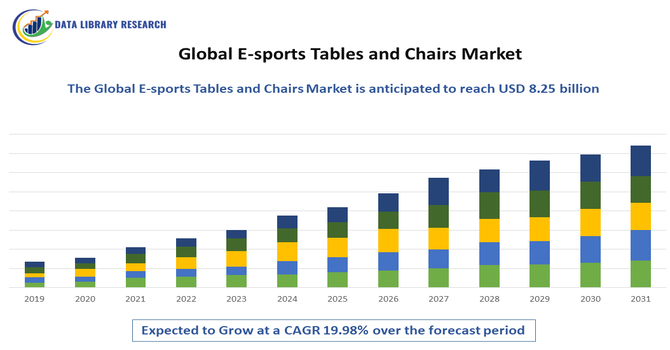
The global e-sports tables and chairs market focuses on designing and manufacturing ergonomic, durable, and technologically advanced furniture tailored for gamers and e-sports professionals. It enhances comfort, posture, and gaming performance while reflecting lifestyle trends. Driven by rising e-sports popularity, it combines innovation, aesthetics, and functionality to meet growing global demand. The growth of the Global E-Sports Tables and Chairs Market is primarily driven by the rapid expansion of the e-sports industry and the increasing popularity of competitive gaming worldwide. Rising participation in professional and amateur gaming tournaments, coupled with growing viewership on streaming platforms, is fueling demand for specialized gaming furniture that enhances performance and comfort.
The Global E-Sports Tables and Chairs Market is witnessing dynamic trends driven by the evolving needs of gamers and the expanding e-sports industry. There is a growing emphasis on ergonomic designs with features such as lumbar support, adjustable armrests, and breathable materials to ensure comfort during long gaming sessions. Integration of smart technologies, including built-in speakers, haptic feedback, wireless charging, and RGB lighting, is enhancing the immersive gaming experience. Customization and aesthetic appeal are increasingly important, with manufacturers offering personalized colors, materials, and collaborative designs with gaming brands. At the same time, a focus on sustainability through eco-friendly materials, energy-efficient production, and recyclable packaging is emerging.
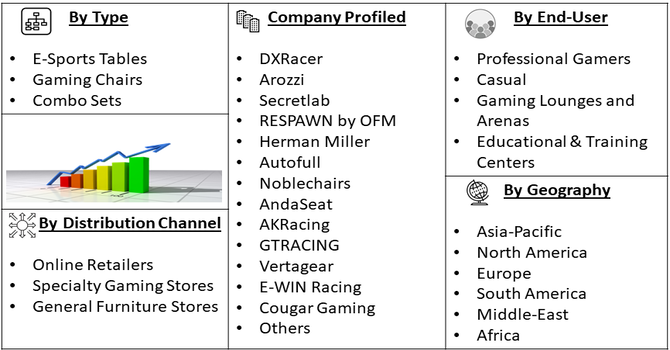
Segmentation: Global E- sports Tables and Chairs Market is segmented By Product Type (E-Sports Tables, Gaming Chairs, Combo Sets), By Material (Wood, Metal, Plastic, Composite Materials), Features (Ergonomic Design, Adjustable Height, Built-in Accessories, Smart Integration), End-User (Professional Gamers, Casual, Gaming Lounges and Arenas, Educational & Training Centers), Distribution Channel (Online Retailers, Specialty Gaming Stores, General Furniture Stores), and Geography (North America, Europe, Asia-Pacific, Middle East and Africa, and South America). The report provides the value (in USD million) for the above segments.
For Detailed Market Segmentation - Get a Free Sample PDF
Market Drivers:
The global expansion of e-sports, fueled by increasing participation in competitive gaming and rising viewership on streaming platforms, is a primary driver for the e-sports tables and chairs market. Professional and amateur gamers alike require specialized furniture that enhances comfort, performance, and gaming efficiency, boosting demand for ergonomic and feature-rich products. For instance, in 2025, Reliance’s wholly-owned subsidiary, RISE Worldwide, entered a strategic joint venture with BLAST Esports to expand the esports business in India. This collaboration aimed to develop new intellectual properties and bring BLAST’s global tournaments to Indian audiences. The partnership accelerated esports growth, driving demand for gaming infrastructure, including specialized e-sports tables and chairs.
Long gaming sessions have increased awareness about posture-related health issues, driving demand for ergonomically designed chairs and adjustable tables. Additionally, features such as built-in cable management, RGB lighting, wireless charging, and smart integrations enhance the gaming experience, making advanced gaming furniture highly sought after among both casual and professional gamers. For instance, in 2025, Pelican Group unveiled Pelicanwork, a premium line of ergonomic office furniture designed for modern professionals seeking elegance and efficiency. The collection featured chairs and desks with advanced ergonomics, sustainable materials, Italian mechanisms, and customizable options. Its launch fueled demand for ergonomic, tech-enabled furniture, indirectly boosting the e-sports tables and chairs market.
Market Restraints:
High price points for premium and technologically advanced gaming furniture make these products less accessible to casual gamers or price-sensitive consumers, especially in emerging markets. Market fragmentation, with numerous local and international brands offering varied products, can create confusion for buyers and make it challenging to establish brand loyalty. Additionally, the shift toward minimalistic or multi-purpose home furniture in small living spaces may reduce demand for specialized gaming setups. Supply chain disruptions and rising costs of materials such as metal, high-quality plastics, and ergonomic components can also increase production expenses, ultimately affecting affordability and market expansion.
The global e-sports tables and chairs market has a significant socio-economic impact, driven by the rapid growth of the gaming and e-sports industries worldwide. It contributes to employment generation across manufacturing, design, logistics, and retail sectors while encouraging technological innovation and ergonomic research. The market supports small and medium enterprises producing specialized gaming furniture, boosting local economies and exports. Socially, it promotes the professionalization of gaming as a viable career path, improving working conditions for gamers through ergonomic solutions that enhance health and productivity. Moreover, increasing consumer demand reflects the rising purchasing power of younger demographics, fostering a new lifestyle economy centered around digital entertainment, performance, and comfort.
Segmental Analysis:
The gaming chairs segment is expected to dominate the market due to the growing emphasis on player comfort and posture support during long gaming sessions. High-performance chairs with lumbar support, adjustable armrests, and breathable materials are highly preferred by both professional and casual gamers. Their ergonomic benefits, coupled with premium designs and customization options, make them a key driver of market growth.
The metal material segment is witnessing strong growth, as metal frames provide durability, stability, and a premium feel for both tables and chairs. Gamers and e-sports arenas prefer metal constructions because they can support longer usage, heavier equipment, and withstand frequent movement, making them ideal for professional setups and long-term investment.
The ergonomic design feature segment is growing rapidly as gamers increasingly seek furniture that reduces strain and improves comfort during extended play. Features such as lumbar support, contoured seating, adjustable backrests, and posture-enhancing designs are becoming standard, addressing health concerns associated with prolonged gaming.
The professional gamers segment is a significant driver of market demand, as competitive players and e-sports teams invest heavily in high-quality tables and chairs to optimize performance. Professional setups require ergonomic, durable, and technologically integrated furniture, driving innovation and premium product offerings in the market.
Online retailers are emerging as the fastest-growing distribution channel due to convenience, a wider product selection, and access to global brands. E-commerce platforms enable consumers to compare products, customize features, and take advantage of direct shipping, making online sales a critical growth driver for the market.
The North America region is expected to witness the highest growth over the forecast period in the Global E-Sports Tables and Chairs Market, driven by the rapid expansion of the e-sports industry and the increasing popularity of competitive gaming across the United States and Canada.
High disposable incomes, widespread adoption of gaming as both a professional and recreational activity, and strong presence of e-sports leagues and tournaments contribute to the rising demand for specialized gaming furniture. For instance, in August 2022, X1Esports acquired Tyrus LLC to expand its reach within the Gen Z demographic and diversify its revenue streams. This acquisition strengthened X1Esports’ position in the North American market, boosting brand presence and driving growth in esports-related products and services, including increased demand for gaming furniture like specialized tables and chairs.
Additionally, the preference for ergonomic, technologically advanced, and customizable tables and chairs among professional gamers, gaming centers, and streaming enthusiasts further fuels market growth. The region’s well-established e-commerce infrastructure also facilitates easy access to premium and feature-rich gaming furniture, reinforcing North America’s position as a key growth market.
| Report Matrics | Details |
| Market Size Value | USD 8.25 billion |
| Growth Rate | CAGR of 19.98 % |
| Forecast | 2026-2033 |
| Historical data | 2021-2024 |
| Base Year | 2025 |
| Report Coverage | Forecasted revenue, company rating, competitive environment, growth drivers, and trends |
| Segment Coverage | Type, Application, End-User, Geography |
| Regional Scope | North America, Europe, Asia Pacific, Middle East |
| Customized scope | Free customization of reports (With 3 months Analysis Support ) |
| To Learn More About This Report | Request a Free Sample Copy |
The Global E-Sports Tables and Chairs Market is characterized by a diverse and competitive landscape, with numerous companies offering specialized furniture solutions tailored to the needs of gamers and e-sports enthusiasts. These companies range from established furniture manufacturers to niche brands focusing exclusively on gaming furniture. The market’s growth is driven by the rising popularity of e-sports tournaments, professional gaming, and the increasing number of gaming content creators worldwide. Manufacturers are emphasizing ergonomic design, durability, and aesthetic appeal to enhance player comfort and performance during extended gaming sessions. Technological integration, such as adjustable features, RGB lighting, and smart connectivity, further adds value and appeal. Additionally, collaborations between gaming brands and furniture makers are fueling innovation and brand differentiation, positioning e-sports tables and chairs as both performance-enhancing tools and lifestyle products within the global gaming ecosystem.
Key players in the market include:
Recent Development:
Q1. What are the main growth driving factors for this market?
The primary growth driver is the explosive global expansion of the esports industry and online gaming, which has dramatically increased the number of dedicated professional and amateur gamers. This translates into a rising demand for ergonomic and specialized furniture that offers comfort and postural support during long gaming sessions. The influence of professional streamers and content creators who showcase elaborate gaming setups also drives consumer purchases. Furthermore, the rising adoption of hybrid and remote work models has led individuals to invest in high-quality, comfortable furniture, blurring the line between office and gaming equipment.
Q2. What are the main restraining factors for this market?
One of the significant restraining factors is the high cost of premium, feature-rich gaming furniture, which makes top-tier models inaccessible to budget-conscious consumers. This price sensitivity leads many to opt for cheaper, conventional office chairs or desks as alternatives. Additionally, the market faces strong competition from a vast influx of low-cost or counterfeit products, which can dilute brand reputation and mislead consumers. Another constraint is the volatility of raw material prices (like steel and upholstery) and potential supply chain disruptions, which increase manufacturing costs and affect market stability.
Q3. Which segment is expected to witness high growth?
The Asia-Pacific (APAC) region is expected to witness the highest growth rate, fueled by its immense gaming population, rapidly increasing disposable incomes, and the widespread establishment of dedicated gaming cafés and esports arenas in countries like China, South Korea, and India. In terms of end-user, the Commercial Segment (esports facilities, training centers, and gaming cafes) is forecast for high growth, driven by bulk orders and the need for standardized, durable, high-performance setups. For products, tables/chairs with technological integration, such as electric height adjustment and smart features, will see rapid adoption.
Q4. Who are the top major players for this market?
The global E-sports tables and chairs market is highly competitive, featuring both established furniture brands and gaming-centric specialists. Top major players in the chairs segment include Secretlab, known for its premium ergonomic designs and professional partnerships, and DXRacer, one of the pioneering brands in the racing-style chair market. Other key players are Noblechairs, Vertagear, and hardware manufacturers that have diversified, such as Razer Inc. and Corsair Gaming. For tables and broader furniture, major brands like IKEA (with its gaming line) are also gaining significant market share.
Q5. Which country is the largest player?
The United States is generally considered the largest country in the global market in terms of revenue and market share, underpinned by its immense gaming community, high consumer disposable income, and the presence of major esports organizations and events. North America, as a whole, leads in the adoption of premium and high-end gaming furniture. However, when considering the entire Asia-Pacific region, it collectively represents a larger overall gaming user base and is the fastest-growing market, with China being a colossal player in both consumption and manufacturing.
Data Library Research are conducted by industry experts who offer insight on industry structure, market segmentations technology assessment and competitive landscape (CL), and penetration, as well as on emerging trends. Their analysis is based on primary interviews (~ 80%) and secondary research (~ 20%) as well as years of professional expertise in their respective industries. Adding to this, by analysing historical trends and current market positions, our analysts predict where the market will be headed for the next five years. Furthermore, the varying trends of segment & categories geographically presented are also studied and the estimated based on the primary & secondary research.
In this particular report from the supply side Data Library Research has conducted primary surveys (interviews) with the key level executives (VP, CEO’s, Marketing Director, Business Development Manager and SOFT) of the companies that active & prominent as well as the midsized organization
FIGURE 1: DLR RESEARH PROCESS
Extensive primary research was conducted to gain a deeper insight of the market and industry performance. The analysis is based on both primary and secondary research as well as years of professional expertise in the respective industries.
In addition to analysing current and historical trends, our analysts predict where the market is headed over the next five years.
It varies by segment for these categories geographically presented in the list of market tables. Speaking about this particular report we have conducted primary surveys (interviews) with the key level executives (VP, CEO’s, Marketing Director, Business Development Manager and many more) of the major players active in the market.
Secondary ResearchSecondary research was mainly used to collect and identify information useful for the extensive, technical, market-oriented, and Friend’s study of the Global Extra Neutral Alcohol. It was also used to obtain key information about major players, market classification and segmentation according to the industry trends, geographical markets, and developments related to the market and technology perspectives. For this study, analysts have gathered information from various credible sources, such as annual reports, sec filings, journals, white papers, SOFT presentations, and company web sites.
Market Size EstimationBoth, top-down and bottom-up approaches were used to estimate and validate the size of the Global market and to estimate the size of various other dependent submarkets in the overall Extra Neutral Alcohol. The key players in the market were identified through secondary research and their market contributions in the respective geographies were determined through primary and secondary research.
Forecast Model