Emergency Response Equipment Rental Market Overview and Analysis
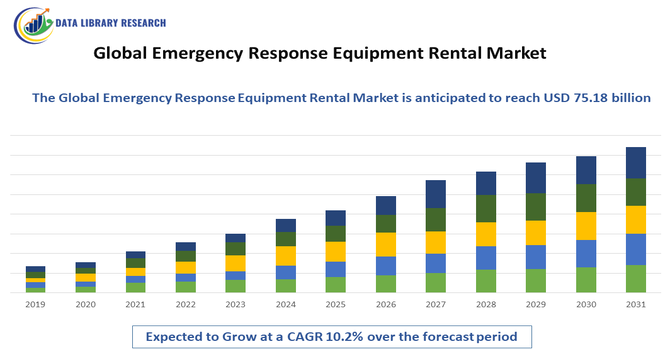
The Global Emergency Response Equipment Rental Market size is forecasted to be worth USD 48.95 billion in 2026, expected to achieve USD 75.18 billion by 2033 with a CAGR of 10.2% from 20262-2033.
Get Complete Analysis Of The Report - Download Updated Free Sample PDF
The Global Emergency Response Equipment Rental Market refers to the industry that provides short-term or long-term rental services of specialized equipment used in disaster management, rescue operations, firefighting, medical emergencies, and hazardous incident response. It includes equipment such as ambulances, fire trucks, portable shelters, lighting systems, generators, communication devices, decontamination units, and heavy rescue tools. The market serves government agencies, military forces, disaster management authorities, and private organizations. It enables rapid access to critical equipment without high ownership costs, improving operational readiness during emergencies. The rental model ensures flexibility, scalability, and cost efficiency in responding to unpredictable and large-scale emergency situations worldwide.
Emergency Response Equipment Rental Market Latest Trends
The Global Emergency Response Equipment Rental Market is witnessing strong growth driven by increasing frequency of natural disasters, climate change impacts, and rising urbanization risks. Governments are investing heavily in disaster preparedness and rapid response infrastructure. Rental companies are integrating advanced technologies such as IoT-enabled tracking, GPS monitoring, and real-time communication systems into emergency equipment. Demand for mobile command centers, temporary shelters, and portable power solutions is rising significantly. Public-private partnerships are expanding to improve emergency readiness. Additionally, digital platforms for equipment booking and fleet management are enhancing efficiency, while automation and smart logistics are transforming emergency response capabilities globally.
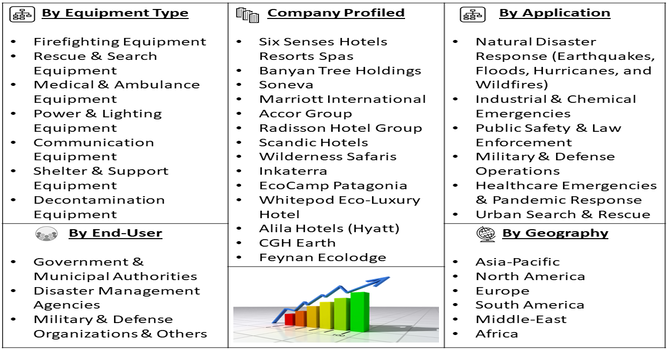
Segmentation: The Global Emergency Response Equipment Rental Market is segmented by Equipment Type (Firefighting Equipment, Rescue & Search Equipment, Medical & Ambulance Equipment, Power & Lighting Equipment, Communication Equipment, Shelter & Support Equipment and Decontamination Equipment), Application (Natural Disaster Response (Earthquakes, Floods, Hurricanes, and Wildfires), Industrial & Chemical Emergencies, Public Safety & Law Enforcement, Military & Defense Operations, Healthcare Emergencies & Pandemic Response and Urban Search & Rescue (USAR)), End-User (Government & Municipal Authorities, Disaster Management Agencies, Military & Defense Organizations, Healthcare Institutions, Industrial & Manufacturing Companies and Non-Governmental Organizations (NGOs)), and Geography (North America, Europe, Asia-Pacific, Middle East and Africa, and South America). The report provides the value (in USD million) for the above segments.
For Detailed Market Segmentation - Get a Free Sample PDF
Market Drivers:
- Increasing frequency and severity of natural disasters
A major driver of the Global Emergency Response Equipment Rental Market is the increasing frequency and severity of natural disasters such as floods, wildfires, hurricanes, and earthquakes. Climate change has significantly intensified the need for rapid emergency preparedness and response systems worldwide.
Governments and disaster management agencies are investing heavily in rental-based solutions to ensure immediate access to critical equipment without the burden of ownership costs. Rental services provide scalability and flexibility during unpredictable crises. For instance, in January 2026, The National Center for Emergency, Crisis, and Disaster Management and UNDP signed an MoU to strengthen Libya’s disaster risk management and preparedness systems. This enhanced institutional capacity and coordination, thereby supporting growth in the global emergency response equipment rental market through improved demand for rapid-deployment emergency solutions.
Additionally, urban population growth increases disaster vulnerability, further driving demand for advanced emergency equipment rental solutions that can be quickly deployed during large-scale emergency situations.
Rising government focus on strengthening disaster management infrastructure and emergency preparedness programs.
Many countries are implementing strict regulations and policies that require rapid response capabilities for public safety. For instance, in 2025, UNDP Ghana and the government developed a Disaster Management and Risk Finance Strategy Framework to enhance climate disaster response and funding readiness. This strengthened government focus on emergency preparedness, thereby boosting the global emergency response equipment rental market through improved demand for rapid-deployment disaster resources.
Rental services enable agencies to access advanced equipment such as mobile hospitals, fire suppression systems, and communication units without large capital investments. Technological advancements, including GPS tracking, IoT-enabled monitoring, and real-time coordination platforms, are improving operational efficiency in emergency response. Increasing collaboration between public agencies and private rental providers is also enhancing service delivery, ensuring faster deployment and better coordination during critical emergency situations globally.
Market Restraints:
- High operational complexity and logistical challenges
A significant restraint in the Global Emergency Response Equipment Rental Market is the high operational complexity and logistical challenges associated with rapid deployment of equipment during emergencies. Ensuring timely availability, transportation, and maintenance of specialized equipment requires advanced coordination and infrastructure. In many developing regions, inadequate logistics networks and limited funding hinder efficient rental service delivery. Additionally, high insurance costs and strict regulatory compliance requirements increase operational expenses for rental providers. Equipment downtime, damage risks during disaster usage, and shortage of skilled personnel further limit market efficiency. These challenges collectively restrict smooth scalability and consistent service quality in emergency situations worldwide.
Socioeconomic Impact on Emergency Response Equipment Rental Market
The emergency response equipment rental market has a significant socioeconomic impact by improving disaster preparedness, reducing loss of life, and enhancing community resilience. It ensures rapid access to essential equipment during crises, especially in regions lacking permanent infrastructure. This supports public safety, healthcare response, and economic recovery after disasters. The rental model reduces capital burden on governments and organizations, enabling efficient resource allocation. It also creates employment opportunities in logistics, maintenance, and emergency services. However, unequal access to advanced rental services in developing regions can limit response efficiency, highlighting the need for broader infrastructure investment and equitable emergency preparedness strategies globally.
Segmental Analysis:
- Firefighting Equipment segment is expected to witness highest growth over the forecast period
The firefighting equipment segment is expected to witness the highest growth over the forecast period due to increasing frequency of urban fires, industrial accidents, and wildfires caused by climate change. Emergency response agencies and municipalities are increasingly relying on rental services to access advanced firefighting systems such as fire trucks, foam suppression units, and portable extinguishers without high ownership costs. Rental models ensure rapid deployment, scalability, and access to modern, well-maintained equipment. Growing urbanization and stricter fire safety regulations are further driving demand. Additionally, technological advancements in firefighting systems and increasing investment in disaster preparedness infrastructure are significantly boosting segment expansion globally.
- Earthquakes segment is expected to witness highest growth over the forecast period
The earthquakes segment is expected to witness the highest growth over the forecast period due to rising seismic activity in vulnerable regions and increasing awareness of disaster preparedness. Governments and disaster management authorities are investing heavily in rapid response systems to minimize loss of life and infrastructure damage. Rental equipment such as rescue tools, mobile command centers, temporary shelters, and medical units are critical in earthquake response scenarios. The unpredictability of earthquakes makes rental solutions highly preferred for immediate deployment. Additionally, international aid organizations and emergency response teams are expanding their preparedness capabilities, further accelerating demand for earthquake-related emergency equipment rental services globally.
- Disaster Management Agencies segment is expected to witness highest growth over the forecast period
The disaster management agencies segment is expected to witness the highest growth over the forecast period due to increasing government focus on strengthening emergency preparedness and response capabilities. These agencies play a central role in coordinating rescue operations, relief distribution, and infrastructure recovery during disasters. Rental equipment provides them with flexible access to critical resources such as communication systems, rescue tools, medical units, and temporary shelters without heavy capital investment. Rising frequency of natural disasters and climate-related emergencies is further driving demand. Additionally, international collaboration and funding for disaster resilience programs are enhancing the adoption of advanced rental-based emergency response solutions globally.
- North American region is expected to witness highest growth over the forecast period
The North American region is expected to witness the highest growth over the forecast period due to strong investments in disaster preparedness, advanced emergency response infrastructure, and frequent exposure to natural disasters such as hurricanes, wildfires, and floods. The presence of leading rental service providers and well-established emergency management systems further supports market expansion. Government agencies in the United States and Canada are increasingly adopting rental-based solutions to enhance operational efficiency and reduce capital expenditure. Technological advancements, including AI-based logistics, GPS tracking, and real-time communication systems, are improving response capabilities, making North America a key growth hub in the emergency equipment rental market globally.
| Report Matrics |
Details |
| Market Size Value |
USD 75.18 billion |
| Growth Rate |
CAGR of 10.2 % |
| Forecast |
2026-2033 |
| Historical data |
2021-2024 |
| Base Year |
2025 |
| Report Coverage |
Forecasted revenue, company rating, competitive environment, growth drivers, and trends |
| Segment Coverage |
Type, Application, End-User, Geography |
| Regional Scope |
North America, Europe, Asia Pacific, Middle East |
| Customized scope |
Free customization of reports (With 3 months Analysis Support ) |
| To Learn More About This Report |
Request a Free Sample Copy |
Emergency Response Equipment Rental Market Competitive Landscape
The competitive landscape of the Global Emergency Response Equipment Rental Market is moderately fragmented, comprising international rental companies, regional service providers, and specialized emergency equipment suppliers. Companies compete based on equipment availability, response time, technological integration, and service reliability. Key strategies include fleet expansion, partnerships with government agencies, and investment in digital platforms for emergency logistics management. Advanced tracking systems, AI-based deployment planning, and predictive maintenance are becoming competitive differentiators. Mergers and acquisitions are also common to strengthen geographic presence. The market is highly service-driven, where operational efficiency, rapid deployment capability, and compliance with safety standards define competitive advantage.
The major players are:
- United Rentals Inc.
- Ashtead Group plc (Sunbelt Rentals)
- Herc Holdings Inc.
- Aggreko plc
- Caterpillar Inc.
- Kennards Hire
- Ahern Rentals
- Aktio Corporation
- Loxam Group
- Boels Rental
- Speedy Hire plc
- H&E Equipment Services Inc.
- Cooper Equipment Rentals
- Sunstate Equipment Co.
- Max Equipment Rental
- Byrne Equipment Rental
- Fabick Cat Rentals
- Thompson Machinery Rentals
- Blueline Rental
Recent Development
- In December 2025, Japan’s ETC 2.0 system enhanced data-driven mobility insights, enabling better traffic management and disaster response planning. This improved coordination and efficiency in emergency situations, indirectly boosting the global emergency response equipment rental market by increasing demand for technologically integrated, rapid-deployment disaster response solutions.
- In August 2025, INCOIS and NDMA strengthened India’s coastal disaster preparedness through marine hazard services and a cell broadcast alert system for cyclone warnings. This initiative improved emergency response readiness, indirectly boosting the global emergency response equipment rental market by increasing demand for rapid-deployment disaster management solutions.
Frequently Asked Questions (FAQ) :
Q1. What are the main growth-driving factors for this market?
The market is primarily driven by the increasing frequency and intensity of natural disasters, such as wildfires, floods, and hurricanes. Key catalysts include the cost-efficiency of renting specialized gear for short-term crises, rising government investments in disaster preparedness, and the integration of advanced technologies like drones and IoT-enabled sensors for real-time monitoring.
Q2. What are the main restraining factors for this market?
Growth is hindered by budget constraints in developing regions, which limit the adoption of high-tech rental solutions. Significant barriers also include logistical delays during peak disasters when equipment demand exceeds supply, a lack of standardized interoperability between different agency systems, and the high maintenance costs required to keep specialized life-saving equipment mission-ready.
Q3. Who are the top major players for this market?
The market is led by diversified rental giants and specialized emergency service providers: • United Rentals, Inc. • Aggreko PLC (Temporary power and cooling) • Sunbelt Rentals (Ashtead Group) • Herc Rentals • Loxam Group • ServiceMaster Restore • BELFOR Property Restoration • Rosenbauer International AG
Q4. Which country is the largest player?
The United States is the largest player in the market, holding approximately 34% to 37% of the global revenue share. This dominance is fuelled by a highly structured federal response system (FEMA), frequent extreme weather events, and a mature rental infrastructure. However, China is the fastest-growing single-country market, driven by massive state-led emergency infrastructure expansion.
List of Figures
Figure 1: Global Emergency Response Equipment Rental Market Revenue Breakdown (USD Billion, %) by Region, 2022 & 2029
Figure 2: Global Emergency Response Equipment Rental Market Value Share (%), By Segment 1, 2022 & 2029
Figure 3: Global Emergency Response Equipment Rental Market Forecast (USD Billion), by Sub-Segment 1, 2018-2029
Figure 4: Global Emergency Response Equipment Rental Market Forecast (USD Billion), by Sub-Segment 2, 2018-2029
Figure 5: Global Emergency Response Equipment Rental Market Value Share (%), By Segment 2, 2022 & 2029
Figure 6: Global Emergency Response Equipment Rental Market Forecast (USD Billion), by Sub-Segment 1, 2018-2029
Figure 7: Global Emergency Response Equipment Rental Market Forecast (USD Billion), by Sub-Segment 2, 2018-2029
Figure 8: Global Emergency Response Equipment Rental Market Forecast (USD Billion), by Sub-Segment 3, 2018-2029
Figure 9: Global Emergency Response Equipment Rental Market Forecast (USD Billion), by Others, 2018-2029
Figure 10: Global Emergency Response Equipment Rental Market Value Share (%), By Segment 3, 2022 & 2029
Figure 11: Global Emergency Response Equipment Rental Market Forecast (USD Billion), by Sub-Segment 1, 2018-2029
Figure 12: Global Emergency Response Equipment Rental Market Forecast (USD Billion), by Sub-Segment 2, 2018-2029
Figure 13: Global Emergency Response Equipment Rental Market Forecast (USD Billion), by Sub-Segment 3, 2018-2029
Figure 14: Global Emergency Response Equipment Rental Market Forecast (USD Billion), by Others, 2018-2029
Figure 15: Global Emergency Response Equipment Rental Market Value (USD Billion), by Region, 2022 & 2029
Figure 16: North America Emergency Response Equipment Rental Market Value Share (%), By Segment 1, 2022 & 2029
Figure 17: North America Emergency Response Equipment Rental Market Forecast (USD Billion), by Sub-Segment 1, 2018-2029
Figure 18: North America Emergency Response Equipment Rental Market Forecast (USD Billion), by Sub-Segment 2, 2018-2029
Figure 19: North America Emergency Response Equipment Rental Market Value Share (%), By Segment 2, 2022 & 2029
Figure 20: North America Emergency Response Equipment Rental Market Forecast (USD Billion), by Sub-Segment 1, 2018-2029
Figure 21: North America Emergency Response Equipment Rental Market Forecast (USD Billion), by Sub-Segment 2, 2018-2029
Figure 22: North America Emergency Response Equipment Rental Market Forecast (USD Billion), by Sub-Segment 3, 2018-2029
Figure 23: North America Emergency Response Equipment Rental Market Forecast (USD Billion), by Others, 2018-2029
Figure 24: North America Emergency Response Equipment Rental Market Value Share (%), By Segment 3, 2022 & 2029
Figure 25: North America Emergency Response Equipment Rental Market Forecast (USD Billion), by Sub-Segment 1, 2018-2029
Figure 26: North America Emergency Response Equipment Rental Market Forecast (USD Billion), by Sub-Segment 2, 2018-2029
Figure 27: North America Emergency Response Equipment Rental Market Forecast (USD Billion), by Sub-Segment 3, 2018-2029
Figure 28: North America Emergency Response Equipment Rental Market Forecast (USD Billion), by Others, 2018-2029
Figure 29: North America Emergency Response Equipment Rental Market Forecast (USD Billion), by U.S., 2018-2029
Figure 30: North America Emergency Response Equipment Rental Market Forecast (USD Billion), by Canada, 2018-2029
Figure 31: Latin America Emergency Response Equipment Rental Market Value Share (%), By Segment 1, 2022 & 2029
Figure 32: Latin America Emergency Response Equipment Rental Market Forecast (USD Billion), by Sub-Segment 1, 2018-2029
Figure 33: Latin America Emergency Response Equipment Rental Market Forecast (USD Billion), by Sub-Segment 2, 2018-2029
Figure 34: Latin America Emergency Response Equipment Rental Market Value Share (%), By Segment 2, 2022 & 2029
Figure 35: Latin America Emergency Response Equipment Rental Market Forecast (USD Billion), by Sub-Segment 1, 2018-2029
Figure 36: Latin America Emergency Response Equipment Rental Market Forecast (USD Billion), by Sub-Segment 2, 2018-2029
Figure 37: Latin America Emergency Response Equipment Rental Market Forecast (USD Billion), by Sub-Segment 3, 2018-2029
Figure 38: Latin America Emergency Response Equipment Rental Market Forecast (USD Billion), by Others, 2018-2029
Figure 39: Latin America Emergency Response Equipment Rental Market Value Share (%), By Segment 3, 2022 & 2029
Figure 40: Latin America Emergency Response Equipment Rental Market Forecast (USD Billion), by Sub-Segment 1, 2018-2029
Figure 41: Latin America Emergency Response Equipment Rental Market Forecast (USD Billion), by Sub-Segment 2, 2018-2029
Figure 42: Latin America Emergency Response Equipment Rental Market Forecast (USD Billion), by Sub-Segment 3, 2018-2029
Figure 43: Latin America Emergency Response Equipment Rental Market Forecast (USD Billion), by Others, 2018-2029
Figure 44: Latin America Emergency Response Equipment Rental Market Forecast (USD Billion), by Brazil, 2018-2029
Figure 45: Latin America Emergency Response Equipment Rental Market Forecast (USD Billion), by Mexico, 2018-2029
Figure 46: Latin America Emergency Response Equipment Rental Market Forecast (USD Billion), by Rest of Latin America, 2018-2029
Figure 47: Europe Emergency Response Equipment Rental Market Value Share (%), By Segment 1, 2022 & 2029
Figure 48: Europe Emergency Response Equipment Rental Market Forecast (USD Billion), by Sub-Segment 1, 2018-2029
Figure 49: Europe Emergency Response Equipment Rental Market Forecast (USD Billion), by Sub-Segment 2, 2018-2029
Figure 50: Europe Emergency Response Equipment Rental Market Value Share (%), By Segment 2, 2022 & 2029
Figure 51: Europe Emergency Response Equipment Rental Market Forecast (USD Billion), by Sub-Segment 1, 2018-2029
Figure 52: Europe Emergency Response Equipment Rental Market Forecast (USD Billion), by Sub-Segment 2, 2018-2029
Figure 53: Europe Emergency Response Equipment Rental Market Forecast (USD Billion), by Sub-Segment 3, 2018-2029
Figure 54: Europe Emergency Response Equipment Rental Market Forecast (USD Billion), by Others, 2018-2029
Figure 55: Europe Emergency Response Equipment Rental Market Value Share (%), By Segment 3, 2022 & 2029
Figure 56: Europe Emergency Response Equipment Rental Market Forecast (USD Billion), by Sub-Segment 1, 2018-2029
Figure 57: Europe Emergency Response Equipment Rental Market Forecast (USD Billion), by Sub-Segment 2, 2018-2029
Figure 58: Europe Emergency Response Equipment Rental Market Forecast (USD Billion), by Sub-Segment 3, 2018-2029
Figure 59: Europe Emergency Response Equipment Rental Market Forecast (USD Billion), by Others, 2018-2029
Figure 60: Europe Emergency Response Equipment Rental Market Forecast (USD Billion), by U.K., 2018-2029
Figure 61: Europe Emergency Response Equipment Rental Market Forecast (USD Billion), by Germany, 2018-2029
Figure 62: Europe Emergency Response Equipment Rental Market Forecast (USD Billion), by France, 2018-2029
Figure 63: Europe Emergency Response Equipment Rental Market Forecast (USD Billion), by Italy, 2018-2029
Figure 64: Europe Emergency Response Equipment Rental Market Forecast (USD Billion), by Spain, 2018-2029
Figure 65: Europe Emergency Response Equipment Rental Market Forecast (USD Billion), by Russia, 2018-2029
Figure 66: Europe Emergency Response Equipment Rental Market Forecast (USD Billion), by Rest of Europe, 2018-2029
Figure 67: Asia Pacific Emergency Response Equipment Rental Market Value Share (%), By Segment 1, 2022 & 2029
Figure 68: Asia Pacific Emergency Response Equipment Rental Market Forecast (USD Billion), by Sub-Segment 1, 2018-2029
Figure 69: Asia Pacific Emergency Response Equipment Rental Market Forecast (USD Billion), by Sub-Segment 2, 2018-2029
Figure 70: Asia Pacific Emergency Response Equipment Rental Market Value Share (%), By Segment 2, 2022 & 2029
Figure 71: Asia Pacific Emergency Response Equipment Rental Market Forecast (USD Billion), by Sub-Segment 1, 2018-2029
Figure 72: Asia Pacific Emergency Response Equipment Rental Market Forecast (USD Billion), by Sub-Segment 2, 2018-2029
Figure 73: Asia Pacific Emergency Response Equipment Rental Market Forecast (USD Billion), by Sub-Segment 3, 2018-2029
Figure 74: Asia Pacific Emergency Response Equipment Rental Market Forecast (USD Billion), by Others, 2018-2029
Figure 75: Asia Pacific Emergency Response Equipment Rental Market Value Share (%), By Segment 3, 2022 & 2029
Figure 76: Asia Pacific Emergency Response Equipment Rental Market Forecast (USD Billion), by Sub-Segment 1, 2018-2029
Figure 77: Asia Pacific Emergency Response Equipment Rental Market Forecast (USD Billion), by Sub-Segment 2, 2018-2029
Figure 78: Asia Pacific Emergency Response Equipment Rental Market Forecast (USD Billion), by Sub-Segment 3, 2018-2029
Figure 79: Asia Pacific Emergency Response Equipment Rental Market Forecast (USD Billion), by Others, 2018-2029
Figure 80: Asia Pacific Emergency Response Equipment Rental Market Forecast (USD Billion), by China, 2018-2029
Figure 81: Asia Pacific Emergency Response Equipment Rental Market Forecast (USD Billion), by India, 2018-2029
Figure 82: Asia Pacific Emergency Response Equipment Rental Market Forecast (USD Billion), by Japan, 2018-2029
Figure 83: Asia Pacific Emergency Response Equipment Rental Market Forecast (USD Billion), by Australia, 2018-2029
Figure 84: Asia Pacific Emergency Response Equipment Rental Market Forecast (USD Billion), by Southeast Asia, 2018-2029
Figure 85: Asia Pacific Emergency Response Equipment Rental Market Forecast (USD Billion), by Rest of Asia Pacific, 2018-2029
Figure 86: Middle East & Africa Emergency Response Equipment Rental Market Value Share (%), By Segment 1, 2022 & 2029
Figure 87: Middle East & Africa Emergency Response Equipment Rental Market Forecast (USD Billion), by Sub-Segment 1, 2018-2029
Figure 88: Middle East & Africa Emergency Response Equipment Rental Market Forecast (USD Billion), by Sub-Segment 2, 2018-2029
Figure 89: Middle East & Africa Emergency Response Equipment Rental Market Value Share (%), By Segment 2, 2022 & 2029
Figure 90: Middle East & Africa Emergency Response Equipment Rental Market Forecast (USD Billion), by Sub-Segment 1, 2018-2029
Figure 91: Middle East & Africa Emergency Response Equipment Rental Market Forecast (USD Billion), by Sub-Segment 2, 2018-2029
Figure 92: Middle East & Africa Emergency Response Equipment Rental Market Forecast (USD Billion), by Sub-Segment 3, 2018-2029
Figure 93: Middle East & Africa Emergency Response Equipment Rental Market Forecast (USD Billion), by Others, 2018-2029
Figure 94: Middle East & Africa Emergency Response Equipment Rental Market Value Share (%), By Segment 3, 2022 & 2029
Figure 95: Middle East & Africa Emergency Response Equipment Rental Market Forecast (USD Billion), by Sub-Segment 1, 2018-2029
Figure 96: Middle East & Africa Emergency Response Equipment Rental Market Forecast (USD Billion), by Sub-Segment 2, 2018-2029
Figure 97: Middle East & Africa Emergency Response Equipment Rental Market Forecast (USD Billion), by Sub-Segment 3, 2018-2029
Figure 98: Middle East & Africa Emergency Response Equipment Rental Market Forecast (USD Billion), by Others, 2018-2029
Figure 99: Middle East & Africa Emergency Response Equipment Rental Market Forecast (USD Billion), by GCC, 2018-2029
Figure 100: Middle East & Africa Emergency Response Equipment Rental Market Forecast (USD Billion), by South Africa, 2018-2029
Figure 101: Middle East & Africa Emergency Response Equipment Rental Market Forecast (USD Billion), by Rest of Middle East & Africa, 2018-2029
List of Tables
Table 1: Global Emergency Response Equipment Rental Market Revenue (USD Billion) Forecast, by Segment 1, 2018-2029
Table 2: Global Emergency Response Equipment Rental Market Revenue (USD Billion) Forecast, by Segment 2, 2018-2029
Table 3: Global Emergency Response Equipment Rental Market Revenue (USD Billion) Forecast, by Segment 3, 2018-2029
Table 4: Global Emergency Response Equipment Rental Market Revenue (USD Billion) Forecast, by Region, 2018-2029
Table 5: North America Emergency Response Equipment Rental Market Revenue (USD Billion) Forecast, by Segment 1, 2018-2029
Table 6: North America Emergency Response Equipment Rental Market Revenue (USD Billion) Forecast, by Segment 2, 2018-2029
Table 7: North America Emergency Response Equipment Rental Market Revenue (USD Billion) Forecast, by Segment 3, 2018-2029
Table 8: North America Emergency Response Equipment Rental Market Revenue (USD Billion) Forecast, by Country, 2018-2029
Table 9: Europe Emergency Response Equipment Rental Market Revenue (USD Billion) Forecast, by Segment 1, 2018-2029
Table 10: Europe Emergency Response Equipment Rental Market Revenue (USD Billion) Forecast, by Segment 2, 2018-2029
Table 11: Europe Emergency Response Equipment Rental Market Revenue (USD Billion) Forecast, by Segment 3, 2018-2029
Table 12: Europe Emergency Response Equipment Rental Market Revenue (USD Billion) Forecast, by Country, 2018-2029
Table 13: Latin America Emergency Response Equipment Rental Market Revenue (USD Billion) Forecast, by Segment 1, 2018-2029
Table 14: Latin America Emergency Response Equipment Rental Market Revenue (USD Billion) Forecast, by Segment 2, 2018-2029
Table 15: Latin America Emergency Response Equipment Rental Market Revenue (USD Billion) Forecast, by Segment 3, 2018-2029
Table 16: Latin America Emergency Response Equipment Rental Market Revenue (USD Billion) Forecast, by Country, 2018-2029
Table 17: Asia Pacific Emergency Response Equipment Rental Market Revenue (USD Billion) Forecast, by Segment 1, 2018-2029
Table 18: Asia Pacific Emergency Response Equipment Rental Market Revenue (USD Billion) Forecast, by Segment 2, 2018-2029
Table 19: Asia Pacific Emergency Response Equipment Rental Market Revenue (USD Billion) Forecast, by Segment 3, 2018-2029
Table 20: Asia Pacific Emergency Response Equipment Rental Market Revenue (USD Billion) Forecast, by Country, 2018-2029
Table 21: Middle East & Africa Emergency Response Equipment Rental Market Revenue (USD Billion) Forecast, by Segment 1, 2018-2029
Table 22: Middle East & Africa Emergency Response Equipment Rental Market Revenue (USD Billion) Forecast, by Segment 2, 2018-2029
Table 23: Middle East & Africa Emergency Response Equipment Rental Market Revenue (USD Billion) Forecast, by Segment 3, 2018-2029
Table 24: Middle East & Africa Emergency Response Equipment Rental Market Revenue (USD Billion) Forecast, by Country, 2018-2029
Research Process
Data Library Research are conducted by industry experts who offer insight on
industry structure, market segmentations technology assessment and competitive landscape (CL), and penetration, as well as on emerging trends. Their analysis is based on primary interviews (~ 80%) and secondary research (~ 20%) as well as years of professional expertise in their respective industries. Adding to this, by analysing historical trends and current market positions, our analysts predict where the market will be headed for the next five years. Furthermore, the varying trends of segment & categories geographically presented are also studied and the estimated based on the primary & secondary research.
In this particular report from the supply side Data Library Research has conducted primary surveys (interviews) with the key level executives (VP, CEO’s, Marketing Director, Business Development Manager
and SOFT) of the companies that active & prominent as well as the midsized organization
FIGURE 1: DLR RESEARH PROCESS
![research-methodology1]()
Primary Research
Extensive primary research was conducted to gain a deeper insight of the market and industry performance. The analysis is based on both primary and secondary research as well as years of professional expertise in the respective industries.
In addition to analysing current and historical trends, our analysts predict where the market is headed over the next five years.
It varies by segment for these categories geographically presented in the list of market tables. Speaking about this particular report we have conducted primary surveys (interviews) with the key level executives (VP, CEO’s, Marketing Director, Business Development Manager and many more) of the major players active in the market.
Secondary Research
Secondary research was mainly used to collect and identify information useful for the extensive, technical, market-oriented, and Friend’s study of the Global Extra Neutral Alcohol. It was also used to obtain key information about major players, market classification and segmentation according to the industry trends, geographical markets, and developments related to the market and technology perspectives. For this study, analysts have gathered information from various credible sources, such as annual reports, sec filings, journals, white papers, SOFT presentations, and company web sites.
Market Size Estimation
Both, top-down and bottom-up approaches were used to estimate and validate the size of the Global market and to estimate the size of various other dependent submarkets in the overall Extra Neutral Alcohol. The key players in the market were identified through secondary research and their market contributions in the respective geographies were determined through primary and secondary research.
Forecast Model
![research-methodology2]()