Harmonizer Plugin Market Overview and Analysis:

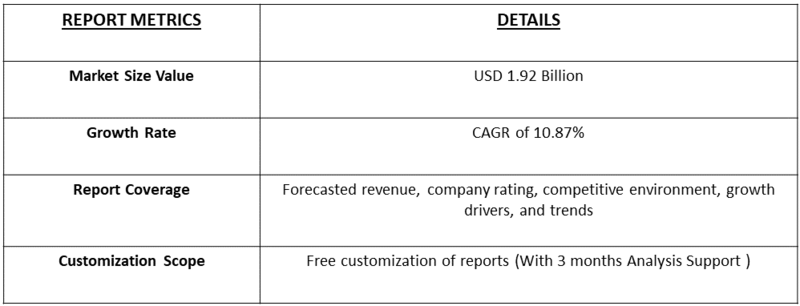
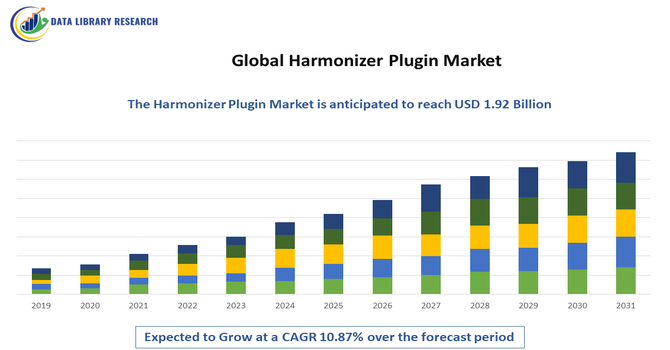
The Harmonizer Plugin Market was valued at approximately USD 0.85 Billion in 2025 and is projected to reach around USD 1.92 Billion by 2032. The market is forecast to expand at a healthy rate, with a CAGR of about 10.87% over the forecast period (2025–2032).

The Global Harmonizer Plugin Market is experiencing steady growth, driven primarily by the rising adoption of digital audio workstations (DAWs), the expansion of home studios, and increasing demand for high-quality vocal processing tools in music production. As musicians, producers, and content creators seek more advanced solutions for pitch shifting, harmony generation, and vocal enhancement, harmonizer plugins have become essential in modern audio workflows.

The surge in independent music creation, growth of streaming platforms, and widespread availability of affordable professional-grade software further accelerate market expansion. Additionally, technological advancements such as AI-powered harmony generation, real-time pitch correction, and seamless integration with major DAWs continue to push the market forward by enabling more intuitive and efficient music production experiences.

Harmonizer Plugin Market Latest Trends

The Global Harmonizer Plugin Market is evolving rapidly, with a major shift toward AI-powered harmony generation, where machine learning algorithms analyze vocal or MIDI input in real time to produce natural-sounding, context-aware harmonies that adapt dynamically. Another key trend is the rise of cloud-based harmonizer plugins, which enable remote collaboration, storage of user sessions online, and real-time harmonic processing without the need for local CPU-intensive computing. In addition, the industry is moving toward subscription-based licensing, reducing upfront costs for creators and enabling continuous access to updates and new features. Cross-platform compatibility is also becoming increasingly important, with developers ensuring seamless operation across macOS, Windows, and DAWs, empowering musicians to work across devices and environments. Finally, ethical AI voice-modelling tools are emerging such as Antares’s MetaMorph that use responsibly trained vocal models to generate harmonies while preserving creative authenticity.

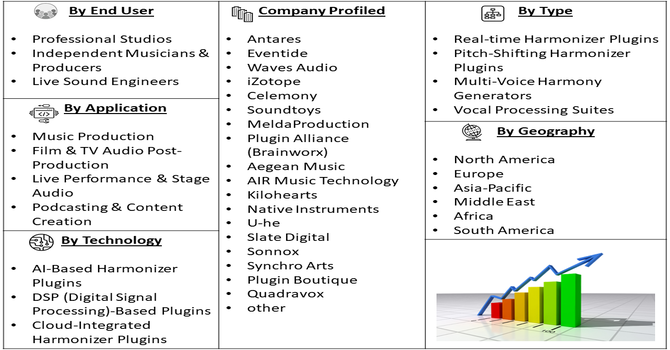
Segmentation: Global Harmonizer Plugin Market is segmented By Plugin Type (Real-time Harmonizer Plugins, Pitch-Shifting Harmonizer Plugins, Multi-Voice Harmony Generators, Vocal Processing Suites), Technology (AI-Based Harmonizer Plugins, DSP (Digital Signal Processing)-Based Plugins, Cloud-Integrated Harmonizer Plugins), Application (Music Production, Film & TV Audio Post-Production, Live Performance & Stage Audio, Podcasting & Content Creation), End User (Professional Studios, Independent Musicians & Producers, Live Sound Engineers), and Geography (North America, Europe, Asia-Pacific, Middle East and Africa, and South America). The report provides the value (in USD million) for the above segments.
Market Drivers:

  • Rising Adoption of Home Studios and Independent Music Production

The strongest drivers of the harmonizer plugin market is the rapid rise of home-based music production, fueled by affordable recording equipment, accessible DAWs, and the growing culture of independent music creation. As more artists work from personal studios, harmonizer plugins have become essential tools for enhancing vocals, generating harmonies, correcting pitch, and enriching overall sound quality without the need for expensive studio hardware.

The growth of platforms like YouTube, Spotify, SoundCloud, and TikTok has further amplified the demand for professional-sounding vocals, enabling even beginners to produce polished tracks from home. For instance, Artera, showcased its latest AI innovations at the Heartbeat Annual Customer Conference, introducing Artera Staff AI Co-Pilot, Artera Insights AI Co-Pilots, and updates to its Artera Harmony platform. These advancements indirectly supported the rising adoption of home studios and independent music production by demonstrating the growing role of AI in workflow automation and personalized experiences, which mirrored trends in the harmonizer plugin market, driving demand for accessible, AI-powered music production tools.

  • Advancements in AI and Real-Time Audio Processing Technologies

Significant technological advancements in AI, machine learning, and DSP (Digital Signal Processing) are fueling market growth by enabling more accurate, natural, and intelligent harmonization. AI-powered harmonizer plugins can analyze vocal tone, musical context, pitch patterns, and phrasing in real time, automatically generating harmonies that sound more human and musically coherent. These innovations reduce the need for manual tuning and complex vocal layering, dramatically speeding up the production workflow for producers, sound designers, and live performers.

Additionally, modern plugins offer ultra-low latency processing, making them ideal for live performances and studio sessions. As developers continue to integrate generative audio capabilities, predictive pitch modeling, and deep-learning algorithms, the demand for advanced harmonizer plugins will continue to grow across both amateur and professional audio segments.

Market Restraints:

  • Market Saturation and Intense Competition

The primary challenges is market saturation and intense competition, with numerous plugin developers offering similar pitch-shifting and harmonization tools, often at competitive or discounted pricing. This makes differentiation difficult, pushing companies to rely heavily on innovation and aggressive marketing to maintain user interest. Additionally, high dependency on skilled users acts as a barrier, as harmonizer plugins require a strong understanding of mixing, vocal processing, and digital audio workstations (DAWs) to achieve optimal output. Beginners often struggle with steep learning curves, leading many to prefer simpler audio effects.

Socio Economic Impact on Harmonizer Plugin Market

The global harmonizer plugin market is accelerating the democratization of music production by making sophisticated sound processing tools accessible to both amateur creators and professional studios, driving economic growth in the creative industries and fueling innovation. As costs drop relative to hardware, independent artists and small studios can produce high-quality content, contributing to job creation, income generation, and cultural output. At the same time, the rapid growth of this market — especially through AI powered and cloud enabled harmonizers — raises challenges around software piracy, pricing models, and intellectual property, with potential socioeconomic trade offs between accessibility and fair compensation for developers. Moreover, as digital music production becomes more widespread, it enhances social well being by fostering greater community participation, creative expression and mental health benefits.

Segmental Analysis:

  • Real-Time Harmonizer Plugins segment is expected to witness highest growth over the forecast period

Real-time harmonizer plugins hold a prominent position in the market as they enable instant pitch correction, vocal layering, and harmony generation during live performances and recording sessions. Their low-latency processing and ability to generate natural-sounding harmonies make them essential for both studio environments and stage applications. As modern music increasingly incorporates live digital processing, real-time harmonizers are witnessing strong adoption among producers, performers, and sound engineers seeking seamless creative control.

  • AI-Based Harmonizer Plugins segment is expected to witness highest growth over the forecast period

AI-based harmonizer plugins are emerging as one of the fastest-growing segments due to their advanced capabilities in analyzing vocal tone, musical context, and user intent. These solutions provide intelligent harmony suggestions, automatic pitch correction, and adaptive processing that evolves with the user's style. The integration of machine learning significantly enhances workflow efficiency, reduces manual editing, and delivers more precise output, driving high demand from professionals and independent creators.

  • Music Production segment is expected to witness highest growth over the forecast period

Music production remains the dominant application segment, accounting for a substantial share of the harmonizer plugin market. The need for sophisticated vocal arrangements, creative sound design, and multi-layered harmonies in modern music genres such as pop, EDM, hip-hop, and indie is fueling adoption. Producers increasingly rely on harmonizer tools to streamline complex vocal processing workflows, enhance sonic texture, and achieve polished studio-quality sound, contributing to strong market growth in this segment.

  • Independent Musicians & Producers segment is expected to witness highest growth over the forecast period

Independent musicians and producers represent a rapidly expanding user group as affordable digital audio workstations (DAWs) and home-studio setups become mainstream. The rise of self-produced content on platforms like YouTube, Spotify, and TikTok is boosting demand for harmonizer plugins that offer professional-grade harmonies and vocal effects without requiring extensive technical expertise. This segment is gaining traction due to its emphasis on accessibility, cost-effectiveness, and high creative flexibility.

  • North America segment is expected to witness highest growth over the forecast period

North America leads the market owing to its well-established music production industry, high concentration of professional recording studios, and strong presence of plugin developers. The region benefits from early adoption of advanced audio technologies and a robust ecosystem of musicians, sound engineers, and post-production professionals.

Growing demand for high-quality audio content across streaming platforms, gaming, and entertainment further accelerates the market growth in this region. For instance, in November 2025, Los Angeles-based music technology company KLAY Vision Inc. has finalized AI licensing agreements with major music players, including Universal Music Group (UMG), Universal Music Publishing Group (UMPG), Sony Music Entertainment (SME), Sony Music Publishing (SMP), Warner Music Group (WMG), and Warner Chappell Music (WCM). These deals outline how KLAY will enhance music experiences for fans using AI, while fully protecting the rights of artists, songwriters, and rightsholders. This move is expected to boost North America’s harmonizer plugin market by driving adoption of AI-powered audio tools, encouraging innovation in plugin features, and expanding access to advanced harmonization technology for both professional studios and independent creators.

Thus, such factors together are driving the growth of above market.

Harmonizer Plugin Market Competitive Landscape:

The competitive landscape of the Global Harmonizer Plugin Market is vibrant and competitive, led by established audio-plugin houses and fast-moving AI-driven newcomers alike—companies compete on realism of generated harmonies, latency and real-time performance, DAW/format compatibility, and added features like MIDI control, formant shaping, and cloud collaboration. Innovation is rapid (AI harmonization, on-device ML, cloud processing and subscription models), and differentiation now often comes from integration with popular DAWs, tight Apple/Windows optimization, and strong user communities and tutorials.

Key Players:

  • Antares
  • Eventide
  • Waves Audio
  • iZotope
  • Celemony
  • Soundtoys
  • MeldaProduction
  • Plugin Alliance (Brainworx)
  • Aegean Music
  • AIR Music Technology
  • Kilohearts
  • Native Instruments
  • Universal Audio
  • FabFilter
  • U-he
  • Slate Digital
  • Sonnox
  • Synchro Arts
  • Plugin Boutique
  • Quadravox

Recent Development

  • In October 2025, Universal Music Group (UMG) has partnered with Stability AI to develop next-generation music production tools powered by responsibly trained generative AI. Aimed at enhancing artists’, producers’, and songwriters’ creative workflows, this collaboration is set to impact the global harmonizer plugin market by driving demand for AI-enabled audio tools. It will accelerate innovation, make advanced harmonization more accessible, and expand opportunities for both independent creators and professional studios worldwide.


  • In June 2024, A cutting-edge AI music technology company has partnered with Universal Music Group (UMG) to offer SoundLabs MicDrop, an AI vocal plugin that lets artists create ultra-high-fidelity vocal models using their own voice data while retaining full ownership and control. This innovation is set to boost the global harmonizer plugin market by driving demand for AI-powered vocal tools, fostering innovation, and making advanced harmonization accessible to creators worldwide.


Frequently Asked Questions (FAQ) :

Q1. What are the main growth-driving factors for this market?

The market is primarily driven by the democratization of music production, making professional tools widely accessible to home studios and independent artists globally. Key drivers include the surging demand for Digital Audio Workstations (DAWs) and the integration of advanced technologies like Artificial Intelligence (AI) and Machine Learning (ML). These innovations enable plugins to create complex, high-quality vocal and instrumental harmonies with minimal user effort, expanding the creative user base significantly.

Q2. What are the main restraining factors for this market?

Restraining factors include the intense competition in the digital audio market, which often leads to price wars among developers. Another challenge is the steep learning curve associated with complex, feature-rich plugins, which can intimidate amateur users. Furthermore, technical issues such as the lack of standardization between different plugin formats (like VST and AU) and the persistent impact of software piracy on revenue streams hinder overall adoption.

Q3. Which segment is expected to witness high growth?

The Software-based Harmonizer Plugins segment is expected to show the highest growth, currently dominating the market due to its affordability and operational flexibility compared to hardware units. Specifically, the subsegment focused on vocal processing and real-time harmonization is expanding rapidly, fueled by the rising global content creator economy. Regionally, the Asia Pacific area is projected to witness the fastest Compound Annual Growth Rate (CAGR).

Q4. Who are the top major players for this market?

The market is dominated by several established companies known for extensive product catalogs and strong brand recognition. Major global players include Waves Audio, which offers a vast array of essential mixing and mastering tools, Native Instruments, and Universal Audio (UA), famous for high-quality hardware emulations. Other key contributors are iZotope and Antares Technologies, the creator of the globally recognized Auto-Tune and Harmony Engine plugins.

Q5. Which country is the largest player?

In terms of overall revenue and market share, the North American region is currently the largest player, accounting for a significant percentage of the global market share. Within North America, the United States is the primary leader, driving global adoption due to its dense concentration of professional recording studios, a thriving independent artist community, and the significant presence of major audio technology developers and consumers.


Harmonizer Plugin MARKET STUDY GLOBAL MARKET ANALYSIS, INSIGHTS AND FORECAST, 2022-2029

    1. Introduction

    • 1.1. Research Scope
    • 1.2. Market Segmentation
    • 1.3. Research Methodology
    • 1.4. Definitions and Assumptions

    2. Executive Summary

      3. Market Dynamics

      • 3.1. Market Drivers
      • 3.2. Market Restraints
      • 3.3. Market Opportunities

      4. Key Insights

      • 4.1. Key Emerging Trends – For Major Countries
      • 4.2. Latest Technological Advancement
      • 4.3. Regulatory Landscape
      • 4.4. Industry SWOT Analysis
      • 4.5. Porters Five Forces Analysis

      5. Global Harmonizer Plugin Market Analysis (USD Billion), Insights and Forecast, 2018-2029

      • 5.1. Key Findings / Summary
      • 5.2. Market Analysis, Insights and Forecast – By Segment 1
        • 5.2.1. Sub-Segment 1
        • 5.2.2. Sub-Segment 2
      • 5.3. Market Analysis, Insights and Forecast – By Segment 2
        • 5.3.1. Sub-Segment 1
        • 5.3.2. Sub-Segment 2
        • 5.3.3. Sub-Segment 3
        • 5.3.4. Others
      • 5.4. Market Analysis, Insights and Forecast – By Segment 3
        • 5.4.1. Sub-Segment 1
        • 5.4.2. Sub-Segment 2
        • 5.4.3. Sub-Segment 3
        • 5.4.4. Others
      • 5.5. Market Analysis, Insights and Forecast – By Region
        • 5.5.1. North America
        • 5.5.2. Latin America
        • 5.5.3. Europe
        • 5.5.4. Asia Pacific
        • 5.5.5. Middle East and Africa

      6. North America Harmonizer Plugin Market Analysis (USD Billion), Insights and Forecast, 2018-2029

      • 6.1. Key Findings / Summary
      • 6.2. Market Analysis, Insights and Forecast – By Segment 1
        • 6.2.1. Sub-Segment 1
        • 6.2.2. Sub-Segment 2
      • 6.3. Market Analysis, Insights and Forecast – By Segment 2
        • 6.3.1. Sub-Segment 1
        • 6.3.2. Sub-Segment 2
        • 6.3.3. Sub-Segment 3
        • 6.3.4. Others
      • 6.4. Market Analysis, Insights and Forecast – By Segment 3
        • 6.4.1. Sub-Segment 1
        • 6.4.2. Sub-Segment 2
        • 6.4.3. Sub-Segment 3
        • 6.4.4. Others
      • 6.5. Market Analysis, Insights and Forecast – By Country
        • 6.5.1. U.S.
        • 6.5.2. Canada

      7. Latin America Harmonizer Plugin Market Analysis (USD Billion), Insights and Forecast, 2018-2029

      • 7.1. Key Findings / Summary
      • 7.2. Market Analysis, Insights and Forecast – By Segment 1
        • 7.2.1. Sub-Segment 1
        • 7.2.2. Sub-Segment 2
      • 7.3. Market Analysis, Insights and Forecast – By Segment 2
        • 7.3.1. Sub-Segment 1
        • 7.3.2. Sub-Segment 2
        • 7.3.3. Sub-Segment 3
        • 7.3.4. Others
      • 7.4. Market Analysis, Insights and Forecast – By Segment 3
        • 7.4.1. Sub-Segment 1
        • 7.4.2. Sub-Segment 2
        • 7.4.3. Sub-Segment 3
        • 7.4.4. Others
      • 7.5. Insights and Forecast – By Country
        • 7.5.1. Brazil
        • 7.5.2. Mexico
        • 7.5.3. Rest of Latin America

      8. Europe Harmonizer Plugin Market Analysis (USD Billion), Insights and Forecast, 2018-2029

      • 8.1. Key Findings / Summary
      • 8.2. Market Analysis, Insights and Forecast – By Segment 1
        • 8.2.1. Sub-Segment 1
        • 8.2.2. Sub-Segment 2
      • 8.3. Market Analysis, Insights and Forecast – By Segment 2
        • 8.3.1. Sub-Segment 1
        • 8.3.2. Sub-Segment 2
        • 8.3.3. Sub-Segment 3
        • 8.3.4. Others
      • 8.4. Market Analysis, Insights and Forecast – By Segment 3
        • 8.4.1. Sub-Segment 1
        • 8.4.2. Sub-Segment 2
        • 8.4.3. Sub-Segment 3
        • 8.4.4. Others
      • 8.5. Market Analysis, Insights and Forecast – By Country
        • 8.5.1. UK
        • 8.5.2. Germany
        • 8.5.3. France
        • 8.5.4. Italy
        • 8.5.5. Spain
        • 8.5.6. Russia
        • 8.5.7. Rest of Europe

      9. Asia Pacific Harmonizer Plugin Market Analysis (USD Billion), Insights and Forecast, 2018-2029

      • 9.1. Key Findings / Summary
      • 9.2. Market Analysis, Insights and Forecast – By Segment 1
        • 9.2.1. Sub-Segment 1
        • 9.2.2. Sub-Segment 2
      • 9.3. Market Analysis, Insights and Forecast – By Segment 2
        • 9.3.1. Sub-Segment 1
        • 9.3.2. Sub-Segment 2
        • 9.3.3. Sub-Segment 3
        • 9.3.4. Others
      • 9.4. Market Analysis, Insights and Forecast – By Segment 3
        • 9.4.1. Sub-Segment 1
        • 9.4.2. Sub-Segment 2
        • 9.4.3. Sub-Segment 3
        • 9.4.4. Others
      • 9.5. Market Analysis, Insights and Forecast – By Country
        • 9.5.1. China
        • 9.5.2. India
        • 9.5.3. Japan
        • 9.5.4. Australia
        • 9.5.5. South East Asia
        • 9.5.6. Rest of Asia Pacific

      10. Middle East & Africa Harmonizer Plugin Market Analysis (USD Billion), Insights and Forecast, 2018-2029

      • 10.1. Key Findings / Summary
      • 10.2. Market Analysis, Insights and Forecast – By Segment 1
        • 10.2.1. Sub-Segment 1
        • 10.2.2. Sub-Segment 2
      • 10.3. Market Analysis, Insights and Forecast – By Segment 2
        • 10.3.1. Sub-Segment 1
        • 10.3.2. Sub-Segment 2
        • 10.3.3. Sub-Segment 3
        • 10.3.4. Others
      • 10.4. Market Analysis, Insights and Forecast – By Segment 3
        • 10.4.1. Sub-Segment 1
        • 10.4.2. Sub-Segment 2
        • 10.4.3. Sub-Segment 3
        • 10.4.4. Others
      • 10.5. Market Analysis, Insights and Forecast – By Country
        • 10.5.1. GCC
        • 10.5.2. South Africa
        • 10.5.3. Rest of Middle East & Africa

      11. Competitive Analysis

      • 11.1. Company Market Share Analysis, 2018
      • 11.2. Key Industry Developments
      • 11.3. Company Profile
        • 11.3.1. Company 1
          • 11.3.1.1. Business Overview
          • 11.3.1.2. Segment 1 & Service Offering
          • 11.3.1.3. Overall Revenue
          • 11.3.1.4. Geographic Presence
          • 11.3.1.5. Recent Development
        *Similar details will be provided for the following companies
        • 11.3.2. Company 2
        • 11.3.3. Company 3
        • 11.3.4. Company 4
        • 11.3.5. Company 5
        • 11.3.6. Company 6
        • 11.3.7. Company 7
        • 11.3.8. Company 8
        • 11.3.9. Company 9
        • 11.3.10. Company 10
        • 11.3.11. Company 11
        • 11.3.12. Company 12
      List of Figures

      Figure 1: Global Harmonizer Plugin Market Revenue Breakdown (USD Billion, %) by Region, 2022 & 2029
      Figure 2: Global Harmonizer Plugin Market Value Share (%), By Segment 1, 2022 & 2029
      Figure 3: Global Harmonizer Plugin Market Forecast (USD Billion), by Sub-Segment 1, 2018-2029
      Figure 4: Global Harmonizer Plugin Market Forecast (USD Billion), by Sub-Segment 2, 2018-2029
      Figure 5: Global Harmonizer Plugin Market Value Share (%), By Segment 2, 2022 & 2029
      Figure 6: Global Harmonizer Plugin Market Forecast (USD Billion), by Sub-Segment 1, 2018-2029
      Figure 7: Global Harmonizer Plugin Market Forecast (USD Billion), by Sub-Segment 2, 2018-2029
      Figure 8: Global Harmonizer Plugin Market Forecast (USD Billion), by Sub-Segment 3, 2018-2029
      Figure 9: Global Harmonizer Plugin Market Forecast (USD Billion), by Others, 2018-2029
      Figure 10: Global Harmonizer Plugin Market Value Share (%), By Segment 3, 2022 & 2029
      Figure 11: Global Harmonizer Plugin Market Forecast (USD Billion), by Sub-Segment 1, 2018-2029
      Figure 12: Global Harmonizer Plugin Market Forecast (USD Billion), by Sub-Segment 2, 2018-2029
      Figure 13: Global Harmonizer Plugin Market Forecast (USD Billion), by Sub-Segment 3, 2018-2029
      Figure 14: Global Harmonizer Plugin Market Forecast (USD Billion), by Others, 2018-2029
      Figure 15: Global Harmonizer Plugin Market Value (USD Billion), by Region, 2022 & 2029
      Figure 16: North America Harmonizer Plugin Market Value Share (%), By Segment 1, 2022 & 2029
      Figure 17: North America Harmonizer Plugin Market Forecast (USD Billion), by Sub-Segment 1, 2018-2029
      Figure 18: North America Harmonizer Plugin Market Forecast (USD Billion), by Sub-Segment 2, 2018-2029
      Figure 19: North America Harmonizer Plugin Market Value Share (%), By Segment 2, 2022 & 2029
      Figure 20: North America Harmonizer Plugin Market Forecast (USD Billion), by Sub-Segment 1, 2018-2029
      Figure 21: North America Harmonizer Plugin Market Forecast (USD Billion), by Sub-Segment 2, 2018-2029
      Figure 22: North America Harmonizer Plugin Market Forecast (USD Billion), by Sub-Segment 3, 2018-2029
      Figure 23: North America Harmonizer Plugin Market Forecast (USD Billion), by Others, 2018-2029
      Figure 24: North America Harmonizer Plugin Market Value Share (%), By Segment 3, 2022 & 2029
      Figure 25: North America Harmonizer Plugin Market Forecast (USD Billion), by Sub-Segment 1, 2018-2029
      Figure 26: North America Harmonizer Plugin Market Forecast (USD Billion), by Sub-Segment 2, 2018-2029
      Figure 27: North America Harmonizer Plugin Market Forecast (USD Billion), by Sub-Segment 3, 2018-2029
      Figure 28: North America Harmonizer Plugin Market Forecast (USD Billion), by Others, 2018-2029
      Figure 29: North America Harmonizer Plugin Market Forecast (USD Billion), by U.S., 2018-2029
      Figure 30: North America Harmonizer Plugin Market Forecast (USD Billion), by Canada, 2018-2029
      Figure 31: Latin America Harmonizer Plugin Market Value Share (%), By Segment 1, 2022 & 2029
      Figure 32: Latin America Harmonizer Plugin Market Forecast (USD Billion), by Sub-Segment 1, 2018-2029
      Figure 33: Latin America Harmonizer Plugin Market Forecast (USD Billion), by Sub-Segment 2, 2018-2029
      Figure 34: Latin America Harmonizer Plugin Market Value Share (%), By Segment 2, 2022 & 2029
      Figure 35: Latin America Harmonizer Plugin Market Forecast (USD Billion), by Sub-Segment 1, 2018-2029
      Figure 36: Latin America Harmonizer Plugin Market Forecast (USD Billion), by Sub-Segment 2, 2018-2029
      Figure 37: Latin America Harmonizer Plugin Market Forecast (USD Billion), by Sub-Segment 3, 2018-2029
      Figure 38: Latin America Harmonizer Plugin Market Forecast (USD Billion), by Others, 2018-2029
      Figure 39: Latin America Harmonizer Plugin Market Value Share (%), By Segment 3, 2022 & 2029
      Figure 40: Latin America Harmonizer Plugin Market Forecast (USD Billion), by Sub-Segment 1, 2018-2029
      Figure 41: Latin America Harmonizer Plugin Market Forecast (USD Billion), by Sub-Segment 2, 2018-2029
      Figure 42: Latin America Harmonizer Plugin Market Forecast (USD Billion), by Sub-Segment 3, 2018-2029
      Figure 43: Latin America Harmonizer Plugin Market Forecast (USD Billion), by Others, 2018-2029
      Figure 44: Latin America Harmonizer Plugin Market Forecast (USD Billion), by Brazil, 2018-2029
      Figure 45: Latin America Harmonizer Plugin Market Forecast (USD Billion), by Mexico, 2018-2029
      Figure 46: Latin America Harmonizer Plugin Market Forecast (USD Billion), by Rest of Latin America, 2018-2029
      Figure 47: Europe Harmonizer Plugin Market Value Share (%), By Segment 1, 2022 & 2029
      Figure 48: Europe Harmonizer Plugin Market Forecast (USD Billion), by Sub-Segment 1, 2018-2029
      Figure 49: Europe Harmonizer Plugin Market Forecast (USD Billion), by Sub-Segment 2, 2018-2029
      Figure 50: Europe Harmonizer Plugin Market Value Share (%), By Segment 2, 2022 & 2029
      Figure 51: Europe Harmonizer Plugin Market Forecast (USD Billion), by Sub-Segment 1, 2018-2029
      Figure 52: Europe Harmonizer Plugin Market Forecast (USD Billion), by Sub-Segment 2, 2018-2029
      Figure 53: Europe Harmonizer Plugin Market Forecast (USD Billion), by Sub-Segment 3, 2018-2029
      Figure 54: Europe Harmonizer Plugin Market Forecast (USD Billion), by Others, 2018-2029
      Figure 55: Europe Harmonizer Plugin Market Value Share (%), By Segment 3, 2022 & 2029
      Figure 56: Europe Harmonizer Plugin Market Forecast (USD Billion), by Sub-Segment 1, 2018-2029
      Figure 57: Europe Harmonizer Plugin Market Forecast (USD Billion), by Sub-Segment 2, 2018-2029
      Figure 58: Europe Harmonizer Plugin Market Forecast (USD Billion), by Sub-Segment 3, 2018-2029
      Figure 59: Europe Harmonizer Plugin Market Forecast (USD Billion), by Others, 2018-2029
      Figure 60: Europe Harmonizer Plugin Market Forecast (USD Billion), by U.K., 2018-2029
      Figure 61: Europe Harmonizer Plugin Market Forecast (USD Billion), by Germany, 2018-2029
      Figure 62: Europe Harmonizer Plugin Market Forecast (USD Billion), by France, 2018-2029
      Figure 63: Europe Harmonizer Plugin Market Forecast (USD Billion), by Italy, 2018-2029
      Figure 64: Europe Harmonizer Plugin Market Forecast (USD Billion), by Spain, 2018-2029
      Figure 65: Europe Harmonizer Plugin Market Forecast (USD Billion), by Russia, 2018-2029
      Figure 66: Europe Harmonizer Plugin Market Forecast (USD Billion), by Rest of Europe, 2018-2029
      Figure 67: Asia Pacific Harmonizer Plugin Market Value Share (%), By Segment 1, 2022 & 2029
      Figure 68: Asia Pacific Harmonizer Plugin Market Forecast (USD Billion), by Sub-Segment 1, 2018-2029
      Figure 69: Asia Pacific Harmonizer Plugin Market Forecast (USD Billion), by Sub-Segment 2, 2018-2029
      Figure 70: Asia Pacific Harmonizer Plugin Market Value Share (%), By Segment 2, 2022 & 2029
      Figure 71: Asia Pacific Harmonizer Plugin Market Forecast (USD Billion), by Sub-Segment 1, 2018-2029
      Figure 72: Asia Pacific Harmonizer Plugin Market Forecast (USD Billion), by Sub-Segment 2, 2018-2029
      Figure 73: Asia Pacific Harmonizer Plugin Market Forecast (USD Billion), by Sub-Segment 3, 2018-2029
      Figure 74: Asia Pacific Harmonizer Plugin Market Forecast (USD Billion), by Others, 2018-2029
      Figure 75: Asia Pacific Harmonizer Plugin Market Value Share (%), By Segment 3, 2022 & 2029
      Figure 76: Asia Pacific Harmonizer Plugin Market Forecast (USD Billion), by Sub-Segment 1, 2018-2029
      Figure 77: Asia Pacific Harmonizer Plugin Market Forecast (USD Billion), by Sub-Segment 2, 2018-2029
      Figure 78: Asia Pacific Harmonizer Plugin Market Forecast (USD Billion), by Sub-Segment 3, 2018-2029
      Figure 79: Asia Pacific Harmonizer Plugin Market Forecast (USD Billion), by Others, 2018-2029
      Figure 80: Asia Pacific Harmonizer Plugin Market Forecast (USD Billion), by China, 2018-2029
      Figure 81: Asia Pacific Harmonizer Plugin Market Forecast (USD Billion), by India, 2018-2029
      Figure 82: Asia Pacific Harmonizer Plugin Market Forecast (USD Billion), by Japan, 2018-2029
      Figure 83: Asia Pacific Harmonizer Plugin Market Forecast (USD Billion), by Australia, 2018-2029
      Figure 84: Asia Pacific Harmonizer Plugin Market Forecast (USD Billion), by Southeast Asia, 2018-2029
      Figure 85: Asia Pacific Harmonizer Plugin Market Forecast (USD Billion), by Rest of Asia Pacific, 2018-2029
      Figure 86: Middle East & Africa Harmonizer Plugin Market Value Share (%), By Segment 1, 2022 & 2029
      Figure 87: Middle East & Africa Harmonizer Plugin Market Forecast (USD Billion), by Sub-Segment 1, 2018-2029
      Figure 88: Middle East & Africa Harmonizer Plugin Market Forecast (USD Billion), by Sub-Segment 2, 2018-2029
      Figure 89: Middle East & Africa Harmonizer Plugin Market Value Share (%), By Segment 2, 2022 & 2029
      Figure 90: Middle East & Africa Harmonizer Plugin Market Forecast (USD Billion), by Sub-Segment 1, 2018-2029
      Figure 91: Middle East & Africa Harmonizer Plugin Market Forecast (USD Billion), by Sub-Segment 2, 2018-2029
      Figure 92: Middle East & Africa Harmonizer Plugin Market Forecast (USD Billion), by Sub-Segment 3, 2018-2029
      Figure 93: Middle East & Africa Harmonizer Plugin Market Forecast (USD Billion), by Others, 2018-2029
      Figure 94: Middle East & Africa Harmonizer Plugin Market Value Share (%), By Segment 3, 2022 & 2029
      Figure 95: Middle East & Africa Harmonizer Plugin Market Forecast (USD Billion), by Sub-Segment 1, 2018-2029
      Figure 96: Middle East & Africa Harmonizer Plugin Market Forecast (USD Billion), by Sub-Segment 2, 2018-2029
      Figure 97: Middle East & Africa Harmonizer Plugin Market Forecast (USD Billion), by Sub-Segment 3, 2018-2029
      Figure 98: Middle East & Africa Harmonizer Plugin Market Forecast (USD Billion), by Others, 2018-2029
      Figure 99: Middle East & Africa Harmonizer Plugin Market Forecast (USD Billion), by GCC, 2018-2029
      Figure 100: Middle East & Africa Harmonizer Plugin Market Forecast (USD Billion), by South Africa, 2018-2029
      Figure 101: Middle East & Africa Harmonizer Plugin Market Forecast (USD Billion), by Rest of Middle East & Africa, 2018-2029 
      List of Tables
      Table 1: Global Harmonizer Plugin Market Revenue (USD Billion) Forecast, by Segment 1, 2018-2029
      Table 2: Global Harmonizer Plugin Market Revenue (USD Billion) Forecast, by Segment 2, 2018-2029
      Table 3: Global Harmonizer Plugin Market Revenue (USD Billion) Forecast, by Segment 3, 2018-2029
      Table 4: Global Harmonizer Plugin Market Revenue (USD Billion) Forecast, by Region, 2018-2029
      Table 5: North America Harmonizer Plugin Market Revenue (USD Billion) Forecast, by Segment 1, 2018-2029
      Table 6: North America Harmonizer Plugin Market Revenue (USD Billion) Forecast, by Segment 2, 2018-2029
      Table 7: North America Harmonizer Plugin Market Revenue (USD Billion) Forecast, by Segment 3, 2018-2029
      Table 8: North America Harmonizer Plugin Market Revenue (USD Billion) Forecast, by Country, 2018-2029
      Table 9: Europe Harmonizer Plugin Market Revenue (USD Billion) Forecast, by Segment 1, 2018-2029
      Table 10: Europe Harmonizer Plugin Market Revenue (USD Billion) Forecast, by Segment 2, 2018-2029
      Table 11: Europe Harmonizer Plugin Market Revenue (USD Billion) Forecast, by Segment 3, 2018-2029
      Table 12: Europe Harmonizer Plugin Market Revenue (USD Billion) Forecast, by Country, 2018-2029
      Table 13: Latin America Harmonizer Plugin Market Revenue (USD Billion) Forecast, by Segment 1, 2018-2029
      Table 14: Latin America Harmonizer Plugin Market Revenue (USD Billion) Forecast, by Segment 2, 2018-2029
      Table 15: Latin America Harmonizer Plugin Market Revenue (USD Billion) Forecast, by Segment 3, 2018-2029
      Table 16: Latin America Harmonizer Plugin Market Revenue (USD Billion) Forecast, by Country, 2018-2029
      Table 17: Asia Pacific Harmonizer Plugin Market Revenue (USD Billion) Forecast, by Segment 1, 2018-2029
      Table 18: Asia Pacific Harmonizer Plugin Market Revenue (USD Billion) Forecast, by Segment 2, 2018-2029
      Table 19: Asia Pacific Harmonizer Plugin Market Revenue (USD Billion) Forecast, by Segment 3, 2018-2029
      Table 20: Asia Pacific Harmonizer Plugin Market Revenue (USD Billion) Forecast, by Country, 2018-2029
      Table 21: Middle East & Africa Harmonizer Plugin Market Revenue (USD Billion) Forecast, by Segment 1, 2018-2029
      Table 22: Middle East & Africa Harmonizer Plugin Market Revenue (USD Billion) Forecast, by Segment 2, 2018-2029
      Table 23: Middle East & Africa Harmonizer Plugin Market Revenue (USD Billion) Forecast, by Segment 3, 2018-2029
      Table 24: Middle East & Africa Harmonizer Plugin Market Revenue (USD Billion) Forecast, by Country, 2018-2029
      Research Process

      Data Library Research are conducted by industry experts who offer insight on industry structure, market segmentations technology assessment and competitive landscape (CL), and penetration, as well as on emerging trends. Their analysis is based on primary interviews (~ 80%) and secondary research (~ 20%) as well as years of professional expertise in their respective industries. Adding to this, by analysing historical trends and current market positions, our analysts predict where the market will be headed for the next five years. Furthermore, the varying trends of segment & categories geographically presented are also studied and the estimated based on the primary & secondary research.

      In this particular report from the supply side Data Library Research has conducted primary surveys (interviews) with the key level executives (VP, CEO’s, Marketing Director, Business Development Manager and SOFT) of the companies that active & prominent as well as the midsized organization

      FIGURE 1: DLR RESEARH PROCESS

      research-methodology1

      Primary Research

      Extensive primary research was conducted to gain a deeper insight of the market and industry performance. The analysis is based on both primary and secondary research as well as years of professional expertise in the respective industries.

      In addition to analysing current and historical trends, our analysts predict where the market is headed over the next five years.

      It varies by segment for these categories geographically presented in the list of market tables. Speaking about this particular report we have conducted primary surveys (interviews) with the key level executives (VP, CEO’s, Marketing Director, Business Development Manager and many more) of the major players active in the market.

      Secondary Research

      Secondary research was mainly used to collect and identify information useful for the extensive, technical, market-oriented, and Friend’s study of the Global Extra Neutral Alcohol. It was also used to obtain key information about major players, market classification and segmentation according to the industry trends, geographical markets, and developments related to the market and technology perspectives. For this study, analysts have gathered information from various credible sources, such as annual reports, sec filings, journals, white papers, SOFT presentations, and company web sites.

      Market Size Estimation

      Both, top-down and bottom-up approaches were used to estimate and validate the size of the Global market and to estimate the size of various other dependent submarkets in the overall Extra Neutral Alcohol. The key players in the market were identified through secondary research and their market contributions in the respective geographies were determined through primary and secondary research.

      Forecast Model

      research-methodology2

      Happy to Assist You

      If you have a question?

      info@datalibraryresearch.com

      IND : +91 955 279 0357

      Browse Related Reports