
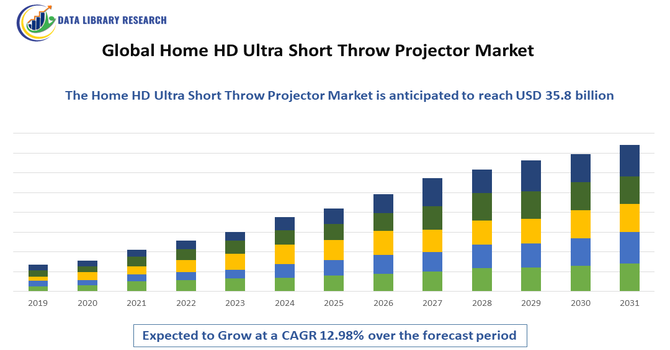
Get Complete Analysis Of The Report - Download Updated Free Sample PDF
The Global Home HD Ultra Short Throw Projector Market refers to the industry segment focused on compact, high-definition projectors designed for home entertainment. These projectors offer ultra-short throw distances, allowing large, high-quality images to be projected from minimal space. Rising demand for home theaters, gaming, and immersive viewing experiences drives market growth globally.
Strategic investments in research and development, product diversification, and digital transformation enable companies to stay competitive and capture emerging opportunities. Additionally, favorable government regulations, supportive infrastructure, and expanding distribution networks enhance market accessibility and scalability. Growing disposable incomes, urbanization, and globalization further fuel demand, while data-driven marketing, customer-centric approaches, and partnerships or collaborations accelerate market penetration and brand loyalty, collectively creating a robust ecosystem for sustained growth.
Current market trends in the above market include a strong shift toward digitalization and automation, with companies leveraging AI, IoT, and cloud-based solutions to enhance efficiency and customer experience. There is a growing emphasis on sustainability and eco-friendly practices, driven by regulatory pressures and consumer demand for responsible products. Personalization and customization are becoming key differentiators, as businesses aim to cater to niche segments and evolving consumer preferences. Additionally, strategic collaborations, mergers, and acquisitions are shaping competitive dynamics, while the rise of e-commerce and omnichannel distribution is expanding market reach.
Segmentation: The Global Home HD Ultra Short Throw Projector Market can be segmented by Application-Based (Commercial, Industrial, Or Personal Use), Technology (AI, Iot, and Automation), Distribution Channels (Online Marketplaces, Direct-To-Consumer Platforms, Retail, and B2B Networks), and Geography (North America, Europe, Asia-Pacific, Middle East and Africa, and South America). The report provides the value (in USD million) for the above segments.
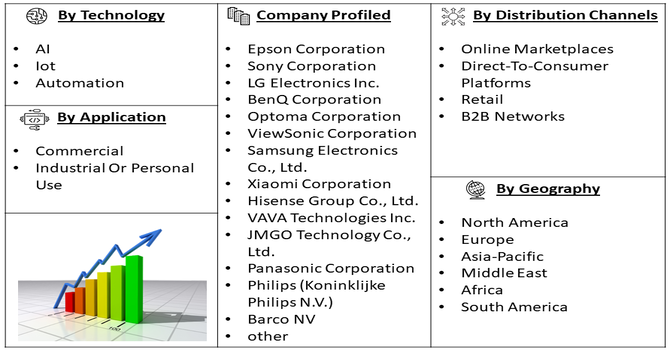
For Detailed Market Segmentation - Get a Free Sample PDF
Market Drivers:
The growing consumer demand for immersive home-entertainment experiences is a key driver for the global home HD ultra-short-throw (UST) projector market. With urban living spaces becoming more compact, households increasingly seek large-screen cinematic experiences without the space requirements of traditional projectors or large TVs. Home UST projectors allow users to project large, high-quality images from very short distances, making them ideal for apartments, living rooms, or small home theaters. Integration of smart features, such as streaming apps, smart-TV compatibility, and voice controls, further enhances usability and convenience, making these projectors highly attractive to consumers seeking premium home entertainment solutions.
Technological innovation is another significant growth driver. Advancements in laser light sources, 4K and higher resolutions, improved brightness and contrast ratios, and compact, sleek designs enhance the performance and appeal of UST projectors. These improvements make the devices suitable not only for home entertainment but also for gaming rooms, small offices, and professional home theaters. The enhanced image quality and user-friendly features drive adoption by offering a superior viewing experience and a higher perceived value compared to conventional projection systems.
In July 2025, Bangalore-based audiovisual provider announced exclusive Prime Day 2023 deals, highlighting advancements in ultra-short-throw projectors. Laser light sources, 4K and higher resolutions, improved brightness and contrast ratios, and compact, sleek designs enhanced performance and appeal. The offers included up to 50% off WZATCO LED projectors and a flat Rs 25,000 discount on the WZATCO Bliss 4K Laser UST, enabling customers to upgrade home entertainment or business presentations with cutting-edge technology.
Market Restraint:
A key restraint to market growth is the relatively high upfront cost of HD ultra-short-throw projectors compared to traditional projectors or large-screen TVs. Many potential buyers are price-sensitive, particularly in developing regions, and the premium pricing of laser-based UST models can limit adoption. Additionally, these projectors often require optimized environments, such as ambient light control or specialized projection surfaces, which can add to installation complexity and costs, further restricting widespread use.
The global home HD ultra-short-throw projector market has notable socioeconomic impacts by enhancing access to high-quality home entertainment, education, and professional content in both urban and semi-urban settings. By enabling large-screen viewing in compact spaces, these projectors contribute to lifestyle improvements and support home-based learning, remote work, and digital engagement, fostering a knowledge-driven environment. The market also stimulates economic activity by creating jobs across manufacturing, distribution, retail, and after-sales services, while driving technological innovation in display and smart-home integration. However, the premium pricing of advanced models can reinforce disparities in access, highlighting the need for more affordable solutions to ensure broader social benefits and inclusive digital experiences.
Segmental Analysis:
The commercial segment of the global home HD ultra-short-throw projector market is expected to witness significant growth over the forecast period due to increasing adoption in corporate offices, conference rooms, educational institutions, and hospitality venues. Businesses are investing in ultra-short-throw projectors to enable large, high-quality displays in limited spaces, enhancing presentations, training sessions, and collaborative work. The demand is further driven by technological advancements, such as higher resolution, improved brightness, and integrated smart features, which allow seamless integration into existing infrastructures. This growing adoption is creating opportunities for manufacturers to offer specialized solutions catering to the commercial sector’s unique requirements.
The AI segment in the home HD ultra-short-throw projector market is poised for substantial growth, driven by the integration of artificial intelligence to enhance user experience. AI-powered projectors offer features such as automatic image calibration, adaptive brightness adjustment, content recognition, voice control, and predictive maintenance. These intelligent functionalities provide a more personalized and convenient viewing experience while improving device performance and longevity. Rising consumer interest in smart home ecosystems, combined with increased investments in AI technologies by manufacturers, is accelerating the adoption of AI-enabled projectors, positioning this segment as a key growth area in the coming years.
The online channel segment of the global home HD ultra-short-throw projector market is expected to grow significantly due to the increasing preference for e-commerce and digital purchasing platforms. Consumers are leveraging online channels for their convenience, wider product selection, competitive pricing, and doorstep delivery. Additionally, product reviews, ratings, and detailed specifications available online help buyers make informed decisions, boosting confidence in high-value purchases like ultra-short-throw projectors. Manufacturers are also investing in direct-to-consumer online stores, exclusive launches, and digital marketing strategies to reach broader audiences. These factors are driving robust growth in the online sales segment during the forecast period.
The North America region is expected to witness significant growth in the home HD ultra-short-throw projector market due to the presence of high disposable incomes, advanced infrastructure, and strong adoption of home entertainment technologies. Consumers are increasingly seeking premium, space-efficient solutions for home theaters, gaming, and smart living spaces. The region also benefits from the early adoption of cutting-edge technologies, including 4K and AI-enabled projectors, supported by established distribution networks and strong brand presence.
Additionally, increasing investments by manufacturers in marketing, innovation, and partnerships are contributing to the region’s rapid market expansion, making North America a leading growth hub during the forecast period. For instance, in May 2025, Optoma, introduced the GT4000UHD, a compact 4K UHD laser ultra-short-throw projector designed for gaming and home entertainment. Delivering 4,000 lumens of brightness, reliable long-term performance, and flexible installation options, it enhanced immersive viewing experiences in space-constrained living environments and joined Optoma’s award-winning lineup. In North America, the GT4000UHD strengthened the brand’s presence by catering to high demand for premium home entertainment and gaming solutions. Its advanced features, compact design, and ultra-short-throw capability encouraged adoption across urban households, driving growth in the region’s competitive home projector market.
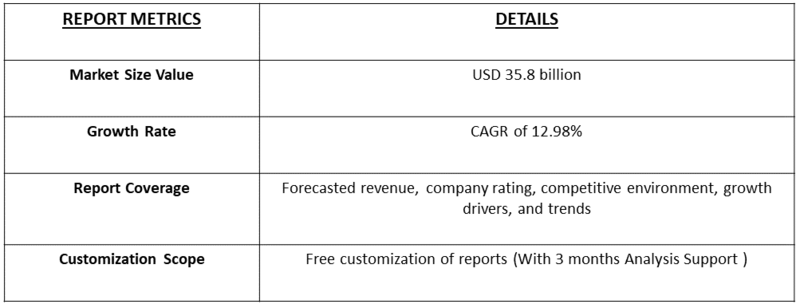
To Learn More About This Report - Request a Free Sample Copy
The Global Home HD Ultra Short Throw Projector Market competitive landscape is intense and innovation-driven, primarily contested by major display technology giants like Epson, Hisense, LG, and Samsung. Competition centers on delivering superior 4K resolution, high brightness (using laser light sources), and smart integration with home ecosystems. Key players heavily invest in R&D to improve image quality, color gamut, and reduce latency for gaming. The rivalry is further fueled by aggressive pricing and rapid feature deployment from growing Chinese technology brands, forcing established players to continually innovate lens technology, light sources, and aesthetic design to maintain their premium market positioning.
The major players for above market are:
Recent Development
Q1. What the main growth driving factors for this market?
The primary growth driver for the Home HD Ultra Short Throw Projector Market is the surging consumer demand for immersive, large-screen home theater experiences without the space limitations of traditional TVs. Ultra Short Throw (UST) projectors, often called "laser TVs," can project a massive 100-inch+ image from just inches away from the wall, making them ideal for modern, compact living spaces. Furthermore, the adoption of advanced laser light sources and 4K resolution has significantly improved brightness, color accuracy, and lifespan, making them a compelling alternative to large-format flat-panel displays.
Q2. What are the main restraining factors for this market?
One of the most significant restraining factors is the high initial price point of most high-performance HD/4K UST projectors compared to similarly sized, high-end 75-inch or 85-inch LED/OLED televisions. This substantial capital investment can deter budget-conscious consumers. Additionally, achieving optimal picture quality often requires purchasing a specialized Ambient Light Rejecting (ALR) screen, which adds considerable cost and complexity to the total setup, presenting a barrier to simple plug-and-play adoption.
Q3. Which segment is expected to witness high growth?
The commercial segment’s growth is driven by rising demand for large, high-quality displays in offices, educational institutions, and hospitality venues. Adoption of space-efficient ultra-short-throw projectors, technological advancements like higher resolution and brightness, and integration with smart collaboration and presentation tools enhance productivity, efficiency, and professional communication, fueling market expansion.
Q4. Who are the top major players for this market?
The market is characterized by strong competition between established display manufacturers and new specialized home cinema brands. Top major players include Epson (known for its 3LCD technology), Hisense (a leader in "Laser TVs" with TriChroma technology), LG Electronics (with its CineBeam series), and Samsung (with The Premiere series). Other notable contenders are component specialists and growing Chinese brands like BenQ and XGIMI, who focus on bringing smart features and laser projection to a wider consumer base.
Q5. Which country is the largest player?
North America, particularly the United States, holds the largest market share in terms of revenue and early adoption of premium, high-value Home Ultra Short Throw Projectors. This dominance is driven by high disposable incomes, a large base of dedicated home theater enthusiasts, and strong demand for cutting-edge 4K and laser technology. However, the Asia-Pacific (APAC) region, led by countries like China, is rapidly emerging as the fastest-growing market due to rapid urbanization, increasing middle-class income, and high sales volume from local technology brands.
Data Library Research are conducted by industry experts who offer insight on industry structure, market segmentations technology assessment and competitive landscape (CL), and penetration, as well as on emerging trends. Their analysis is based on primary interviews (~ 80%) and secondary research (~ 20%) as well as years of professional expertise in their respective industries. Adding to this, by analysing historical trends and current market positions, our analysts predict where the market will be headed for the next five years. Furthermore, the varying trends of segment & categories geographically presented are also studied and the estimated based on the primary & secondary research.
In this particular report from the supply side Data Library Research has conducted primary surveys (interviews) with the key level executives (VP, CEO’s, Marketing Director, Business Development Manager and SOFT) of the companies that active & prominent as well as the midsized organization
FIGURE 1: DLR RESEARH PROCESS
Extensive primary research was conducted to gain a deeper insight of the market and industry performance. The analysis is based on both primary and secondary research as well as years of professional expertise in the respective industries.
In addition to analysing current and historical trends, our analysts predict where the market is headed over the next five years.
It varies by segment for these categories geographically presented in the list of market tables. Speaking about this particular report we have conducted primary surveys (interviews) with the key level executives (VP, CEO’s, Marketing Director, Business Development Manager and many more) of the major players active in the market.
Secondary ResearchSecondary research was mainly used to collect and identify information useful for the extensive, technical, market-oriented, and Friend’s study of the Global Extra Neutral Alcohol. It was also used to obtain key information about major players, market classification and segmentation according to the industry trends, geographical markets, and developments related to the market and technology perspectives. For this study, analysts have gathered information from various credible sources, such as annual reports, sec filings, journals, white papers, SOFT presentations, and company web sites.
Market Size EstimationBoth, top-down and bottom-up approaches were used to estimate and validate the size of the Global market and to estimate the size of various other dependent submarkets in the overall Extra Neutral Alcohol. The key players in the market were identified through secondary research and their market contributions in the respective geographies were determined through primary and secondary research.
Forecast Model