Microbial Precision Fermentation Market Overview and Analysis
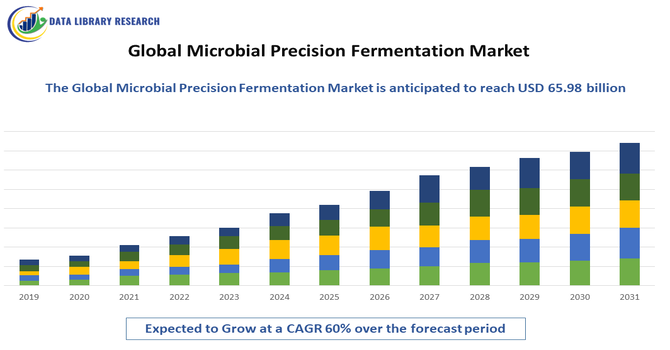
- The Global Microbial Precision Fermentation Market size was valued at USD 5.8 billion in 2025 and is projected to reach USD 65.98 billion by 2032, growing with a CAGR is 45% of from 2025-2032.
Get Complete Analysis Of The Report - Download Updated Free Sample PDF
The Global Microbial Precision Fermentation Market involves producing specific proteins, enzymes, and bioactive compounds using engineered microorganisms. This technology enables sustainable, efficient, and scalable production for industries like food, pharmaceuticals, and cosmetics. Growth is driven by rising demand for alternative proteins, clean-label ingredients, and eco-friendly production methods, as companies seek innovative, cost-effective solutions to replace traditional animal- or plant-based sources.
Microbial Precision Fermentation Market Latest Trends
The microbial precision fermentation market is being driven by growing demand for sustainable, animal free proteins and ingredients in food, beverage, nutraceutical, cosmetic, and pharmaceutical sectors. Advances in genetic engineering, synthetic biology, and bioprocess optimization have improved microbial yields and lowered production costs, making precision fermented proteins, enzymes, and biomolecules more commercially viable.
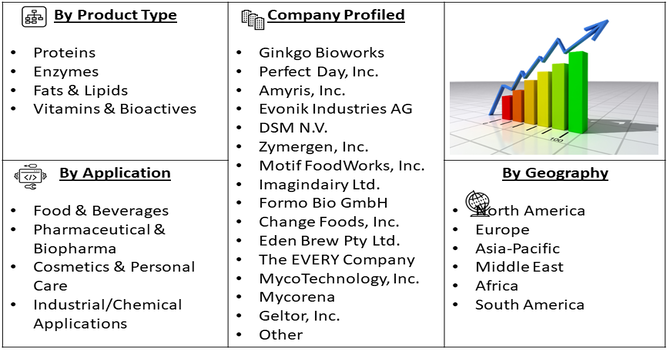
Segmentation: The Global Microbial Precision Fermentation Market is Segmented by Microbe Type (Yeast, Bacteria, Fungi (Filamentous Fungi) and Algae), Product Type (Proteins, Enzymes, Fats & Lipids and Vitamins & Bioactives), Application (Food & Beverages, Pharmaceutical & Biopharma, Cosmetics & Personal Care, and Industrial/Chemical Applications), and Geography (North America, Europe, Asia-Pacific, Middle East and Africa, and South America). The report provides the value (in USD million) for the above segments.
For Detailed Market Segmentation - Get a Free Sample PDF
Market Drivers:
- Rising Demand for Sustainable and Alternative Proteins
A key driver of the global microbial precision fermentation market is the increasing consumer demand for sustainable, plant- and microbe-based proteins. Environmental concerns, animal welfare awareness, and the need to reduce greenhouse gas emissions have encouraged food and beverage companies to adopt precision fermentation as an alternative to traditional animal agriculture. For instance, in November 2023, Novozymes and Arla Foods Ingredients partnered to develop advanced protein ingredients using precision fermentation. Novozymes, a global leader in the technology, optimized microbial outputs to create tailor-made proteins. This collaboration addressed the rising demand for sustainable, alternative proteins and strengthened innovation, adoption, and growth in the global microbial precision fermentation market.
- Technological Advancements and Innovation
Technological innovation in genetic engineering, synthetic biology, and bioprocess optimization is propelling the precision fermentation market forward. Advanced microbial strain engineering, fermentation process improvements, and scalable production methods enable companies to produce high-purity proteins and enzymes more efficiently and cost-effectively.
Innovations also allow creation of novel ingredients tailored for specific functional, nutritional, or sensory applications. For instance, in May 2023, EVERY Company and Alpha Foods formed a Joint Development Agreement to advance next-generation alternative meat products. By combining EVERY’s expertise in animal-free protein production with Alpha Foods’ chef-crafted plant-based innovations, the collaboration accelerated technological advancements in precision fermentation, enhancing taste, texture, and scalability, thereby strengthening innovation and growth in the global microbial precision fermentation market. Increased investment in research and development, along with collaborations between startups and established biotech firms, accelerates commercialization of precision-fermented products.
Marke Restraints:
- High Production Costs and Regulatory Challenges
Despite its advantages, microbial precision fermentation faces challenges due to high production costs and regulatory complexities. Developing and scaling microbial strains requires significant investment in R&D, bioreactors, and downstream processing. Additionally, navigating regulatory approvals for novel proteins and ingredients in different countries can be time-consuming and costly, slowing market entry. Smaller companies and startups may struggle to compete with well-funded firms due to capital-intensive infrastructure requirements. Consumer skepticism toward lab-grown or microbial-derived ingredients in certain regions can also limit adoption. Together, these financial, regulatory, and perception barriers restrain market growth despite rising demand for sustainable and alternative protein solutions.
Socioeconomic Impact on Microbial Precision Fermentation Market
Precision fermentation offers a more resource efficient and environmentally friendly alternative to traditional agriculture and animal farming, potentially reducing land use, water consumption, and greenhouse gas emissions. As demand for sustainable proteins and bio ingredients grows, the technology can ease pressure on livestock farming and help meet food security challenges for a growing global population. The spread of fermentation-based production can stimulate biotech industry growth, generate jobs in research, manufacturing, and supply chain infrastructure, and catalyze investment in biotechnology — especially in emerging economies that adopt these technologies. This shift supports more ethical consumption, healthier diets, and sustainable production systems worldwide.
Segmental Analysis:
- Fungi (Filamentous Fungi) segment is expected to witness highest growth over the forecast period
The filamentous fungi segment is expected to witness the highest growth over the forecast period due to its versatility in producing proteins, enzymes, and bioactive compounds via microbial precision fermentation. Filamentous fungi can efficiently generate high yields of functional ingredients with applications across food, beverage, pharmaceutical, and cosmetic industries. Their ability to replicate complex structures found in animal proteins makes them ideal for alternative meat and dairy products. As demand for sustainable, plant- and microbe-based ingredients rises, companies are increasingly investing in fungal fermentation processes. This trend is projected to drive strong growth in the filamentous fungi segment globally.
- Fats & Lipids segment is expected to witness highest growth over the forecast period
The fats and lipids segment is anticipated to grow significantly as microbial precision fermentation enables sustainable production of essential fatty acids, omega-3 oils, and specialty lipids. Traditional extraction from plants or animals is resource-intensive and environmentally taxing, creating demand for microbial alternatives. Precision fermentation allows controlled, high-purity lipid production for use in food, nutraceuticals, and pharmaceuticals. Increasing consumer preference for clean-label, non-animal-derived ingredients further fuels adoption. Companies are investing in fermentation-based lipid production to meet regulatory standards and scale efficiently. These factors position the fats and lipids segment for substantial growth over the forecast period.
- Pharmaceutical & Biopharma segment is expected to witness highest growth over the forecast period
The pharmaceutical and biopharma segment is expected to witness robust growth as precision fermentation provides a cost-effective, scalable method for producing therapeutic proteins, enzymes, and vaccines. Microbial fermentation enables precise control over bioactive molecule synthesis, enhancing efficacy and reducing contamination risks. The technology supports the production of novel biologics, personalized medicines, and regenerative therapies, which are increasingly in demand worldwide. Regulatory support, combined with rising investment in biotechnology R&D, is driving adoption across pharmaceutical companies. Consequently, precision fermentation is becoming a cornerstone for innovation in biopharma, fueling strong market growth in this segment over the forecast period.
- North American Region segment is expected to witness highest growth over the forecast period
The North American region is projected to record the highest growth in the microbial precision fermentation market due to technological leadership, strong biotech infrastructure, and high investment in sustainable protein and ingredient innovation. The U.S. and Canada host major precision fermentation startups and established biotech firms, fostering collaboration and rapid commercialization. For instance, in May 2024, Bored Cow, a leading animal-free dairy company, expanded its distribution to 2,000 Albertsons stores in New York, offering precision-fermented dairy products. This expansion showcased technological advancements in scalable, high-quality microbial fermentation, driving innovation and accelerating adoption, thereby boosting growth in North America’s microbial precision fermentation market.
Consumer demand for alternative proteins, clean-label ingredients, and sustainable products further supports adoption. Government and private funding in R&D, along with supportive regulatory frameworks for novel food ingredients, accelerate market expansion. These factors collectively position North America as the fastest-growing regional segment in the microbial precision fermentation market over the forecast period.
| Report Matrics |
Details |
| Market Size Value |
USD 65.98 billion |
| Growth Rate |
CAGR of 45% |
| Forecast |
2026-2033 |
| Historical data |
2021-2024 |
| Base Year |
2025 |
| Report Coverage |
Forecasted revenue, company rating, competitive environment, growth drivers, and trends |
| Segment Coverage |
Type, Application, End-User, Geography |
| Regional Scope |
North America, Europe, Asia Pacific, Middle East |
| Customized scope |
Free customization of reports (With 3 months Analysis Support ) |
| To Learn More About This Report |
Request a Free Sample Copy |
Microbial Precision Fermentation Market Competitive Landscape
The competitive landscape in microbial precision fermentation is dynamic and expanding, with both established biotech firms and a wave of startups entering the space. Companies compete on microbial strain engineering, fermentation efficiency, scalability, yield optimization, and cost effectiveness of production. Firms that secure regulatory approvals, invest in novel ingredients (such as alternative proteins, specialty enzymes, bioactive compounds), and build robust production infrastructure are likely to lead. However, high capital expenditure for bioreactors and downstream processing, as well as regulatory and scale up barriers, pose challenges — benefiting larger or better-funded players while making it harder for smaller entrants to scale quickly.
The major players for above market are:
- Ginkgo Bioworks
- Perfect Day, Inc.
- Amyris, Inc.
- Evonik Industries AG
- DSM N.V.
- Zymergen, Inc.
- Motif FoodWorks, Inc.
- Imagindairy Ltd.
- Formo Bio GmbH
- Change Foods, Inc.
- Eden Brew Pty Ltd.
- The EVERY Company
- MycoTechnology, Inc.
- Mycorena
- Geltor, Inc.
- Triton Algae Innovations
- Nourish Ingredients Pty Ltd.
- Calysta, Inc.
- Evolva Holding SA
- Clara Foods
Recent Development
- In November 2025, Angel Yeast, a global leader in yeast and fermentation solutions, began trial production at its specialty yeast project in Baiyang Biotechnology Park, Yichang. Starting material feeding, the facility aimed for an annual capacity of 8,500 tons. This launch completed Angel Yeast’s full-chain specialty yeast operations, enhancing high-value ingredient supply and strengthening the biomanufacturing value chain.
- In March 2025, the UK government announced a USD 1.87 million investment in a research and innovation hub to support the Food Standards Agency (FSA) in advancing expertise in emerging technologies. The initiative focuses on precision fermentation, which utilizes microorganisms to produce specific components like proteins, fats, and sugars. The hub aims to guide innovators and investors on regulatory compliance and enhance the FSA’s scientific capacity to assess risks associated with novel food products.
Frequently Asked Questions (FAQ) :
Q1. What are the main growth-driving factors for this market?
The market is soaring due to the urgent global demand for sustainable and animal-free proteins. Precision fermentation significantly reduces the environmental impact of traditional livestock farming. Furthermore, massive private and public investment in scaling up biomanufacturing technology is rapidly advancing production efficiency and capacity across regions.
Q2. What are the main restraining factors for this market?
The high capital expenditure required to scale up production and purify the final ingredients currently leads to elevated production costs, which makes final products expensive for consumers. Additionally, navigating complex and varying regulatory approval processes across different countries presents a significant hurdle for commercialization and market speed.
Q3. Which segment is expected to witness high growth?
The fastest growth is anticipated in the ingredients segment related to dairy alternatives, specifically animal-free whey and casein proteins. Consumers are demanding sustainable dairy products that match the taste and function of cow’s milk, and precision fermentation is the primary technology enabling this highly accurate, functional replication.
Q4. Who are the top major players for this market?
The market is led by innovative startups focused solely on precision fermentation, such as Perfect Day and The Every Co., which specialize in dairy and egg proteins, respectively. Established food ingredient giants like ADM and ICL Group are also becoming major players by integrating this technology into their expansive ingredient portfolios.
Q5. Which country is the largest player?
The United States is currently the largest and most dominant player. This leadership is driven by a massive concentration of biotechnology expertise, significant venture capital funding for food-tech startups, and a well-established infrastructure for R&D and pilot-scale production, particularly in areas like California and Boston.
List of Figures
Figure 1: Global Microbial Precision Fermentation Market Revenue Breakdown (USD Billion, %) by Region, 2022 & 2029
Figure 2: Global Microbial Precision Fermentation Market Value Share (%), By Segment 1, 2022 & 2029
Figure 3: Global Microbial Precision Fermentation Market Forecast (USD Billion), by Sub-Segment 1, 2018-2029
Figure 4: Global Microbial Precision Fermentation Market Forecast (USD Billion), by Sub-Segment 2, 2018-2029
Figure 5: Global Microbial Precision Fermentation Market Value Share (%), By Segment 2, 2022 & 2029
Figure 6: Global Microbial Precision Fermentation Market Forecast (USD Billion), by Sub-Segment 1, 2018-2029
Figure 7: Global Microbial Precision Fermentation Market Forecast (USD Billion), by Sub-Segment 2, 2018-2029
Figure 8: Global Microbial Precision Fermentation Market Forecast (USD Billion), by Sub-Segment 3, 2018-2029
Figure 9: Global Microbial Precision Fermentation Market Forecast (USD Billion), by Others, 2018-2029
Figure 10: Global Microbial Precision Fermentation Market Value Share (%), By Segment 3, 2022 & 2029
Figure 11: Global Microbial Precision Fermentation Market Forecast (USD Billion), by Sub-Segment 1, 2018-2029
Figure 12: Global Microbial Precision Fermentation Market Forecast (USD Billion), by Sub-Segment 2, 2018-2029
Figure 13: Global Microbial Precision Fermentation Market Forecast (USD Billion), by Sub-Segment 3, 2018-2029
Figure 14: Global Microbial Precision Fermentation Market Forecast (USD Billion), by Others, 2018-2029
Figure 15: Global Microbial Precision Fermentation Market Value (USD Billion), by Region, 2022 & 2029
Figure 16: North America Microbial Precision Fermentation Market Value Share (%), By Segment 1, 2022 & 2029
Figure 17: North America Microbial Precision Fermentation Market Forecast (USD Billion), by Sub-Segment 1, 2018-2029
Figure 18: North America Microbial Precision Fermentation Market Forecast (USD Billion), by Sub-Segment 2, 2018-2029
Figure 19: North America Microbial Precision Fermentation Market Value Share (%), By Segment 2, 2022 & 2029
Figure 20: North America Microbial Precision Fermentation Market Forecast (USD Billion), by Sub-Segment 1, 2018-2029
Figure 21: North America Microbial Precision Fermentation Market Forecast (USD Billion), by Sub-Segment 2, 2018-2029
Figure 22: North America Microbial Precision Fermentation Market Forecast (USD Billion), by Sub-Segment 3, 2018-2029
Figure 23: North America Microbial Precision Fermentation Market Forecast (USD Billion), by Others, 2018-2029
Figure 24: North America Microbial Precision Fermentation Market Value Share (%), By Segment 3, 2022 & 2029
Figure 25: North America Microbial Precision Fermentation Market Forecast (USD Billion), by Sub-Segment 1, 2018-2029
Figure 26: North America Microbial Precision Fermentation Market Forecast (USD Billion), by Sub-Segment 2, 2018-2029
Figure 27: North America Microbial Precision Fermentation Market Forecast (USD Billion), by Sub-Segment 3, 2018-2029
Figure 28: North America Microbial Precision Fermentation Market Forecast (USD Billion), by Others, 2018-2029
Figure 29: North America Microbial Precision Fermentation Market Forecast (USD Billion), by U.S., 2018-2029
Figure 30: North America Microbial Precision Fermentation Market Forecast (USD Billion), by Canada, 2018-2029
Figure 31: Latin America Microbial Precision Fermentation Market Value Share (%), By Segment 1, 2022 & 2029
Figure 32: Latin America Microbial Precision Fermentation Market Forecast (USD Billion), by Sub-Segment 1, 2018-2029
Figure 33: Latin America Microbial Precision Fermentation Market Forecast (USD Billion), by Sub-Segment 2, 2018-2029
Figure 34: Latin America Microbial Precision Fermentation Market Value Share (%), By Segment 2, 2022 & 2029
Figure 35: Latin America Microbial Precision Fermentation Market Forecast (USD Billion), by Sub-Segment 1, 2018-2029
Figure 36: Latin America Microbial Precision Fermentation Market Forecast (USD Billion), by Sub-Segment 2, 2018-2029
Figure 37: Latin America Microbial Precision Fermentation Market Forecast (USD Billion), by Sub-Segment 3, 2018-2029
Figure 38: Latin America Microbial Precision Fermentation Market Forecast (USD Billion), by Others, 2018-2029
Figure 39: Latin America Microbial Precision Fermentation Market Value Share (%), By Segment 3, 2022 & 2029
Figure 40: Latin America Microbial Precision Fermentation Market Forecast (USD Billion), by Sub-Segment 1, 2018-2029
Figure 41: Latin America Microbial Precision Fermentation Market Forecast (USD Billion), by Sub-Segment 2, 2018-2029
Figure 42: Latin America Microbial Precision Fermentation Market Forecast (USD Billion), by Sub-Segment 3, 2018-2029
Figure 43: Latin America Microbial Precision Fermentation Market Forecast (USD Billion), by Others, 2018-2029
Figure 44: Latin America Microbial Precision Fermentation Market Forecast (USD Billion), by Brazil, 2018-2029
Figure 45: Latin America Microbial Precision Fermentation Market Forecast (USD Billion), by Mexico, 2018-2029
Figure 46: Latin America Microbial Precision Fermentation Market Forecast (USD Billion), by Rest of Latin America, 2018-2029
Figure 47: Europe Microbial Precision Fermentation Market Value Share (%), By Segment 1, 2022 & 2029
Figure 48: Europe Microbial Precision Fermentation Market Forecast (USD Billion), by Sub-Segment 1, 2018-2029
Figure 49: Europe Microbial Precision Fermentation Market Forecast (USD Billion), by Sub-Segment 2, 2018-2029
Figure 50: Europe Microbial Precision Fermentation Market Value Share (%), By Segment 2, 2022 & 2029
Figure 51: Europe Microbial Precision Fermentation Market Forecast (USD Billion), by Sub-Segment 1, 2018-2029
Figure 52: Europe Microbial Precision Fermentation Market Forecast (USD Billion), by Sub-Segment 2, 2018-2029
Figure 53: Europe Microbial Precision Fermentation Market Forecast (USD Billion), by Sub-Segment 3, 2018-2029
Figure 54: Europe Microbial Precision Fermentation Market Forecast (USD Billion), by Others, 2018-2029
Figure 55: Europe Microbial Precision Fermentation Market Value Share (%), By Segment 3, 2022 & 2029
Figure 56: Europe Microbial Precision Fermentation Market Forecast (USD Billion), by Sub-Segment 1, 2018-2029
Figure 57: Europe Microbial Precision Fermentation Market Forecast (USD Billion), by Sub-Segment 2, 2018-2029
Figure 58: Europe Microbial Precision Fermentation Market Forecast (USD Billion), by Sub-Segment 3, 2018-2029
Figure 59: Europe Microbial Precision Fermentation Market Forecast (USD Billion), by Others, 2018-2029
Figure 60: Europe Microbial Precision Fermentation Market Forecast (USD Billion), by U.K., 2018-2029
Figure 61: Europe Microbial Precision Fermentation Market Forecast (USD Billion), by Germany, 2018-2029
Figure 62: Europe Microbial Precision Fermentation Market Forecast (USD Billion), by France, 2018-2029
Figure 63: Europe Microbial Precision Fermentation Market Forecast (USD Billion), by Italy, 2018-2029
Figure 64: Europe Microbial Precision Fermentation Market Forecast (USD Billion), by Spain, 2018-2029
Figure 65: Europe Microbial Precision Fermentation Market Forecast (USD Billion), by Russia, 2018-2029
Figure 66: Europe Microbial Precision Fermentation Market Forecast (USD Billion), by Rest of Europe, 2018-2029
Figure 67: Asia Pacific Microbial Precision Fermentation Market Value Share (%), By Segment 1, 2022 & 2029
Figure 68: Asia Pacific Microbial Precision Fermentation Market Forecast (USD Billion), by Sub-Segment 1, 2018-2029
Figure 69: Asia Pacific Microbial Precision Fermentation Market Forecast (USD Billion), by Sub-Segment 2, 2018-2029
Figure 70: Asia Pacific Microbial Precision Fermentation Market Value Share (%), By Segment 2, 2022 & 2029
Figure 71: Asia Pacific Microbial Precision Fermentation Market Forecast (USD Billion), by Sub-Segment 1, 2018-2029
Figure 72: Asia Pacific Microbial Precision Fermentation Market Forecast (USD Billion), by Sub-Segment 2, 2018-2029
Figure 73: Asia Pacific Microbial Precision Fermentation Market Forecast (USD Billion), by Sub-Segment 3, 2018-2029
Figure 74: Asia Pacific Microbial Precision Fermentation Market Forecast (USD Billion), by Others, 2018-2029
Figure 75: Asia Pacific Microbial Precision Fermentation Market Value Share (%), By Segment 3, 2022 & 2029
Figure 76: Asia Pacific Microbial Precision Fermentation Market Forecast (USD Billion), by Sub-Segment 1, 2018-2029
Figure 77: Asia Pacific Microbial Precision Fermentation Market Forecast (USD Billion), by Sub-Segment 2, 2018-2029
Figure 78: Asia Pacific Microbial Precision Fermentation Market Forecast (USD Billion), by Sub-Segment 3, 2018-2029
Figure 79: Asia Pacific Microbial Precision Fermentation Market Forecast (USD Billion), by Others, 2018-2029
Figure 80: Asia Pacific Microbial Precision Fermentation Market Forecast (USD Billion), by China, 2018-2029
Figure 81: Asia Pacific Microbial Precision Fermentation Market Forecast (USD Billion), by India, 2018-2029
Figure 82: Asia Pacific Microbial Precision Fermentation Market Forecast (USD Billion), by Japan, 2018-2029
Figure 83: Asia Pacific Microbial Precision Fermentation Market Forecast (USD Billion), by Australia, 2018-2029
Figure 84: Asia Pacific Microbial Precision Fermentation Market Forecast (USD Billion), by Southeast Asia, 2018-2029
Figure 85: Asia Pacific Microbial Precision Fermentation Market Forecast (USD Billion), by Rest of Asia Pacific, 2018-2029
Figure 86: Middle East & Africa Microbial Precision Fermentation Market Value Share (%), By Segment 1, 2022 & 2029
Figure 87: Middle East & Africa Microbial Precision Fermentation Market Forecast (USD Billion), by Sub-Segment 1, 2018-2029
Figure 88: Middle East & Africa Microbial Precision Fermentation Market Forecast (USD Billion), by Sub-Segment 2, 2018-2029
Figure 89: Middle East & Africa Microbial Precision Fermentation Market Value Share (%), By Segment 2, 2022 & 2029
Figure 90: Middle East & Africa Microbial Precision Fermentation Market Forecast (USD Billion), by Sub-Segment 1, 2018-2029
Figure 91: Middle East & Africa Microbial Precision Fermentation Market Forecast (USD Billion), by Sub-Segment 2, 2018-2029
Figure 92: Middle East & Africa Microbial Precision Fermentation Market Forecast (USD Billion), by Sub-Segment 3, 2018-2029
Figure 93: Middle East & Africa Microbial Precision Fermentation Market Forecast (USD Billion), by Others, 2018-2029
Figure 94: Middle East & Africa Microbial Precision Fermentation Market Value Share (%), By Segment 3, 2022 & 2029
Figure 95: Middle East & Africa Microbial Precision Fermentation Market Forecast (USD Billion), by Sub-Segment 1, 2018-2029
Figure 96: Middle East & Africa Microbial Precision Fermentation Market Forecast (USD Billion), by Sub-Segment 2, 2018-2029
Figure 97: Middle East & Africa Microbial Precision Fermentation Market Forecast (USD Billion), by Sub-Segment 3, 2018-2029
Figure 98: Middle East & Africa Microbial Precision Fermentation Market Forecast (USD Billion), by Others, 2018-2029
Figure 99: Middle East & Africa Microbial Precision Fermentation Market Forecast (USD Billion), by GCC, 2018-2029
Figure 100: Middle East & Africa Microbial Precision Fermentation Market Forecast (USD Billion), by South Africa, 2018-2029
Figure 101: Middle East & Africa Microbial Precision Fermentation Market Forecast (USD Billion), by Rest of Middle East & Africa, 2018-2029
List of Tables
Table 1: Global Microbial Precision Fermentation Market Revenue (USD Billion) Forecast, by Segment 1, 2018-2029
Table 2: Global Microbial Precision Fermentation Market Revenue (USD Billion) Forecast, by Segment 2, 2018-2029
Table 3: Global Microbial Precision Fermentation Market Revenue (USD Billion) Forecast, by Segment 3, 2018-2029
Table 4: Global Microbial Precision Fermentation Market Revenue (USD Billion) Forecast, by Region, 2018-2029
Table 5: North America Microbial Precision Fermentation Market Revenue (USD Billion) Forecast, by Segment 1, 2018-2029
Table 6: North America Microbial Precision Fermentation Market Revenue (USD Billion) Forecast, by Segment 2, 2018-2029
Table 7: North America Microbial Precision Fermentation Market Revenue (USD Billion) Forecast, by Segment 3, 2018-2029
Table 8: North America Microbial Precision Fermentation Market Revenue (USD Billion) Forecast, by Country, 2018-2029
Table 9: Europe Microbial Precision Fermentation Market Revenue (USD Billion) Forecast, by Segment 1, 2018-2029
Table 10: Europe Microbial Precision Fermentation Market Revenue (USD Billion) Forecast, by Segment 2, 2018-2029
Table 11: Europe Microbial Precision Fermentation Market Revenue (USD Billion) Forecast, by Segment 3, 2018-2029
Table 12: Europe Microbial Precision Fermentation Market Revenue (USD Billion) Forecast, by Country, 2018-2029
Table 13: Latin America Microbial Precision Fermentation Market Revenue (USD Billion) Forecast, by Segment 1, 2018-2029
Table 14: Latin America Microbial Precision Fermentation Market Revenue (USD Billion) Forecast, by Segment 2, 2018-2029
Table 15: Latin America Microbial Precision Fermentation Market Revenue (USD Billion) Forecast, by Segment 3, 2018-2029
Table 16: Latin America Microbial Precision Fermentation Market Revenue (USD Billion) Forecast, by Country, 2018-2029
Table 17: Asia Pacific Microbial Precision Fermentation Market Revenue (USD Billion) Forecast, by Segment 1, 2018-2029
Table 18: Asia Pacific Microbial Precision Fermentation Market Revenue (USD Billion) Forecast, by Segment 2, 2018-2029
Table 19: Asia Pacific Microbial Precision Fermentation Market Revenue (USD Billion) Forecast, by Segment 3, 2018-2029
Table 20: Asia Pacific Microbial Precision Fermentation Market Revenue (USD Billion) Forecast, by Country, 2018-2029
Table 21: Middle East & Africa Microbial Precision Fermentation Market Revenue (USD Billion) Forecast, by Segment 1, 2018-2029
Table 22: Middle East & Africa Microbial Precision Fermentation Market Revenue (USD Billion) Forecast, by Segment 2, 2018-2029
Table 23: Middle East & Africa Microbial Precision Fermentation Market Revenue (USD Billion) Forecast, by Segment 3, 2018-2029
Table 24: Middle East & Africa Microbial Precision Fermentation Market Revenue (USD Billion) Forecast, by Country, 2018-2029
Research Process
Data Library Research are conducted by industry experts who offer insight on
industry structure, market segmentations technology assessment and competitive landscape (CL), and penetration, as well as on emerging trends. Their analysis is based on primary interviews (~ 80%) and secondary research (~ 20%) as well as years of professional expertise in their respective industries. Adding to this, by analysing historical trends and current market positions, our analysts predict where the market will be headed for the next five years. Furthermore, the varying trends of segment & categories geographically presented are also studied and the estimated based on the primary & secondary research.
In this particular report from the supply side Data Library Research has conducted primary surveys (interviews) with the key level executives (VP, CEO’s, Marketing Director, Business Development Manager
and SOFT) of the companies that active & prominent as well as the midsized organization
FIGURE 1: DLR RESEARH PROCESS
![research-methodology1]()
Primary Research
Extensive primary research was conducted to gain a deeper insight of the market and industry performance. The analysis is based on both primary and secondary research as well as years of professional expertise in the respective industries.
In addition to analysing current and historical trends, our analysts predict where the market is headed over the next five years.
It varies by segment for these categories geographically presented in the list of market tables. Speaking about this particular report we have conducted primary surveys (interviews) with the key level executives (VP, CEO’s, Marketing Director, Business Development Manager and many more) of the major players active in the market.
Secondary Research
Secondary research was mainly used to collect and identify information useful for the extensive, technical, market-oriented, and Friend’s study of the Global Extra Neutral Alcohol. It was also used to obtain key information about major players, market classification and segmentation according to the industry trends, geographical markets, and developments related to the market and technology perspectives. For this study, analysts have gathered information from various credible sources, such as annual reports, sec filings, journals, white papers, SOFT presentations, and company web sites.
Market Size Estimation
Both, top-down and bottom-up approaches were used to estimate and validate the size of the Global market and to estimate the size of various other dependent submarkets in the overall Extra Neutral Alcohol. The key players in the market were identified through secondary research and their market contributions in the respective geographies were determined through primary and secondary research.
Forecast Model
![research-methodology2]()