
Get Complete Analysis Of The Report - Download Updated Free Sample PDF
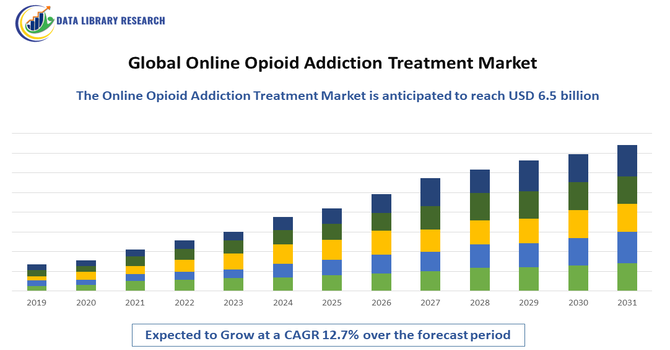
The Global Online Opioid Addiction Treatment Market refers to the sector focused on delivering opioid use disorder (OUD) therapies via digital platforms, including telemedicine, web-based counseling, medication-assisted treatment (MAT), and mobile apps. These services enable remote access to licensed professionals and evidence-based therapeutic interventions, combining behavioral therapy, digital support tools, and pharmacotherapy to treat addiction more conveniently and discreetly.
The Global Online Opioid Addiction Treatment Market is driven by rising prevalence of opioid use disorder and growing awareness of digital health solutions. Increasing adoption of telemedicine and virtual healthcare platforms enables convenient, remote access to medication-assisted treatment (MAT) and counseling services. Supportive government initiatives and insurance coverage for telehealth programs further accelerate adoption.
The online opioid addiction treatment market is rapidly evolving, with growing integration of telehealth services, digital therapeutic platforms, and hybrid care models that combine virtual and in-person support. The COVID-19 pandemic accelerated the adoption of virtual prescribing for medications like buprenorphine, helping reduce overdose risks. Artificial intelligence and data analytics are increasingly applied to personalize treatment, monitor patient adherence, and predict relapse. Additionally, stigma-reducing community-based platforms and digital peer-support groups are emerging, enhancing engagement, improving retention rates, and expanding accessibility for patients seeking discreet, convenient treatment options.
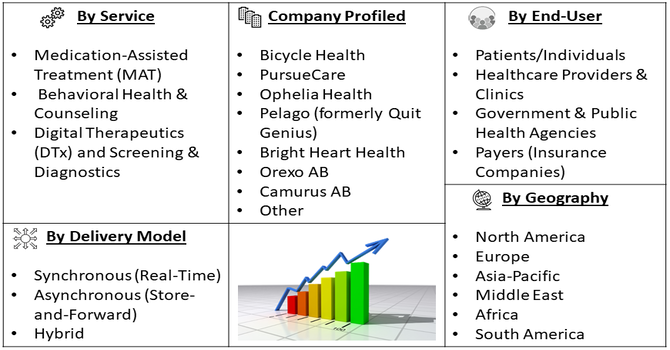
Segmentation: The Global Online Opioid Addiction Treatment Market is segmented by Service (Medication-Assisted Treatment (MAT), Behavioral Health & Counseling, Digital Therapeutics (DTx) and Screening & Diagnostics), Delivery Model (Synchronous (Real-Time), Asynchronous (Store-and-Forward) and Hybrid), End-User (Patients/Individuals, Healthcare Providers & Clinics, Government & Public Health Agencies and Payers (Insurance Companies)), and Geography (North America, Europe, Asia-Pacific, Middle East and Africa, and South America). The report provides the value (in USD million) for the above segments.
For Detailed Market Segmentation - Get a Free Sample PDF
Market Drivers:
The increasing prevalence of opioid use disorder (OUD) globally is a key driver for the online opioid addiction treatment market. Opioid misuse, overdose deaths, and associated health complications have reached alarming levels, prompting governments, healthcare providers, and patients to seek accessible, effective treatment options. Online platforms offer convenient access to evidence-based interventions, including medication-assisted treatment (MAT), counseling, and behavioral therapy, reducing barriers to care such as travel, stigma, and scheduling challenges. The urgent need for rapid intervention and ongoing management of OUD encourages the adoption of telehealth solutions, allowing patients to maintain continuity of care. Rising awareness about the consequences of untreated addiction further fuels demand for online treatment programs worldwide.
The adoption of telemedicine and digital health technologies is a significant driver for the online opioid addiction treatment market. Telehealth platforms enable remote consultations with licensed healthcare professionals, reducing the need for in-person visits and improving treatment adherence. Digital tools, including mobile apps, virtual therapy sessions, and AI-driven monitoring systems, enhance patient engagement, track medication adherence, and predict relapse risks. Insurance coverage and supportive government regulations for telemedicine further boost adoption. Additionally, the convenience, privacy, and flexibility offered by online platforms make treatment more appealing, particularly for patients in rural areas or with limited access to traditional healthcare facilities. Overall, technological integration strengthens the accessibility, efficiency, and scalability of opioid addiction care.
Market Restraints:
A major restraint for the global online opioid addiction treatment market is the complex regulatory landscape and privacy concerns surrounding digital healthcare. Different countries and regions impose strict rules on telemedicine, prescribing controlled substances like buprenorphine, and cross-border delivery of addiction treatment. Compliance with data protection regulations, including HIPAA in the U.S. and GDPR in Europe, adds operational challenges for providers, particularly in storing and sharing sensitive patient health information. These barriers can delay market entry, increase operational costs, and limit the scalability of online platforms. Additionally, inconsistent reimbursement policies for telehealth services can discourage adoption by both providers and patients. Collectively, regulatory and privacy hurdles restrict market growth despite rising demand for online opioid addiction treatment.
Online opioid addiction treatment is improving access to care for underserved and rural populations, addressing geographic and socioeconomic barriers. Telehealth programs enable patients to initiate and continue treatment without the need for frequent travel, reducing costs and time away from work. By offering remote behavioral therapy and medication-assisted treatment, these platforms contribute to higher retention rates and better treatment outcomes. This accessibility helps reduce the societal and economic burden of untreated opioid use disorder, lowers healthcare costs, and supports public health initiatives aimed at combating addiction more efficiently and equitably.
Segmental Analysis:
The Medication-Assisted Treatment (MAT) segment is expected to witness the highest growth over the forecast period due to its proven effectiveness in treating opioid use disorder (OUD). MAT combines FDA-approved medications, such as buprenorphine, methadone, and naltrexone, with counseling and behavioral therapy, significantly reducing cravings and relapse rates. The rising awareness of MAT among healthcare providers and patients, along with increasing regulatory support for virtual prescribing, is boosting adoption in online platforms. Additionally, MAT’s ability to improve long-term recovery outcomes and reduce overdose deaths makes it a preferred treatment method. The convenience of accessing MAT through telehealth further drives the growth of this segment in the global market.
The Synchronous (Real-Time) segment is projected to experience the highest growth, driven by the demand for live, interactive consultations between patients and healthcare providers. Real-time telehealth sessions allow clinicians to monitor patient progress, adjust treatment plans, and provide counseling immediately, improving adherence and recovery outcomes. This model is particularly beneficial for opioid use disorder treatment, where timely interventions can prevent relapse or overdose. The integration of video conferencing, live chat, and AI-assisted monitoring enhances patient engagement and satisfaction. As healthcare systems increasingly embrace telemedicine and digital health infrastructure, the synchronous delivery of addiction treatment services is becoming a preferred option, fueling market expansion globally.
The Patients/Individuals segment is expected to witness the highest growth over the forecast period as the primary beneficiaries of online opioid addiction treatment. Increasing awareness of the benefits of telehealth, coupled with the stigma associated with visiting traditional clinics, encourages patients to seek discreet, remote treatment options. Online platforms provide convenience, privacy, and flexible scheduling, allowing individuals to access counseling, medication-assisted treatment, and behavioral therapies from home. Rising smartphone and internet penetration, especially among younger demographics, further facilitates adoption. Additionally, the growing prevalence of opioid use disorder across diverse populations and regions drives demand, making direct-to-patient services the fastest-growing segment in the global online opioid addiction treatment market.
North America is expected to witness the highest growth in the online opioid addiction treatment market due to the high prevalence of opioid use disorder and supportive healthcare infrastructure. The region has seen a surge in telehealth adoption, accelerated by the COVID-19 pandemic and policy reforms enabling remote prescribing of controlled substances. Government initiatives, insurance coverage for telemedicine, and rising awareness of evidence-based treatments, including medication-assisted therapy, contribute to robust market growth. Additionally, advanced digital health technologies, widespread internet access, and a strong presence of leading telehealth providers strengthen North America’s position. Thus, these factors make the region the fastest-growing market for online opioid addiction treatment.
To Learn More About This Report - Request a Free Sample Copy
The market is highly competitive, featuring telemedicine providers, digital therapeutics companies, and hybrid platforms delivering online medication-assisted treatment. Key players differentiate through AI-driven support, app-based behavioral therapy, remote monitoring, and personalized patient care. Startups are expanding rapidly, offering innovative solutions for patient engagement and adherence. Established pharmaceutical and healthcare companies are also entering the digital space by integrating online treatment programs with their existing opioid disorder therapies. Partnerships with payors and value-based care contracts further strengthen market presence, while regulatory support for telemedicine enhances opportunities for growth and broader adoption of online addiction treatment solutions.
The major players for above market are:
Q1. What are the main growth-driving factors for this market?
The primary driver is the ongoing global opioid crisis and the overwhelming need for easily accessible treatment, especially in underserved rural areas. Telehealth and online platforms dramatically reduce geographic and transportation barriers, making essential services like Medication-Assisted Treatment (MAT) and counseling available from home. Furthermore, the reduced stigma associated with seeking help privately through a digital interface encourages more individuals to enroll in programs, and favorable regulatory changes supporting telemedicine and digital prescriptions strongly accelerate market adoption.
Q2. What are the main restraining factors for this market?
A significant constraint is the persistent digital divide, where limited internet access or lack of necessary technology in some regions prevents vulnerable populations from accessing online services. Furthermore, regulatory complexity regarding cross-state or cross-country prescribing of controlled substances like buprenorphine can create legal hurdles for providers looking to scale. Finally, concerns remain about data privacy and security on digital platforms, which can deter patients from sharing sensitive health information and hinder trust in online therapy models.
Q3. Which segment is expected to witness high growth?
The Medication-Assisted Treatment (MAT) Segment is expected to witness the highest growth. MAT, which involves combining FDA-approved medications (like buprenorphine or naltrexone) with counseling and behavioral therapies, is considered the gold standard for opioid use disorder. Online platforms allow for remote prescription management and virtual clinician oversight, making the integration of medication delivery and required counseling seamless and convenient. This comprehensive, evidence-based approach makes MAT the most utilized and fastest-growing service delivery method online.
Q4. Who are the top major players for this market?
The market is fragmented but led by specialized telehealth providers and major healthcare technology firms. Top major players include Boulder Care, Eleanor Health, and AptarGroup (via their digital health platforms), alongside larger providers like Telemynd that offer broad mental health services encompassing addiction treatment. These companies compete by focusing on proprietary technology platforms, comprehensive clinical protocols, and establishing partnerships with insurance payers to ensure wide patient coverage and accessibility.
Q5. Which country is the largest player?
The United States is the largest country market for online opioid addiction treatment. This dominance is due to the severe and widespread opioid epidemic across the country, which created an urgent public health demand for accessible solutions. Favorable government policy changes, particularly those relaxing restrictions on MAT prescribing via telemedicine, along with high rates of technology adoption and substantial private investment in digital health startups, have positioned the U.S. as the primary driver of market revenue and innovation.
Data Library Research are conducted by industry experts who offer insight on industry structure, market segmentations technology assessment and competitive landscape (CL), and penetration, as well as on emerging trends. Their analysis is based on primary interviews (~ 80%) and secondary research (~ 20%) as well as years of professional expertise in their respective industries. Adding to this, by analysing historical trends and current market positions, our analysts predict where the market will be headed for the next five years. Furthermore, the varying trends of segment & categories geographically presented are also studied and the estimated based on the primary & secondary research.
In this particular report from the supply side Data Library Research has conducted primary surveys (interviews) with the key level executives (VP, CEO’s, Marketing Director, Business Development Manager and SOFT) of the companies that active & prominent as well as the midsized organization
FIGURE 1: DLR RESEARH PROCESS
Extensive primary research was conducted to gain a deeper insight of the market and industry performance. The analysis is based on both primary and secondary research as well as years of professional expertise in the respective industries.
In addition to analysing current and historical trends, our analysts predict where the market is headed over the next five years.
It varies by segment for these categories geographically presented in the list of market tables. Speaking about this particular report we have conducted primary surveys (interviews) with the key level executives (VP, CEO’s, Marketing Director, Business Development Manager and many more) of the major players active in the market.
Secondary ResearchSecondary research was mainly used to collect and identify information useful for the extensive, technical, market-oriented, and Friend’s study of the Global Extra Neutral Alcohol. It was also used to obtain key information about major players, market classification and segmentation according to the industry trends, geographical markets, and developments related to the market and technology perspectives. For this study, analysts have gathered information from various credible sources, such as annual reports, sec filings, journals, white papers, SOFT presentations, and company web sites.
Market Size EstimationBoth, top-down and bottom-up approaches were used to estimate and validate the size of the Global market and to estimate the size of various other dependent submarkets in the overall Extra Neutral Alcohol. The key players in the market were identified through secondary research and their market contributions in the respective geographies were determined through primary and secondary research.
Forecast Model