
Get Complete Analysis Of The Report - Download Updated Free Sample PDF
The Global Pet Antibiotic Medication Market refers to the worldwide industry focused on the development, production, and distribution of antibiotic drugs used to treat bacterial infections in companion animals such as dogs and cats. These medications are prescribed to manage conditions including skin infections, respiratory diseases, urinary tract infections, and gastrointestinal disorders. The market is driven by rising pet ownership, increasing awareness of animal health, and growing expenditure on veterinary care, supported by advancements in veterinary pharmaceuticals and diagnostics.
The Global Pet Antibiotic Medication Market is witnessing steady growth driven by rising pet ownership and increased humanization of companion animals. Pet owners are increasingly seeking timely and effective treatments for bacterial infections, boosting demand for veterinary antibiotics. Key trends include the development of broad-spectrum and targeted antibiotics, improved drug formulations with better palatability, and increased use of combination therapies. Additionally, growing awareness of antimicrobial resistance has led to stricter prescription practices and demand for responsible antibiotic use.
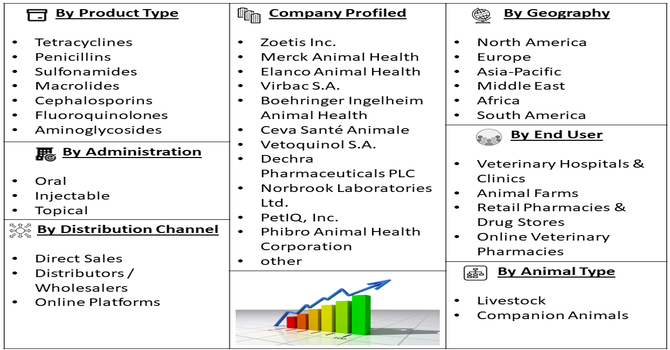
Segmentation: The Global Pet Antibiotic Medication Market is segmented by Product Type (Tetracyclines, Penicillins, Sulfonamides, Macrolides, Cephalosporins, Fluoroquinolones, Aminoglycosides, Others (e.g., Lincosamides, Carbapenems)), Route of Administration (Oral, Injectable, Topical, Intramammary), Animal Type (Livestock, and Companion Animals), End User (Veterinary Hospitals & Clinics, Animal Farms, Retail Pharmacies & Drug Stores, Online Veterinary Pharmacies, Research Institutes & Academic Settings), Distribution Channel (Direct Sales (Veterinary Sales Representatives), Distributors / Wholesalers, Online Platforms)) and Geography (North America, Europe, Asia-Pacific, Middle East and Africa, and South America). The report provides the value (in USD million) for the above segments.
For Detailed Market Segmentation - Get a Free Sample PDF
Market Drivers:
The Global Pet Antibiotic Medication Market is significantly driven by the rapid rise in pet ownership and the growing humanization of companion animals. Pet owners increasingly view pets as family members, leading to higher spending on preventive and curative veterinary care. This trend has increased demand for timely treatment of bacterial infections such as skin, respiratory, urinary tract, and gastrointestinal diseases. Improved access to veterinary clinics, expansion of pet insurance, and greater awareness of animal health further support antibiotic usage. As disposable incomes rise, especially in urban households, demand for effective pet antibiotic medications continues to grow globally.
Technological advancements in veterinary diagnostics and pharmaceutical research are accelerating growth in the pet antibiotic medication market. Improved diagnostic tools enable early and accurate identification of bacterial infections, driving appropriate antibiotic prescriptions. Pharmaceutical companies are investing in developing safer, more targeted, and broad-spectrum antibiotics with improved efficacy and reduced side effects. Innovations in drug formulations, such as flavored tablets and long-acting injectables, enhance treatment compliance among pets and owners. Additionally, growing collaboration between veterinary professionals and pharmaceutical manufacturers supports product development, regulatory approvals, and wider adoption of advanced antibiotic therapies.
Market Restraints:
Increasing concerns regarding antimicrobial resistance (AMR) present a significant restraint on the Global Pet Antibiotic Medication Market. Overuse and misuse of antibiotics in animals have raised public health concerns, leading to stricter regulations on veterinary antibiotic prescriptions and usage. Regulatory authorities are enforcing tighter guidelines, monitoring antibiotic consumption, and promoting antimicrobial stewardship programs. These measures may limit antibiotic sales growth and increase compliance costs for manufacturers and veterinarians. Additionally, heightened scrutiny and longer approval timelines for new antibiotics can slow product launches, restraining market expansion despite growing demand for pet healthcare solutions.
The pet antibiotic medication market plays a significant socioeconomic role by supporting animal health, public health, and the veterinary healthcare ecosystem. Effective treatment of pet infections helps reduce the spread of zoonotic diseases, contributing to overall community well-being. Increased spending on pet healthcare stimulates job creation across veterinary services, pharmaceutical manufacturing, and distribution channels. Moreover, rising disposable incomes and changing lifestyles, particularly in urban areas, have increased access to advanced veterinary treatments. However, cost sensitivity in developing regions may limit access to high-quality medications, highlighting the need for affordable and regulated antibiotic solutions.
Segmental Analysis:
The Cephalosporins segment is expected to witness the highest growth over the forecast period due to its broad-spectrum efficacy and strong safety profile in treating bacterial infections in pets. Cephalosporins are widely prescribed for skin, soft tissue, respiratory, and urinary tract infections in companion animals. Their high effectiveness against both Gram-positive and Gram-negative bacteria, coupled with lower toxicity compared to other antibiotic classes, supports increased adoption. Advancements in veterinary formulations, including long-acting injectables and improved oral dosages, further enhance treatment compliance. Growing veterinarian preference for reliable and well-tolerated antibiotics continues to drive segment growth.
The Oral Medication segment is expected to witness the highest growth over the forecast period, driven by ease of administration and high pet owner acceptance. Oral antibiotics, available as tablets, capsules, powders, and flavored chewables, are commonly prescribed for outpatient treatment of mild to moderate infections. Improved palatability and dosing convenience enhance treatment adherence, reducing stress for pets and caregivers. The increasing shift toward home-based pet care, coupled with rising awareness of early disease management, further supports demand. Additionally, oral medications are cost-effective compared to injectable therapies, making them a preferred choice among veterinarians and pet owners.
The Companion Animals segment is expected to witness the highest growth over the forecast period due to increasing ownership of dogs and cats globally. Rising humanization of pets has led to higher demand for advanced veterinary care, including prompt treatment of bacterial infections. Companion animals are more frequently diagnosed and treated due to regular veterinary visits and preventive health monitoring. Increased spending on pet healthcare, growth in pet insurance coverage, and improved access to veterinary services further fuel market expansion. Additionally, heightened awareness of zoonotic disease prevention supports proactive antibiotic treatment, driving sustained growth in this segment.
The Veterinary Hospitals & Clinics segment is expected to witness the highest growth over the forecast period, supported by the expanding global veterinary healthcare infrastructure. These facilities serve as the primary point of diagnosis and treatment for pet infections, driving antibiotic prescriptions. Advanced diagnostic capabilities, trained veterinary professionals, and access to a wide range of pharmaceutical products enhance treatment outcomes. Increasing investments in modern veterinary clinics, especially in urban areas, along with rising pet healthcare expenditure, support growth. Additionally, strong veterinarian–pet owner relationships influence treatment decisions, reinforcing the dominance of hospitals and clinics in antibiotic medication distribution.
The Direct Sales (Veterinary Sales Representatives) segment is expected to witness the highest growth over the forecast period due to strong professional engagement and trust-based selling. Veterinary sales representatives play a crucial role in educating veterinarians about new antibiotic products, treatment protocols, and responsible usage guidelines. Direct interaction enables better product demonstration, customized solutions, and prompt feedback, supporting higher adoption rates. Pharmaceutical companies increasingly rely on direct sales channels to promote prescription antibiotics and ensure regulatory compliance. This approach strengthens brand loyalty, enhances market penetration, and supports sustained growth within this distribution segment.
North America is expected to witness the highest growth over the forecast period, driven by high pet ownership rates and advanced veterinary healthcare systems. The region benefits from strong regulatory frameworks, widespread pet insurance adoption, and high awareness of animal health.
Presence of leading veterinary pharmaceutical companies, robust R&D investments, and early adoption of innovative antibiotic therapies further support growth. For instance, in April 2025, Vetlen launched a smaller 5 mL version of its antibiotic pouch system, offering a targeted antibiotic delivery option alongside its existing 10 mL format. This launch strengthened North America’s pet antibiotic medication market by improving dosing flexibility, reducing drug wastage, and supporting precision therapy. The innovation enhanced treatment compliance in companion animals and reinforced the region’s leadership in adopting advanced veterinary drug delivery technologies.
Additionally, increasing expenditure on companion animal care and availability of skilled veterinary professionals across the United States and Canada continue to drive strong demand for pet antibiotic medications in the region. For instance, an article published in the journal, Sec. Veterinary Humanities and Social Sciences, in 2025, reported that a survey conducted in US among 1,177 people, out of which 78.2% respondents reported availability of veterinarians with expertise veterinary science. This combination of higher healthcare spending and professional expertise has supported increased prescription rates and sustained growth of the pet antibiotic medication market throughout the region.
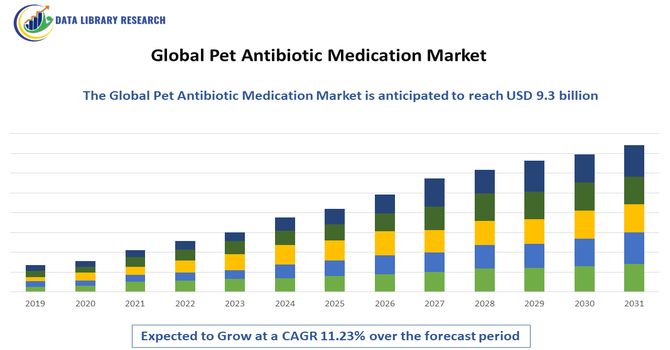
| Market Size Value | USD 9.3 billion |
| Growth Rate | CAGR of 11.23 % |
| Forecast | 2026-2033 |
| Historical data | 2021-2024 |
| Base Year | 2025 |
| Report Coverage | Forecasted revenue, company rating, competitive environment, growth drivers, and trends |
| Segment Coverage | Type, Application, End-User, Geography |
| Regional Scope | North America, Europe, Asia Pacific, Middle East |
| Customized scope | Free customization of reports (With 3 months Analysis Support ) |
| To Learn More About This Report | Request a Free Sample Copy |
The Global Pet Antibiotic Medication Market is moderately competitive, characterized by the presence of established veterinary pharmaceutical companies and emerging regional players. Leading companies focus on product innovation, regulatory approvals, and strategic partnerships to strengthen their market position. Mergers, acquisitions, and licensing agreements are common strategies to expand product portfolios and geographic reach. Companies are also investing in R&D to develop safer, more effective antibiotics while addressing antimicrobial resistance concerns. Strong distribution networks, brand reputation, and veterinarian trust play a crucial role in shaping competitive advantage within the market.
The major players for above market are:
Recent Development
Q1. What are the main growth-driving factors for this market?
The market is growing because pets are increasingly viewed as family members, leading owners to invest more in high-quality medical care. A rising number of pet adoptions, coupled with more frequent veterinary visits for skin and respiratory infections, is fueling demand. Additionally, better diagnostic tools allow vets to identify bacterial issues earlier.
Q2. What are the main restraining factors for this market?
Growth is limited by the global concern over antibiotic resistance, which leads to stricter regulations and more cautious prescribing habits by veterinarians. High development costs for new animal-specific drugs and the availability of alternative treatments, such as probiotics or natural supplements, also act as barriers to rapid market expansion.
Q3. Which segment is expected to witness high growth?
The Oral Medication segment is expected to see the highest growth. Pet owners prefer tablets, liquids, and chewable "treat-like" antibiotics because they are easy to administer at home without a vet's help. This convenience leads to better treatment completion, making it the most popular choice for common domestic infections.
Q4. Who are the top major players for this market?
The market is dominated by large animal health companies that focus specifically on pet medicine. Key players include Zoetis, Boehringer Ingelheim, Merck Animal Health, Elanco, and Virbac. These companies stay ahead by developing flavored medications that pets accept more easily and by maintaining massive global distribution networks.
Q5. Which country is the largest player?
The United States is the largest player in the pet antibiotic market. It has the highest rate of pet spending in the world and a very advanced network of veterinary hospitals. The combination of high pet ownership rates and strong consumer awareness regarding animal health keeps the U.S. at the forefront.
Data Library Research are conducted by industry experts who offer insight on industry structure, market segmentations technology assessment and competitive landscape (CL), and penetration, as well as on emerging trends. Their analysis is based on primary interviews (~ 80%) and secondary research (~ 20%) as well as years of professional expertise in their respective industries. Adding to this, by analysing historical trends and current market positions, our analysts predict where the market will be headed for the next five years. Furthermore, the varying trends of segment & categories geographically presented are also studied and the estimated based on the primary & secondary research.
In this particular report from the supply side Data Library Research has conducted primary surveys (interviews) with the key level executives (VP, CEO’s, Marketing Director, Business Development Manager and SOFT) of the companies that active & prominent as well as the midsized organization
FIGURE 1: DLR RESEARH PROCESS
Extensive primary research was conducted to gain a deeper insight of the market and industry performance. The analysis is based on both primary and secondary research as well as years of professional expertise in the respective industries.
In addition to analysing current and historical trends, our analysts predict where the market is headed over the next five years.
It varies by segment for these categories geographically presented in the list of market tables. Speaking about this particular report we have conducted primary surveys (interviews) with the key level executives (VP, CEO’s, Marketing Director, Business Development Manager and many more) of the major players active in the market.
Secondary ResearchSecondary research was mainly used to collect and identify information useful for the extensive, technical, market-oriented, and Friend’s study of the Global Extra Neutral Alcohol. It was also used to obtain key information about major players, market classification and segmentation according to the industry trends, geographical markets, and developments related to the market and technology perspectives. For this study, analysts have gathered information from various credible sources, such as annual reports, sec filings, journals, white papers, SOFT presentations, and company web sites.
Market Size EstimationBoth, top-down and bottom-up approaches were used to estimate and validate the size of the Global market and to estimate the size of various other dependent submarkets in the overall Extra Neutral Alcohol. The key players in the market were identified through secondary research and their market contributions in the respective geographies were determined through primary and secondary research.
Forecast Model