
Get Complete Analysis Of The Report - Download Updated Free Sample PDF
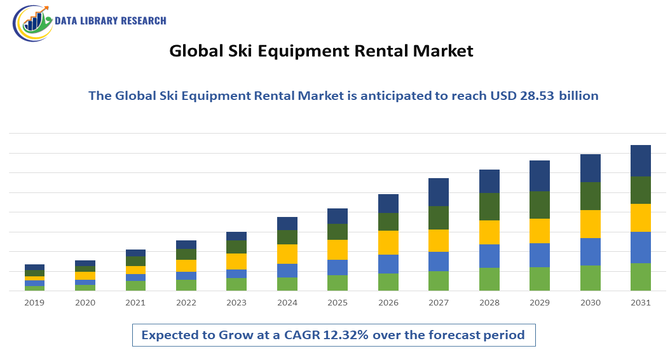
The Global Ski Equipment Rental Market caters to winter sports enthusiasts by providing convenient access to skis, snowboards, and related gear without the need for ownership. Growing interest in skiing and snowboarding, rising tourism in ski destinations, and the high cost of purchasing equipment drive market growth. Rental services offer affordability, flexibility, and convenience, encouraging more participation in winter sports while boosting local economies and supporting sustainable equipment usage across the industry.
The Global Ski Equipment Rental Market is evolving with a strong shift toward digitalization, including online booking platforms and mobile apps, which enhance customer convenience. Increasing demand for high-quality, latest-model equipment is driving rental providers to regularly update their inventories. Additionally, eco-friendly and sustainable rental practices are gaining traction as consumers become more environmentally conscious. Growth in emerging ski destinations and expanding winter sports participation, especially among millennials and families, further fuel market expansion. Seasonal promotions and package deals combining rentals with lessons or lift passes are becoming popular, attracting more tourists and casual skiers.
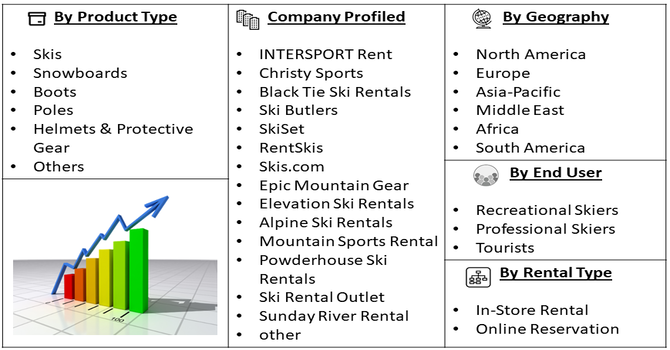
Segmentation: The Global Ski Equipment Rental Market is segmented by Product Type (Skis, Snowboards, Boots, Poles, Helmets & Protective Gear and Others), Rental Type (In-Store Rental and Online Reservation), End User (Recreational Skiers, Professional Skiers and Tourists), and Geography (North America, Europe, Asia-Pacific, Middle East and Africa, and South America). The report provides the value (in USD million) for the above segments.
For Detailed Market Segmentation - Get a Free Sample PDF
Market Drivers:
The increasing global interest in winter sports and ski tourism has been a major driver for the ski equipment rental market. Skiing and snowboarding have evolved from niche activities to mainstream recreational pursuits, attracting tourists and adventure enthusiasts worldwide. Countries with renowned ski destinations, including the U.S., Canada, Switzerland, and Japan, are witnessing rising visitor inflows during winter seasons. Many tourists prefer renting ski equipment rather than purchasing due to cost, convenience, and travel logistics. This trend has led rental businesses to expand their offerings, modernize equipment, and improve service quality, significantly boosting market growth.
Technological innovation in ski and snowboard equipment is fueling the rental market as consumers increasingly seek high-performance and versatile gear without the commitment of purchase. Modern skis, snowboards, and bindings incorporate lightweight materials, ergonomic designs, and smart features to enhance performance, safety, and user experience. For instance, in July 2024, WNDR Alpine expanded into skis, snowboards, and splitboards, integrating biotechnology to enhance performance and sustainability. The comprehensive product line and innovative features attracted a wider outdoor enthusiast audience, increasing participation in winter sports and consequently driving higher demand in the global ski equipment rental market. Equipment customization, online booking platforms, and IoT-enabled gear tracking further improve convenience, promoting rentals over ownership. These advancements expand market adoption, drive repeat rentals, and strengthen customer loyalty across seasonal and regional markets.
Market Restraints:
The key restraint in the global ski equipment rental market is the high cost of maintaining and managing rental fleets. Ski and snowboard equipment undergo significant wear and tear, requiring regular servicing, replacement, and storage infrastructure. Smaller operators may face operational inefficiencies, increased labor costs, and logistical challenges in managing inventory across multiple locations. Additionally, seasonal demand fluctuations result in underutilized equipment during off-peak periods, affecting profitability. Such operational and maintenance burdens discourage new entrants and limit expansion potential, creating barriers to market growth despite rising consumer demand for ski equipment rentals worldwide.
The ski equipment rental market significantly boosts local economies by creating jobs and supporting tourism-dependent communities in mountainous regions worldwide. It lowers barriers to entry for skiing by making equipment more affordable and accessible, particularly benefiting young and low-income enthusiasts. This accessibility encourages healthier lifestyles through outdoor physical activity, promoting social inclusion. Furthermore, rental services reduce the need for personal ownership, minimizing waste and resource consumption, aligning with sustainable development goals. The market’s growth helps sustain small businesses and rental shops, fostering economic diversification in often seasonal tourism regions.
Segmental Analysis:
The snowboards segment is expected to witness the highest growth over the forecast period, driven by increasing popularity among younger winter sports enthusiasts and the rising number of snowboard-focused events and resorts globally. Advancements in snowboard design, including lightweight materials, enhanced flexibility, and durability, have improved user experience and safety, encouraging adoption. Rental providers are expanding their snowboard offerings to meet growing demand from recreational and professional riders. Additionally, social media influence and snowboarding competitions have contributed to higher interest, further boosting rentals. This trend positions snowboards as a key revenue driver in the global ski equipment rental market.
The online reservation segment is projected to experience the highest growth due to increasing consumer preference for convenience, time efficiency, and contactless services. Skiers and snowboarders increasingly use digital platforms to compare prices, check availability, and book equipment in advance, reducing wait times at rental outlets. Integration with mobile apps, loyalty programs, and secure payment systems has enhanced user experience and accessibility. Additionally, the COVID-19 pandemic accelerated digital adoption, driving permanent shifts toward online booking. Rental companies leveraging technology and e-commerce platforms are well-positioned to capture this growing demand, making online reservations a significant growth driver in the ski equipment rental market.
The recreational skiers segment is expected to witness the highest growth as skiing and snowboarding become more accessible to leisure enthusiasts worldwide. Increasing disposable income, growing winter tourism, and expanding ski resort infrastructure have contributed to a surge in recreational participation. Rental services cater to these skiers who prefer cost-effective, flexible access to high-quality equipment without the burden of ownership. Marketing campaigns, seasonal promotions, and beginner-friendly rental packages have further incentivized this segment. The trend toward experiential travel and outdoor recreational activities strengthens demand, making recreational skiers the dominant end-user group driving revenue growth in the global ski equipment rental market.
The North American region is expected to witness the highest growth over the forecast period, supported by well-established ski resorts, high winter tourism, and strong consumer spending power. Countries like the U.S. and Canada offer extensive winter sports infrastructure, attracting both domestic and international visitors. For instance, in March 2025, J.Crew partnered with U.S. Ski & Snowboard for three years as the official lifestyle-apparel sponsor. This collaboration enhanced brand visibility, promoted winter sports culture, and attracted a broader consumer base, indirectly driving demand for ski equipment rentals through increased interest in skiing and snowboarding activities.
Similarly, in February 2025, Bcomp teamed up with Jones Snowboards to incorporate natural fiber composites into snowboard designs. This partnership advanced sustainable, high-performance manufacturing, boosted eco-conscious consumer interest, and supported growth in ski and snowboard rentals as environmentally aware customers sought to experience the latest innovative equipment.
Advanced rental services, including online bookings, home delivery, and premium equipment options, enhance accessibility and convenience. Moreover, the region benefits from strong brand presence of major ski equipment rental companies and technological adoption in rental management. These factors collectively contribute to North America’s leadership and growth potential in the global ski equipment rental market.
| Report Matrics | Details |
| Market Size Value | USD 28.53 billion |
| Growth Rate | CAGR of 12.32% |
| Forecast | 2026-2033 |
| Historical data | 2021-2024 |
| Base Year | 2025 |
| Report Coverage | Forecasted revenue, company rating, competitive environment, growth drivers, and trends |
| Segment Coverage | Type, Application, End-User, Geography |
| Regional Scope | North America, Europe, Asia Pacific, Middle East |
| Customized scope | Free customization of reports (With 3 months Analysis Support ) |
| To Learn More About This Report | Request a Free Sample Copy |
The competitive landscape of the Global Ski Equipment Rental Market is diverse, featuring international rental chains, local specialty shops, and growing online rental platforms. Major players compete on factors like equipment quality, pricing, location convenience, and digital booking ease. Innovation in customer service, such as personalized fittings and multi-language support, differentiates leading companies. Partnerships with ski resorts and tourism agencies strengthen market positioning. Additionally, some players focus on sustainable rental options to attract eco-conscious consumers. Market consolidation through mergers and acquisitions is increasing, as firms seek to expand regional footprints and improve operational efficiencies in a highly seasonal, competitive market.
The major players for this market are:
Recent Development
Q1. What are the main growth-driving factors for this market?
The market is growing because more people are traveling for ski vacations and prefer renting over carrying heavy gear on airplanes. High-quality equipment is expensive to buy, so beginners and casual skiers find renting much more affordable. Additionally, resorts now offer online booking and premium "demo" rentals, allowing skiers to try the latest technology.
Q2. What are the main restraining factors for this market?
Growth is primarily threatened by climate change, as shorter winters and less snowfall reduce the number of days people can ski. High rental prices at popular resorts can also discourage families on a budget. Furthermore, some frequent skiers prefer the perfect fit and familiarity of owning their own custom boots and skis.
Q3. Which segment is expected to witness high growth?
The Online Pre-booking segment is expected to see the highest growth. Travelers want to skip long lines at the rental shop and ensure their size is available before they arrive. Digital platforms and mobile apps make it easy to reserve gear, often at a discount, providing a much smoother experience for modern tourists.
Q4. Who are the top major players for this market?
The market is led by large resort operators and specialized rental chains. Key players include Vail Resorts, Skiset, Intersport Rent, Sport 2000, and Rentskis.com. These companies dominate by having prime locations right at the base of the mountains and offering loyalty programs that work across different international ski destinations.
Q5. Which country is the largest player?
France is a leading player in the ski equipment rental market, home to some of the world's largest and most visited ski areas in the Alps. The country has a very mature rental infrastructure with massive chains like Skiset. The high volume of international tourists visiting French resorts every winter keeps the rental demand consistently high.
Data Library Research are conducted by industry experts who offer insight on industry structure, market segmentations technology assessment and competitive landscape (CL), and penetration, as well as on emerging trends. Their analysis is based on primary interviews (~ 80%) and secondary research (~ 20%) as well as years of professional expertise in their respective industries. Adding to this, by analysing historical trends and current market positions, our analysts predict where the market will be headed for the next five years. Furthermore, the varying trends of segment & categories geographically presented are also studied and the estimated based on the primary & secondary research.
In this particular report from the supply side Data Library Research has conducted primary surveys (interviews) with the key level executives (VP, CEO’s, Marketing Director, Business Development Manager and SOFT) of the companies that active & prominent as well as the midsized organization
FIGURE 1: DLR RESEARH PROCESS
Extensive primary research was conducted to gain a deeper insight of the market and industry performance. The analysis is based on both primary and secondary research as well as years of professional expertise in the respective industries.
In addition to analysing current and historical trends, our analysts predict where the market is headed over the next five years.
It varies by segment for these categories geographically presented in the list of market tables. Speaking about this particular report we have conducted primary surveys (interviews) with the key level executives (VP, CEO’s, Marketing Director, Business Development Manager and many more) of the major players active in the market.
Secondary ResearchSecondary research was mainly used to collect and identify information useful for the extensive, technical, market-oriented, and Friend’s study of the Global Extra Neutral Alcohol. It was also used to obtain key information about major players, market classification and segmentation according to the industry trends, geographical markets, and developments related to the market and technology perspectives. For this study, analysts have gathered information from various credible sources, such as annual reports, sec filings, journals, white papers, SOFT presentations, and company web sites.
Market Size EstimationBoth, top-down and bottom-up approaches were used to estimate and validate the size of the Global market and to estimate the size of various other dependent submarkets in the overall Extra Neutral Alcohol. The key players in the market were identified through secondary research and their market contributions in the respective geographies were determined through primary and secondary research.
Forecast Model