
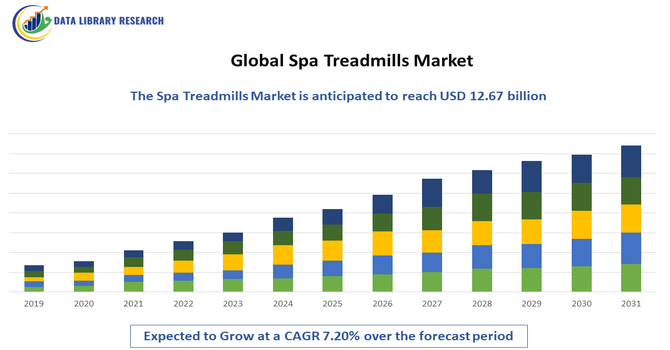
Get Complete Analysis Of The Report - Download Updated Free Sample PDF
The Global Spa Treadmills Market involves specialized treadmills designed for spa and wellness centers, combining fitness and relaxation features. These treadmills offer low-impact exercise options, often with hydrotherapy or massage integration, catering to health-conscious consumers. Growing demand for luxury wellness experiences and rising fitness awareness are driving market growth worldwide, especially in high-end spas and rehabilitation centers.
The Global Spa Treadmills Market is driven by increasing consumer focus on health and wellness, rising demand for luxury spa experiences, and growing awareness of low-impact fitness equipment that combines exercise with relaxation. Technological advancements, such as hydrotherapy integration and smart features, enhance user experience. Additionally, expanding spa and wellness centers worldwide, along with rising disposable incomes, support market growth by encouraging investment in innovative, multifunctional treadmill solutions.
The Global Spa Treadmills Market has seen significant trends toward multifunctional and tech-enabled products. Modern spa treadmills now integrate hydrotherapy, massage, and digital monitoring systems to offer low-impact, personalized workouts. There is also a rising preference for eco-friendly and energy-efficient designs. Smart connectivity, app-based tracking, and virtual training experiences are gaining popularity. Additionally, consumers increasingly seek luxury wellness solutions that blend fitness and relaxation, prompting manufacturers to develop high-end, aesthetically appealing treadmills suitable for premium spas, wellness centers, and home use, driving innovation and shaping market dynamics globally.
\Segmentation: The Global Spa Treadmills Market is segmented by Product Design (In-Ground Systems and Above-Ground & Portable Systems), Operating Mechanism (Standard Systems and Advanced Systems), End-User (Clinical Rehabilitation, Sports & Athletic Training, Luxury Spas & Wellness and Residential), and Geography (North America, Europe, Asia-Pacific, Middle East and Africa, and South America). The report provides the value (in USD million) for the above segments.
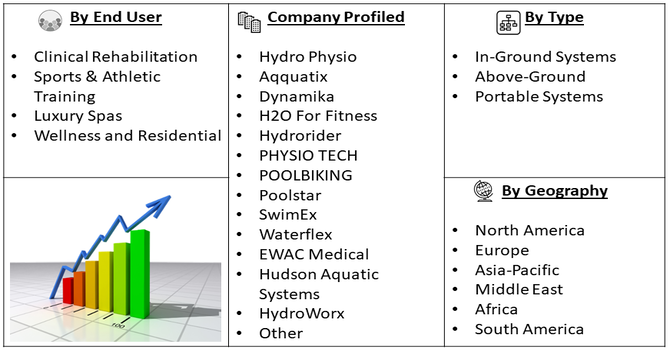
For Detailed Market Segmentation - Get a Free Sample PDF
Market Drivers:
Rising health consciousness and increasing adoption of fitness routines significantly boosted the demand for spa treadmills. Consumers increasingly prefer low-impact exercise equipment that combines physical therapy with cardiovascular benefits, particularly for rehabilitation or aging populations. Spa treadmills offer joint-friendly workouts through water resistance or cushioned decks, reducing the risk of injury. Wellness centers, physiotherapy clinics, and luxury home gyms increasingly invest in spa treadmills to cater to a health-conscious clientele. This trend was further reinforced by increasing disposable incomes and the willingness to spend on premium fitness solutions, driving steady growth in the global spa treadmill market.
The growing number of rehabilitation centers, physiotherapy clinics, and luxury wellness facilities drove demand for spa treadmills. These treadmills are widely used for aquatic therapy, sports injury rehabilitation, and post-operative recovery due to their low-impact, joint-friendly design. Hospitals and wellness centers increasingly integrated spa treadmills into treatment programs to enhance patient outcomes, improve mobility, and promote overall wellness. Additionally, rising awareness of preventive healthcare solutions and rehabilitation therapies led to higher adoption in both commercial and residential settings. The expanding wellness and healthcare infrastructure globally contributed significantly to the market growth of spa treadmills.
Market Restraints:
The high price point of spa treadmills remains a major market restraint, limiting adoption, especially among small clinics and individual consumers. Premium models with advanced features, such as underwater treadmill systems or integrated rehabilitation programs, require significant investment. Additionally, spa treadmills demand regular maintenance, including water treatment, cleaning, and calibration of mechanical components, which increases operational costs. These factors make them less accessible for budget-conscious buyers, restricting market penetration in emerging economies. The combination of high upfront costs and ongoing maintenance challenges slowed the adoption rate, posing a notable restraint to the overall growth of the global spa treadmill market.
The market positively influences both health and economic sectors. Spa treadmills support physical rehabilitation, weight management, and stress reduction, improving overall public wellness. As spas and wellness centers invest in advanced equipment, they create employment opportunities in retail, installation, and maintenance. Rising disposable incomes and urbanization contribute to increased spending on premium fitness solutions. Moreover, improved health outcomes from regular treadmill use can reduce healthcare costs and enhance productivity. The demand for luxury wellness experiences also stimulates tourism and local economies, highlighting the socioeconomic benefits of the growing spa treadmill market, particularly in affluent regions.
Segmental Analysis:
The in-ground spa treadmills segment was projected to witness the highest growth over the forecast period due to its space-saving design, aesthetic appeal, and ease of access. In-ground systems provide users with seamless integration into pools and therapy areas, offering both residential and commercial facilities an elegant solution. These treadmills are particularly preferred in high-end wellness centers, rehabilitation clinics, and luxury homes where aesthetics, safety, and durability are prioritized. Their superior water resistance and customizable installation options made them attractive for long-term investments. Growing demand for low-impact aquatic exercise and rehabilitation therapies further accelerated adoption of in-ground spa treadmills globally.
Standard spa treadmill systems were expected to see robust growth due to their affordability, portability, and versatility in various aquatic and therapeutic settings. These treadmills were widely adopted in physiotherapy clinics, fitness centers, and home gyms for cardiovascular and low-impact exercises. Standard systems offered adjustable resistance, durable construction, and compatibility with different pool types, making them a practical choice for both professional and residential use. Rising awareness of the benefits of aquatic exercise, combined with increasing health-consciousness among consumers, contributed to the growing preference for standard spa treadmills. Their relative ease of installation and maintenance further strengthened their market adoption globally.
The clinical rehabilitation segment was projected to witness the highest growth, driven by increasing use of spa treadmills in hospitals, physiotherapy clinics, and rehabilitation centers. Spa treadmills offered low-impact aquatic therapy, post-operative recovery, and sports injury rehabilitation, helping patients regain mobility while minimizing joint strain. Rising incidence of musculoskeletal disorders, aging populations, and chronic pain conditions accelerated adoption in clinical settings. Additionally, healthcare providers emphasized preventive and therapeutic exercise programs, integrating spa treadmills to improve patient outcomes and satisfaction. Technological advancements, such as adjustable water resistance, precise speed control, and safety features, further enhanced the utility of spa treadmills in clinical rehabilitation programs globally.
North America was expected to witness the highest growth in the spa treadmill market due to strong consumer awareness, higher disposable incomes, and a mature wellness and rehabilitation infrastructure. The region benefited from the proliferation of physiotherapy clinics, luxury gyms, hospitals, and wellness centers adopting spa treadmills for low-impact exercise and rehabilitation therapies. Government initiatives promoting healthcare innovation, preventive care, and active lifestyles further encouraged market adoption.
Additionally, North America’s focus on integrating advanced fitness equipment and smart therapy solutions in both commercial and residential settings contributed to the strong market growth. The presence of leading spa treadmill manufacturers and high R&D investments reinforced the region’s dominance.
Moreover, the growing trend of home-based wellness and rehabilitation solutions in North America further fueled spa treadmill adoption. Consumers increasingly sought convenient, low-impact exercise options that could be integrated into residential pools and home gyms. Rising awareness of chronic disease prevention, physical therapy at home, and personalized fitness regimens drove demand for advanced spa treadmill models with adjustable resistance, ergonomic designs, and smart features. This shift toward combining health, comfort, and technology strengthened North America’s position as the largest and fastest-growing market, with both commercial and residential sectors contributing significantly to overall spa treadmill sales and innovation in the region.
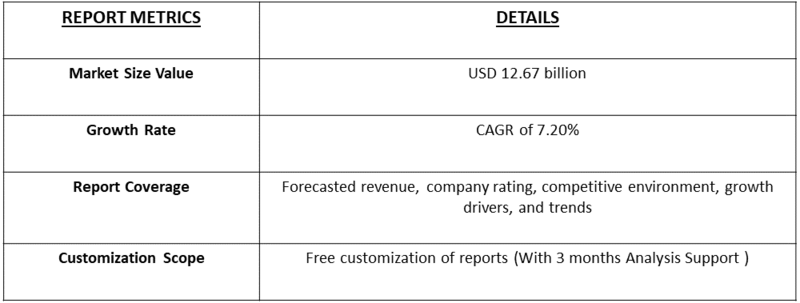
To Learn More About This Report - Request a Free Sample Copy
The Global Spa Treadmills Market is highly competitive, with major players focusing on innovation, quality, and differentiation. Companies such as Woodway, Life Fitness, Precor, Technogym, and NordicTrack dominate through advanced features, aesthetic designs, and integration of wellness technologies. Smaller and niche manufacturers compete by offering customizable, compact, or hydrotherapy-enabled treadmills. Strategic partnerships with spa chains, wellness centers, and fitness influencers enhance brand visibility. Competitive factors include product reliability, technological advancement, pricing, and after-sales support. Continuous R&D investments and marketing initiatives are crucial for maintaining market share, fostering a dynamic environment that encourages innovation and drives global growth.
The 20 major players for above market:
Recent Development:
Q1. What are the main growth-driving factors for this market?
The primary driver is the increasing global focus on hydrotherapy and water-based rehabilitation for athletes and the geriatric population. Underwater treadmills offer low-impact exercise, accelerating recovery and reducing joint strain, making them highly valued in physical therapy centers. Furthermore, the expansion of the luxury spa and wellness tourism sector, combined with rising disposable incomes among consumers willing to invest in high-end fitness and recovery equipment, fuels consistent market growth.
Q2. What are the main restraining factors for this market?
The major restraint is the significantly high capital investment required to purchase, install, and maintain these specialized units. Underwater treadmills require not only the machine itself but also custom plumbing, water treatment systems, and often dedicated room space. This high barrier to entry limits sales primarily to large commercial rehabilitation clinics, sports performance centers, and luxury facilities, preventing widespread adoption in smaller fitness centers and residential homes.
Q3. Which segment is expected to witness high growth?
The Clinical Rehabilitation Segment is projected to witness the highest growth. As medical professionals increasingly recognize the therapeutic benefits of aquatic exercise for orthopedic injuries, neurological disorders, and chronic pain, demand from hospitals and dedicated physical therapy clinics is surging. This segment relies on high-end, durable equipment capable of precise speed and depth control, ensuring that clinical applications remain the core and fastest-growing revenue stream for manufacturers.
Q4. Who are the top major players for this market?
The market is dominated by niche manufacturers specializing in aquatic therapy and high-end fitness equipment. Top major players include HydroWorx International, Inc., SwimEx, Endless Pools (a subsidiary of Masco Corporation), and Spheredeck. These companies compete by offering robust, customizable designs with advanced features like variable water current jets, digital control panels, and integrated diagnostic monitoring, positioning themselves as suppliers of essential professional-grade medical and athletic training tools.
Q5. Which country is the largest player?
The United States is the largest country player in the Global Spa Treadmills Market. Its market dominance is due to a well-developed healthcare and sports medicine infrastructure, high spending on physical therapy and rehabilitation services, and strong insurance reimbursement for aquatic therapy. The presence of numerous major professional sports teams, elite training facilities, and a culture of prioritizing recovery technology ensures that the U.S. continues to be the largest market for purchasing and utilizing high-cost spa treadmills.
Data Library Research are conducted by industry experts who offer insight on industry structure, market segmentations technology assessment and competitive landscape (CL), and penetration, as well as on emerging trends. Their analysis is based on primary interviews (~ 80%) and secondary research (~ 20%) as well as years of professional expertise in their respective industries. Adding to this, by analysing historical trends and current market positions, our analysts predict where the market will be headed for the next five years. Furthermore, the varying trends of segment & categories geographically presented are also studied and the estimated based on the primary & secondary research.
In this particular report from the supply side Data Library Research has conducted primary surveys (interviews) with the key level executives (VP, CEO’s, Marketing Director, Business Development Manager and SOFT) of the companies that active & prominent as well as the midsized organization
FIGURE 1: DLR RESEARH PROCESS
Extensive primary research was conducted to gain a deeper insight of the market and industry performance. The analysis is based on both primary and secondary research as well as years of professional expertise in the respective industries.
In addition to analysing current and historical trends, our analysts predict where the market is headed over the next five years.
It varies by segment for these categories geographically presented in the list of market tables. Speaking about this particular report we have conducted primary surveys (interviews) with the key level executives (VP, CEO’s, Marketing Director, Business Development Manager and many more) of the major players active in the market.
Secondary ResearchSecondary research was mainly used to collect and identify information useful for the extensive, technical, market-oriented, and Friend’s study of the Global Extra Neutral Alcohol. It was also used to obtain key information about major players, market classification and segmentation according to the industry trends, geographical markets, and developments related to the market and technology perspectives. For this study, analysts have gathered information from various credible sources, such as annual reports, sec filings, journals, white papers, SOFT presentations, and company web sites.
Market Size EstimationBoth, top-down and bottom-up approaches were used to estimate and validate the size of the Global market and to estimate the size of various other dependent submarkets in the overall Extra Neutral Alcohol. The key players in the market were identified through secondary research and their market contributions in the respective geographies were determined through primary and secondary research.
Forecast Model