
Medical Assistive Technology Market Overview and Analysis

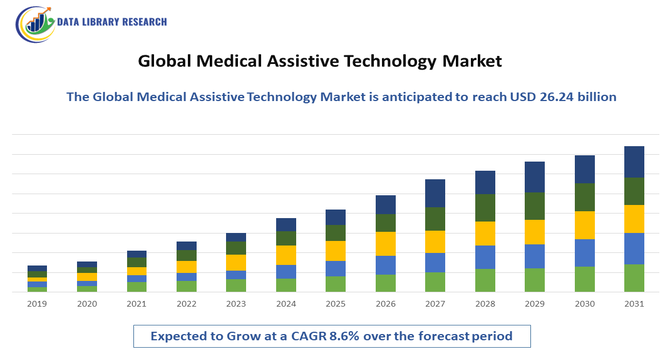
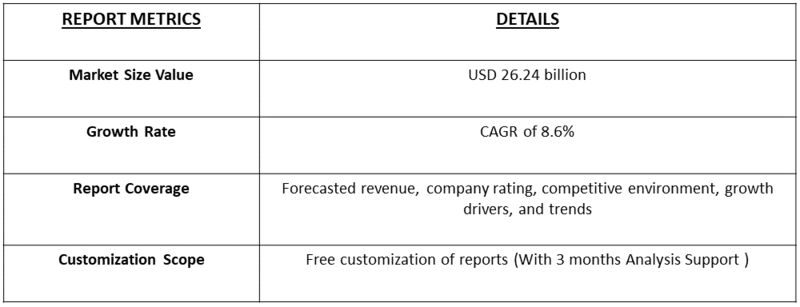
The Global Medical Assistive Technology Market size is expected to reach USD 36.66 billion by 2032, from USD 26.24 billion in 2025, exhibiting a CAGR of 8.6% during the forecast period from 2025-2032.

The Global Medical Assistive Technology Market comprises devices and solutions designed to support individuals with disabilities, chronic illnesses, or mobility, hearing, and vision impairments. It includes mobility aids, hearing and visual devices, daily living aids, and smart wearable technologies. The market is driven by aging populations, rising disability prevalence, and technological advancements, enabling improved independence, accessibility, and quality of life worldwide.

The growth of the Global Medical Assistive Technology Market has been driven by several key factors. An aging global population and rising prevalence of disabilities and chronic illnesses have increased demand for mobility, hearing, visual, and daily living aids. Rapid technological advancements, including AI, IoT, and wearable devices, have enhanced the functionality and accessibility of assistive technologies. Additionally, growing awareness of independent living, rehabilitation needs, and supportive healthcare policies have further fueled market adoption and expansion worldwide.

Medical Assistive Technology Market Latest Trends

The Global Medical Assistive Technology Market has witnessed trends such as the integration of smart technologies, AI, and IoT in assistive devices, enabling real-time monitoring, personalized care, and improved user experience. Telehealth and remote care solutions are gaining traction, while demand for portable, lightweight, and user-friendly devices is rising. Additionally, companies are increasingly focusing on product innovation, digital connectivity, and enhanced accessibility to expand their market presence.

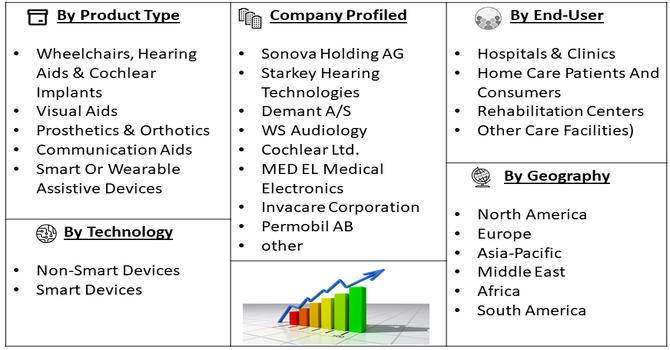
Segmentation: The Global Medical Assistive Technology Market can be segmented by Product Type (Wheelchairs, Hearing Aids & Cochlear Implants; Visual Aids, Prosthetics & Orthotics, and Communication Aids; and Smart Or Wearable Assistive Devices), End User (Hospitals & Clinics, Home Care Patients And Consumers, Rehabilitation Centers, and Other Care Facilities), Technology (Non-Smart Devices and Smart Devices) and Geography (North America, Europe, Asia-Pacific, Middle East and Africa, and South America). The report provides the value (in USD million) for the above segments.
Market Drivers:

  • Aging Population and Rising Disability Prevalence

The primary drivers of the medical assistive technology market is the global increase in aging populations and the rising prevalence of disabilities and chronic diseases. As people age, they often face mobility, hearing, and vision impairments, creating demand for wheelchairs, hearing aids, visual devices, and adaptive tools. Similarly, individuals with congenital or acquired disabilities require assistive technologies to maintain independence and daily functionality. The growing need for rehabilitation, elderly care, and chronic disease management has accelerated adoption of assistive devices in hospitals, home care, and rehabilitation centers worldwide, driving consistent market growth across regions.

  • Technological Advancements and Smart Device Integration

Rapid technological advancements have significantly fueled the growth of the medical assistive technology market. Integration of artificial intelligence, Internet of Things (IoT), and wearable technologies has enhanced device functionality, user experience, and connectivity. Smart wheelchairs, AI-enabled hearing aids, and sensor-equipped visual devices allow real-time monitoring, personalized therapy, and remote healthcare support. @@@@ In May 2024, Ireland emerged as a global leader in leveraging digital technologies to overcome barriers to healthcare access. In alignment with WHO, the country emphasized mobilizing assistive technology to support the 2.5 billion people worldwide in need, including the elderly, individuals with disabilities, and those with health conditions. Efforts focused on improving equitable access to products such as glasses, hearing aids, wheelchairs, prosthetics, and communication devices, boosting adoption and driving growth in the global medical assistive technology market.

Additionally, innovations in lightweight, portable, and ergonomic designs have improved comfort and usability, encouraging broader adoption among patients and caregivers. These advancements, combined with digital healthcare trends and increasing telehealth adoption, have made assistive technologies more effective, accessible, and appealing, contributing to the sustained expansion of the global market.

Market Restraint:

  • High Cost and Limited Reimbursement

Despite growing demand, high costs of advanced medical assistive devices and limited insurance reimbursement remain key restraints for market growth. Many high-tech devices, including smart wheelchairs, AI-enabled hearing aids, and wearable assistive technologies, are expensive to manufacture and purchase, making them unaffordable for a large portion of the population. Additionally, inconsistent reimbursement policies across countries and limited coverage by insurance providers increase out-of-pocket expenses for patients. This financial barrier, combined with low awareness in emerging markets, reduces adoption rates and slows market expansion, particularly in regions with constrained healthcare budgets, despite rising need and technological advancements.

Socio Economic Impact on Medical Assistive Technology Market

Medical assistive technologies have significantly improved the quality of life for people with disabilities and the elderly, promoting independence and daily functionality. They reduce healthcare costs by minimizing hospital visits and supporting home-based care. Employment opportunities in assistive device manufacturing, research, and rehabilitation services have increased. Overall, these technologies contribute to social inclusion, enhanced productivity, and better healthcare outcomes for diverse populations.

Segmental Analysis:

  • Wheelchairs Segment is Expected to Witness Significant Growth Over the Forecast Period

The wheelchairs segment is expected to witness significant growth due to increasing demand from aging populations, individuals with mobility impairments, and patients recovering from injuries or surgeries. Rising awareness about rehabilitation and independence has encouraged the adoption of both manual and powered wheelchairs. Technological innovations, such as lightweight materials, ergonomic designs, and smart, sensor-integrated powered wheelchairs, have enhanced user comfort and functionality. Furthermore, the availability of customizable options and the focus on improving accessibility in public and private spaces have driven adoption across hospitals, home care, and rehabilitation centers. These factors combined are projected to support steady growth in the wheelchairs segment over the forecast period.

  • Hospitals & Clinics Segment is Expected to Witness Significant Growth Over the Forecast Period

The hospitals and clinics segment is expected to grow significantly as healthcare facilities increasingly adopt medical assistive technologies to improve patient care and rehabilitation outcomes. Hospitals and clinics rely on wheelchairs, mobility aids, hearing and visual devices, and daily living aids to provide comprehensive care, especially for elderly and disabled patients. The rising demand for rehabilitation programs, chronic disease management, and post-operative care has fueled the adoption of these devices. Investments in modern healthcare infrastructure, combined with technological integration such as smart and connected devices, have further increased efficiency, patient satisfaction, and safety. This trend is expected to drive sustained growth in the hospitals and clinics segment.

  • Smart Devices Segment is Expected to Witness Significant Growth Over the Forecast Period

The smart devices segment is projected to witness significant growth due to technological advancements in artificial intelligence, the Internet of Things (IoT), and wearable sensors. Smart assistive devices, including AI-enabled wheelchairs, connected hearing aids, and sensor-integrated visual aids, offer real-time monitoring, personalized care, and remote healthcare management. Growing awareness of telehealth solutions and home-based care has also contributed to increased adoption of smart devices. Additionally, innovations in user-friendly interfaces, portability, and ergonomic designs have made these devices more accessible and appealing. The combination of technological innovation and rising demand for connected healthcare solutions is expected to drive the rapid growth of the smart devices segment.

  • North America Region is Expected to Witness Significant Growth Over the Forecast Period

North America is expected to dominate the medical assistive technology market due to advanced healthcare infrastructure, high adoption of innovative technologies, and the presence of major market players. The region has a large aging population and rising prevalence of chronic diseases and disabilities, fueling demand for mobility, hearing, visual, and smart assistive devices.

Strong healthcare reimbursement systems, supportive government initiatives, and increasing awareness of rehabilitation and independent living solutions have further strengthened market growth. Additionally, continuous investments in research, development, and innovation by leading companies have accelerated the adoption of AI-enabled and connected devices, positioning North America as a key driver of global market expansion. For instance, in March 2025, Google Cloud introduced new generative AI capabilities in Vertex AI Search for healthcare, including the Visual Q&A feature for searching tables, charts, and diagrams, along with the integration of Gemini 2.0. These multimodal search tools enhanced healthcare organizations’ ability to provide doctors, nurses, and staff with a more comprehensive understanding of patient health. The advancements improved clinical decision-making, efficiency, and technology adoption, driving growth in the U.S. medical assistive technology market.

Thus, such factors are fuelling the growth of above market in this region.
Medical Assistive Technology Market Competitive Analysis

The market is highly competitive, with key players focusing on product innovation, mergers, acquisitions, and strategic partnerships to expand global presence. Leading companies such as Medtronic, Invacare, Sonova, Cochlear, GN Hearing, and Ottobock dominate through advanced technology, strong distribution networks, and robust R&D capabilities. Smaller and emerging companies are also investing in smart devices and connected solutions, intensifying competition and driving continuous innovation in the market.

The major players for above market:

  • Sonova Holding AG
  • Starkey Hearing Technologies
  • Demant A/S
  • WS Audiology
  • Cochlear Ltd.
  • MED EL Medical Electronics
  • Invacare Corporation
  • Permobil AB
  • Sunrise Medical LLC
  • Ottobock SE & Co. KGaA
  • Drive DeVilbiss Healthcare
  • Pride Mobility Products Corp.
  • GN Hearing A/S
  • Freedom Scientific (Vispero)
  • HumanWare Group
  • DynaVox Systems LLC (Tobii Dynavox)
  • Enabling Devices
  • Orbit Research
  • Texthelp Ltd.
  • VFO Group (Vispero Group)

Recent Development

  • In January 2025, Researchers from IIT Madras and CMC Vellore developed a cost-effective, portable plug-and-train robot for hand rehabilitation, named ‘PLUTO.’ The technology was licensed through the Technology Transfer Office (TTO ICSR) and commercialized by Thryv Rehab Solutions. This device addressed a critical gap in rehabilitation, offering affordable and adaptable solutions for clinical and home use. Its introduction supported increased adoption and growth in the global medical assistive technology market.


  • Under the National Medical Device Policy 2023, the Bureau of Indian Standards (BIS) identified 214 critical medical devices in consultation with the Department of Pharmaceuticals. BIS developed standards for innovative products, including therapeutic footwear, portable ramps, braille displays, and fall detectors, aiming to improve accessibility and support individuals with disabilities. This initiative enhanced product reliability and affordability, promoting adoption in India and contributing to growth opportunities in the global medical assistive technology market.


Frequently Asked Questions (FAQ) :

Q1. What the main growth driving factors for this market?

The medical assistive technology market has grown due to several key factors. Aging populations globally need more mobility aids, sensory devices, and other assistive solutions. At the same time, the number of people living with disabilities or chronic conditions has risen, creating higher demand for devices that support independence and daily living. Technological advances such as smart sensors, AI, and connected devices have made assistive technologies more effective, accessible, and appealing to users worldwide.

Q2. What are the main restraining factors for this market?

Despite strong growth, the market faces challenges. Many advanced assistive devices are expensive, limiting affordability, particularly in low- and middle-income countries. Insurance coverage and reimbursement remain limited, forcing users to pay out-of-pocket. Awareness is another barrier, as some patients and healthcare providers may not know about available technologies or how to use them effectively. These factors can slow adoption and limit market expansion.

Q3. Which segment is expected to witness high growth?

The mobility aids and smart assistive devices segments are expected to grow the fastest. Mobility aids, including powered wheelchairs and sensor-enabled walking aids, are in high demand due to aging populations and mobility impairments. Smart assistive devices, integrating AI, IoT, and sensors, are gaining popularity because they offer personalized, connected, and easy-to-use solutions. These segments are expected to drive the market’s future growth.

Q4. Who are the top major players for this market?

Some of the major global players in the medical assistive technology market include Medtronic, Invacare Corporation, Sonova, Cochlear, GN Hearing, and Ottobock. These companies lead through innovation, strong product portfolios, global distribution, and collaborations, which enhance their position in the assistive technology ecosystem.

Q5. Which country is the largest player?

The United States is the largest player in the global medical assistive technology market. North America holds the largest market share due to advanced healthcare infrastructure, high adoption of new technologies, and the presence of leading assistive technology companies. The region continues to drive innovation and demand for assistive devices.

Medical Assistive Technology MARKET STUDY GLOBAL MARKET ANALYSIS, INSIGHTS AND FORECAST, 2022-2029

    1. Introduction

    • 1.1. Research Scope
    • 1.2. Market Segmentation
    • 1.3. Research Methodology
    • 1.4. Definitions and Assumptions

    2. Executive Summary

      3. Market Dynamics

      • 3.1. Market Drivers
      • 3.2. Market Restraints
      • 3.3. Market Opportunities

      4. Key Insights

      • 4.1. Key Emerging Trends – For Major Countries
      • 4.2. Latest Technological Advancement
      • 4.3. Regulatory Landscape
      • 4.4. Industry SWOT Analysis
      • 4.5. Porters Five Forces Analysis

      5. Global Medical Assistive Technology Market Analysis (USD Billion), Insights and Forecast, 2018-2029

      • 5.1. Key Findings / Summary
      • 5.2. Market Analysis, Insights and Forecast – By Segment 1
        • 5.2.1. Sub-Segment 1
        • 5.2.2. Sub-Segment 2
      • 5.3. Market Analysis, Insights and Forecast – By Segment 2
        • 5.3.1. Sub-Segment 1
        • 5.3.2. Sub-Segment 2
        • 5.3.3. Sub-Segment 3
        • 5.3.4. Others
      • 5.4. Market Analysis, Insights and Forecast – By Segment 3
        • 5.4.1. Sub-Segment 1
        • 5.4.2. Sub-Segment 2
        • 5.4.3. Sub-Segment 3
        • 5.4.4. Others
      • 5.5. Market Analysis, Insights and Forecast – By Region
        • 5.5.1. North America
        • 5.5.2. Latin America
        • 5.5.3. Europe
        • 5.5.4. Asia Pacific
        • 5.5.5. Middle East and Africa

      6. North America Medical Assistive Technology Market Analysis (USD Billion), Insights and Forecast, 2018-2029

      • 6.1. Key Findings / Summary
      • 6.2. Market Analysis, Insights and Forecast – By Segment 1
        • 6.2.1. Sub-Segment 1
        • 6.2.2. Sub-Segment 2
      • 6.3. Market Analysis, Insights and Forecast – By Segment 2
        • 6.3.1. Sub-Segment 1
        • 6.3.2. Sub-Segment 2
        • 6.3.3. Sub-Segment 3
        • 6.3.4. Others
      • 6.4. Market Analysis, Insights and Forecast – By Segment 3
        • 6.4.1. Sub-Segment 1
        • 6.4.2. Sub-Segment 2
        • 6.4.3. Sub-Segment 3
        • 6.4.4. Others
      • 6.5. Market Analysis, Insights and Forecast – By Country
        • 6.5.1. U.S.
        • 6.5.2. Canada

      7. Latin America Medical Assistive Technology Market Analysis (USD Billion), Insights and Forecast, 2018-2029

      • 7.1. Key Findings / Summary
      • 7.2. Market Analysis, Insights and Forecast – By Segment 1
        • 7.2.1. Sub-Segment 1
        • 7.2.2. Sub-Segment 2
      • 7.3. Market Analysis, Insights and Forecast – By Segment 2
        • 7.3.1. Sub-Segment 1
        • 7.3.2. Sub-Segment 2
        • 7.3.3. Sub-Segment 3
        • 7.3.4. Others
      • 7.4. Market Analysis, Insights and Forecast – By Segment 3
        • 7.4.1. Sub-Segment 1
        • 7.4.2. Sub-Segment 2
        • 7.4.3. Sub-Segment 3
        • 7.4.4. Others
      • 7.5. Insights and Forecast – By Country
        • 7.5.1. Brazil
        • 7.5.2. Mexico
        • 7.5.3. Rest of Latin America

      8. Europe Medical Assistive Technology Market Analysis (USD Billion), Insights and Forecast, 2018-2029

      • 8.1. Key Findings / Summary
      • 8.2. Market Analysis, Insights and Forecast – By Segment 1
        • 8.2.1. Sub-Segment 1
        • 8.2.2. Sub-Segment 2
      • 8.3. Market Analysis, Insights and Forecast – By Segment 2
        • 8.3.1. Sub-Segment 1
        • 8.3.2. Sub-Segment 2
        • 8.3.3. Sub-Segment 3
        • 8.3.4. Others
      • 8.4. Market Analysis, Insights and Forecast – By Segment 3
        • 8.4.1. Sub-Segment 1
        • 8.4.2. Sub-Segment 2
        • 8.4.3. Sub-Segment 3
        • 8.4.4. Others
      • 8.5. Market Analysis, Insights and Forecast – By Country
        • 8.5.1. UK
        • 8.5.2. Germany
        • 8.5.3. France
        • 8.5.4. Italy
        • 8.5.5. Spain
        • 8.5.6. Russia
        • 8.5.7. Rest of Europe

      9. Asia Pacific Medical Assistive Technology Market Analysis (USD Billion), Insights and Forecast, 2018-2029

      • 9.1. Key Findings / Summary
      • 9.2. Market Analysis, Insights and Forecast – By Segment 1
        • 9.2.1. Sub-Segment 1
        • 9.2.2. Sub-Segment 2
      • 9.3. Market Analysis, Insights and Forecast – By Segment 2
        • 9.3.1. Sub-Segment 1
        • 9.3.2. Sub-Segment 2
        • 9.3.3. Sub-Segment 3
        • 9.3.4. Others
      • 9.4. Market Analysis, Insights and Forecast – By Segment 3
        • 9.4.1. Sub-Segment 1
        • 9.4.2. Sub-Segment 2
        • 9.4.3. Sub-Segment 3
        • 9.4.4. Others
      • 9.5. Market Analysis, Insights and Forecast – By Country
        • 9.5.1. China
        • 9.5.2. India
        • 9.5.3. Japan
        • 9.5.4. Australia
        • 9.5.5. South East Asia
        • 9.5.6. Rest of Asia Pacific

      10. Middle East & Africa Medical Assistive Technology Market Analysis (USD Billion), Insights and Forecast, 2018-2029

      • 10.1. Key Findings / Summary
      • 10.2. Market Analysis, Insights and Forecast – By Segment 1
        • 10.2.1. Sub-Segment 1
        • 10.2.2. Sub-Segment 2
      • 10.3. Market Analysis, Insights and Forecast – By Segment 2
        • 10.3.1. Sub-Segment 1
        • 10.3.2. Sub-Segment 2
        • 10.3.3. Sub-Segment 3
        • 10.3.4. Others
      • 10.4. Market Analysis, Insights and Forecast – By Segment 3
        • 10.4.1. Sub-Segment 1
        • 10.4.2. Sub-Segment 2
        • 10.4.3. Sub-Segment 3
        • 10.4.4. Others
      • 10.5. Market Analysis, Insights and Forecast – By Country
        • 10.5.1. GCC
        • 10.5.2. South Africa
        • 10.5.3. Rest of Middle East & Africa

      11. Competitive Analysis

      • 11.1. Company Market Share Analysis, 2018
      • 11.2. Key Industry Developments
      • 11.3. Company Profile
        • 11.3.1. Company 1
          • 11.3.1.1. Business Overview
          • 11.3.1.2. Segment 1 & Service Offering
          • 11.3.1.3. Overall Revenue
          • 11.3.1.4. Geographic Presence
          • 11.3.1.5. Recent Development
        *Similar details will be provided for the following companies
        • 11.3.2. Company 2
        • 11.3.3. Company 3
        • 11.3.4. Company 4
        • 11.3.5. Company 5
        • 11.3.6. Company 6
        • 11.3.7. Company 7
        • 11.3.8. Company 8
        • 11.3.9. Company 9
        • 11.3.10. Company 10
        • 11.3.11. Company 11
        • 11.3.12. Company 12
      List of Figures

      Figure 1: Global Medical Assistive Technology Market Revenue Breakdown (USD Billion, %) by Region, 2022 & 2029
      Figure 2: Global Medical Assistive Technology Market Value Share (%), By Segment 1, 2022 & 2029
      Figure 3: Global Medical Assistive Technology Market Forecast (USD Billion), by Sub-Segment 1, 2018-2029
      Figure 4: Global Medical Assistive Technology Market Forecast (USD Billion), by Sub-Segment 2, 2018-2029
      Figure 5: Global Medical Assistive Technology Market Value Share (%), By Segment 2, 2022 & 2029
      Figure 6: Global Medical Assistive Technology Market Forecast (USD Billion), by Sub-Segment 1, 2018-2029
      Figure 7: Global Medical Assistive Technology Market Forecast (USD Billion), by Sub-Segment 2, 2018-2029
      Figure 8: Global Medical Assistive Technology Market Forecast (USD Billion), by Sub-Segment 3, 2018-2029
      Figure 9: Global Medical Assistive Technology Market Forecast (USD Billion), by Others, 2018-2029
      Figure 10: Global Medical Assistive Technology Market Value Share (%), By Segment 3, 2022 & 2029
      Figure 11: Global Medical Assistive Technology Market Forecast (USD Billion), by Sub-Segment 1, 2018-2029
      Figure 12: Global Medical Assistive Technology Market Forecast (USD Billion), by Sub-Segment 2, 2018-2029
      Figure 13: Global Medical Assistive Technology Market Forecast (USD Billion), by Sub-Segment 3, 2018-2029
      Figure 14: Global Medical Assistive Technology Market Forecast (USD Billion), by Others, 2018-2029
      Figure 15: Global Medical Assistive Technology Market Value (USD Billion), by Region, 2022 & 2029
      Figure 16: North America Medical Assistive Technology Market Value Share (%), By Segment 1, 2022 & 2029
      Figure 17: North America Medical Assistive Technology Market Forecast (USD Billion), by Sub-Segment 1, 2018-2029
      Figure 18: North America Medical Assistive Technology Market Forecast (USD Billion), by Sub-Segment 2, 2018-2029
      Figure 19: North America Medical Assistive Technology Market Value Share (%), By Segment 2, 2022 & 2029
      Figure 20: North America Medical Assistive Technology Market Forecast (USD Billion), by Sub-Segment 1, 2018-2029
      Figure 21: North America Medical Assistive Technology Market Forecast (USD Billion), by Sub-Segment 2, 2018-2029
      Figure 22: North America Medical Assistive Technology Market Forecast (USD Billion), by Sub-Segment 3, 2018-2029
      Figure 23: North America Medical Assistive Technology Market Forecast (USD Billion), by Others, 2018-2029
      Figure 24: North America Medical Assistive Technology Market Value Share (%), By Segment 3, 2022 & 2029
      Figure 25: North America Medical Assistive Technology Market Forecast (USD Billion), by Sub-Segment 1, 2018-2029
      Figure 26: North America Medical Assistive Technology Market Forecast (USD Billion), by Sub-Segment 2, 2018-2029
      Figure 27: North America Medical Assistive Technology Market Forecast (USD Billion), by Sub-Segment 3, 2018-2029
      Figure 28: North America Medical Assistive Technology Market Forecast (USD Billion), by Others, 2018-2029
      Figure 29: North America Medical Assistive Technology Market Forecast (USD Billion), by U.S., 2018-2029
      Figure 30: North America Medical Assistive Technology Market Forecast (USD Billion), by Canada, 2018-2029
      Figure 31: Latin America Medical Assistive Technology Market Value Share (%), By Segment 1, 2022 & 2029
      Figure 32: Latin America Medical Assistive Technology Market Forecast (USD Billion), by Sub-Segment 1, 2018-2029
      Figure 33: Latin America Medical Assistive Technology Market Forecast (USD Billion), by Sub-Segment 2, 2018-2029
      Figure 34: Latin America Medical Assistive Technology Market Value Share (%), By Segment 2, 2022 & 2029
      Figure 35: Latin America Medical Assistive Technology Market Forecast (USD Billion), by Sub-Segment 1, 2018-2029
      Figure 36: Latin America Medical Assistive Technology Market Forecast (USD Billion), by Sub-Segment 2, 2018-2029
      Figure 37: Latin America Medical Assistive Technology Market Forecast (USD Billion), by Sub-Segment 3, 2018-2029
      Figure 38: Latin America Medical Assistive Technology Market Forecast (USD Billion), by Others, 2018-2029
      Figure 39: Latin America Medical Assistive Technology Market Value Share (%), By Segment 3, 2022 & 2029
      Figure 40: Latin America Medical Assistive Technology Market Forecast (USD Billion), by Sub-Segment 1, 2018-2029
      Figure 41: Latin America Medical Assistive Technology Market Forecast (USD Billion), by Sub-Segment 2, 2018-2029
      Figure 42: Latin America Medical Assistive Technology Market Forecast (USD Billion), by Sub-Segment 3, 2018-2029
      Figure 43: Latin America Medical Assistive Technology Market Forecast (USD Billion), by Others, 2018-2029
      Figure 44: Latin America Medical Assistive Technology Market Forecast (USD Billion), by Brazil, 2018-2029
      Figure 45: Latin America Medical Assistive Technology Market Forecast (USD Billion), by Mexico, 2018-2029
      Figure 46: Latin America Medical Assistive Technology Market Forecast (USD Billion), by Rest of Latin America, 2018-2029
      Figure 47: Europe Medical Assistive Technology Market Value Share (%), By Segment 1, 2022 & 2029
      Figure 48: Europe Medical Assistive Technology Market Forecast (USD Billion), by Sub-Segment 1, 2018-2029
      Figure 49: Europe Medical Assistive Technology Market Forecast (USD Billion), by Sub-Segment 2, 2018-2029
      Figure 50: Europe Medical Assistive Technology Market Value Share (%), By Segment 2, 2022 & 2029
      Figure 51: Europe Medical Assistive Technology Market Forecast (USD Billion), by Sub-Segment 1, 2018-2029
      Figure 52: Europe Medical Assistive Technology Market Forecast (USD Billion), by Sub-Segment 2, 2018-2029
      Figure 53: Europe Medical Assistive Technology Market Forecast (USD Billion), by Sub-Segment 3, 2018-2029
      Figure 54: Europe Medical Assistive Technology Market Forecast (USD Billion), by Others, 2018-2029
      Figure 55: Europe Medical Assistive Technology Market Value Share (%), By Segment 3, 2022 & 2029
      Figure 56: Europe Medical Assistive Technology Market Forecast (USD Billion), by Sub-Segment 1, 2018-2029
      Figure 57: Europe Medical Assistive Technology Market Forecast (USD Billion), by Sub-Segment 2, 2018-2029
      Figure 58: Europe Medical Assistive Technology Market Forecast (USD Billion), by Sub-Segment 3, 2018-2029
      Figure 59: Europe Medical Assistive Technology Market Forecast (USD Billion), by Others, 2018-2029
      Figure 60: Europe Medical Assistive Technology Market Forecast (USD Billion), by U.K., 2018-2029
      Figure 61: Europe Medical Assistive Technology Market Forecast (USD Billion), by Germany, 2018-2029
      Figure 62: Europe Medical Assistive Technology Market Forecast (USD Billion), by France, 2018-2029
      Figure 63: Europe Medical Assistive Technology Market Forecast (USD Billion), by Italy, 2018-2029
      Figure 64: Europe Medical Assistive Technology Market Forecast (USD Billion), by Spain, 2018-2029
      Figure 65: Europe Medical Assistive Technology Market Forecast (USD Billion), by Russia, 2018-2029
      Figure 66: Europe Medical Assistive Technology Market Forecast (USD Billion), by Rest of Europe, 2018-2029
      Figure 67: Asia Pacific Medical Assistive Technology Market Value Share (%), By Segment 1, 2022 & 2029
      Figure 68: Asia Pacific Medical Assistive Technology Market Forecast (USD Billion), by Sub-Segment 1, 2018-2029
      Figure 69: Asia Pacific Medical Assistive Technology Market Forecast (USD Billion), by Sub-Segment 2, 2018-2029
      Figure 70: Asia Pacific Medical Assistive Technology Market Value Share (%), By Segment 2, 2022 & 2029
      Figure 71: Asia Pacific Medical Assistive Technology Market Forecast (USD Billion), by Sub-Segment 1, 2018-2029
      Figure 72: Asia Pacific Medical Assistive Technology Market Forecast (USD Billion), by Sub-Segment 2, 2018-2029
      Figure 73: Asia Pacific Medical Assistive Technology Market Forecast (USD Billion), by Sub-Segment 3, 2018-2029
      Figure 74: Asia Pacific Medical Assistive Technology Market Forecast (USD Billion), by Others, 2018-2029
      Figure 75: Asia Pacific Medical Assistive Technology Market Value Share (%), By Segment 3, 2022 & 2029
      Figure 76: Asia Pacific Medical Assistive Technology Market Forecast (USD Billion), by Sub-Segment 1, 2018-2029
      Figure 77: Asia Pacific Medical Assistive Technology Market Forecast (USD Billion), by Sub-Segment 2, 2018-2029
      Figure 78: Asia Pacific Medical Assistive Technology Market Forecast (USD Billion), by Sub-Segment 3, 2018-2029
      Figure 79: Asia Pacific Medical Assistive Technology Market Forecast (USD Billion), by Others, 2018-2029
      Figure 80: Asia Pacific Medical Assistive Technology Market Forecast (USD Billion), by China, 2018-2029
      Figure 81: Asia Pacific Medical Assistive Technology Market Forecast (USD Billion), by India, 2018-2029
      Figure 82: Asia Pacific Medical Assistive Technology Market Forecast (USD Billion), by Japan, 2018-2029
      Figure 83: Asia Pacific Medical Assistive Technology Market Forecast (USD Billion), by Australia, 2018-2029
      Figure 84: Asia Pacific Medical Assistive Technology Market Forecast (USD Billion), by Southeast Asia, 2018-2029
      Figure 85: Asia Pacific Medical Assistive Technology Market Forecast (USD Billion), by Rest of Asia Pacific, 2018-2029
      Figure 86: Middle East & Africa Medical Assistive Technology Market Value Share (%), By Segment 1, 2022 & 2029
      Figure 87: Middle East & Africa Medical Assistive Technology Market Forecast (USD Billion), by Sub-Segment 1, 2018-2029
      Figure 88: Middle East & Africa Medical Assistive Technology Market Forecast (USD Billion), by Sub-Segment 2, 2018-2029
      Figure 89: Middle East & Africa Medical Assistive Technology Market Value Share (%), By Segment 2, 2022 & 2029
      Figure 90: Middle East & Africa Medical Assistive Technology Market Forecast (USD Billion), by Sub-Segment 1, 2018-2029
      Figure 91: Middle East & Africa Medical Assistive Technology Market Forecast (USD Billion), by Sub-Segment 2, 2018-2029
      Figure 92: Middle East & Africa Medical Assistive Technology Market Forecast (USD Billion), by Sub-Segment 3, 2018-2029
      Figure 93: Middle East & Africa Medical Assistive Technology Market Forecast (USD Billion), by Others, 2018-2029
      Figure 94: Middle East & Africa Medical Assistive Technology Market Value Share (%), By Segment 3, 2022 & 2029
      Figure 95: Middle East & Africa Medical Assistive Technology Market Forecast (USD Billion), by Sub-Segment 1, 2018-2029
      Figure 96: Middle East & Africa Medical Assistive Technology Market Forecast (USD Billion), by Sub-Segment 2, 2018-2029
      Figure 97: Middle East & Africa Medical Assistive Technology Market Forecast (USD Billion), by Sub-Segment 3, 2018-2029
      Figure 98: Middle East & Africa Medical Assistive Technology Market Forecast (USD Billion), by Others, 2018-2029
      Figure 99: Middle East & Africa Medical Assistive Technology Market Forecast (USD Billion), by GCC, 2018-2029
      Figure 100: Middle East & Africa Medical Assistive Technology Market Forecast (USD Billion), by South Africa, 2018-2029
      Figure 101: Middle East & Africa Medical Assistive Technology Market Forecast (USD Billion), by Rest of Middle East & Africa, 2018-2029 
      List of Tables
      Table 1: Global Medical Assistive Technology Market Revenue (USD Billion) Forecast, by Segment 1, 2018-2029
      Table 2: Global Medical Assistive Technology Market Revenue (USD Billion) Forecast, by Segment 2, 2018-2029
      Table 3: Global Medical Assistive Technology Market Revenue (USD Billion) Forecast, by Segment 3, 2018-2029
      Table 4: Global Medical Assistive Technology Market Revenue (USD Billion) Forecast, by Region, 2018-2029
      Table 5: North America Medical Assistive Technology Market Revenue (USD Billion) Forecast, by Segment 1, 2018-2029
      Table 6: North America Medical Assistive Technology Market Revenue (USD Billion) Forecast, by Segment 2, 2018-2029
      Table 7: North America Medical Assistive Technology Market Revenue (USD Billion) Forecast, by Segment 3, 2018-2029
      Table 8: North America Medical Assistive Technology Market Revenue (USD Billion) Forecast, by Country, 2018-2029
      Table 9: Europe Medical Assistive Technology Market Revenue (USD Billion) Forecast, by Segment 1, 2018-2029
      Table 10: Europe Medical Assistive Technology Market Revenue (USD Billion) Forecast, by Segment 2, 2018-2029
      Table 11: Europe Medical Assistive Technology Market Revenue (USD Billion) Forecast, by Segment 3, 2018-2029
      Table 12: Europe Medical Assistive Technology Market Revenue (USD Billion) Forecast, by Country, 2018-2029
      Table 13: Latin America Medical Assistive Technology Market Revenue (USD Billion) Forecast, by Segment 1, 2018-2029
      Table 14: Latin America Medical Assistive Technology Market Revenue (USD Billion) Forecast, by Segment 2, 2018-2029
      Table 15: Latin America Medical Assistive Technology Market Revenue (USD Billion) Forecast, by Segment 3, 2018-2029
      Table 16: Latin America Medical Assistive Technology Market Revenue (USD Billion) Forecast, by Country, 2018-2029
      Table 17: Asia Pacific Medical Assistive Technology Market Revenue (USD Billion) Forecast, by Segment 1, 2018-2029
      Table 18: Asia Pacific Medical Assistive Technology Market Revenue (USD Billion) Forecast, by Segment 2, 2018-2029
      Table 19: Asia Pacific Medical Assistive Technology Market Revenue (USD Billion) Forecast, by Segment 3, 2018-2029
      Table 20: Asia Pacific Medical Assistive Technology Market Revenue (USD Billion) Forecast, by Country, 2018-2029
      Table 21: Middle East & Africa Medical Assistive Technology Market Revenue (USD Billion) Forecast, by Segment 1, 2018-2029
      Table 22: Middle East & Africa Medical Assistive Technology Market Revenue (USD Billion) Forecast, by Segment 2, 2018-2029
      Table 23: Middle East & Africa Medical Assistive Technology Market Revenue (USD Billion) Forecast, by Segment 3, 2018-2029
      Table 24: Middle East & Africa Medical Assistive Technology Market Revenue (USD Billion) Forecast, by Country, 2018-2029
      Research Process

      Data Library Research are conducted by industry experts who offer insight on industry structure, market segmentations technology assessment and competitive landscape (CL), and penetration, as well as on emerging trends. Their analysis is based on primary interviews (~ 80%) and secondary research (~ 20%) as well as years of professional expertise in their respective industries. Adding to this, by analysing historical trends and current market positions, our analysts predict where the market will be headed for the next five years. Furthermore, the varying trends of segment & categories geographically presented are also studied and the estimated based on the primary & secondary research.

      In this particular report from the supply side Data Library Research has conducted primary surveys (interviews) with the key level executives (VP, CEO’s, Marketing Director, Business Development Manager and SOFT) of the companies that active & prominent as well as the midsized organization

      FIGURE 1: DLR RESEARH PROCESS

      research-methodology1

      Primary Research

      Extensive primary research was conducted to gain a deeper insight of the market and industry performance. The analysis is based on both primary and secondary research as well as years of professional expertise in the respective industries.

      In addition to analysing current and historical trends, our analysts predict where the market is headed over the next five years.

      It varies by segment for these categories geographically presented in the list of market tables. Speaking about this particular report we have conducted primary surveys (interviews) with the key level executives (VP, CEO’s, Marketing Director, Business Development Manager and many more) of the major players active in the market.

      Secondary Research

      Secondary research was mainly used to collect and identify information useful for the extensive, technical, market-oriented, and Friend’s study of the Global Extra Neutral Alcohol. It was also used to obtain key information about major players, market classification and segmentation according to the industry trends, geographical markets, and developments related to the market and technology perspectives. For this study, analysts have gathered information from various credible sources, such as annual reports, sec filings, journals, white papers, SOFT presentations, and company web sites.

      Market Size Estimation

      Both, top-down and bottom-up approaches were used to estimate and validate the size of the Global market and to estimate the size of various other dependent submarkets in the overall Extra Neutral Alcohol. The key players in the market were identified through secondary research and their market contributions in the respective geographies were determined through primary and secondary research.

      Forecast Model

      research-methodology2

      Happy to Assist You

      If you have a question?

      info@datalibraryresearch.com

      IND : +91 955 279 0357

      Browse Related Reports