
Get Complete Analysis Of The Report - Download Updated Free Sample PDF
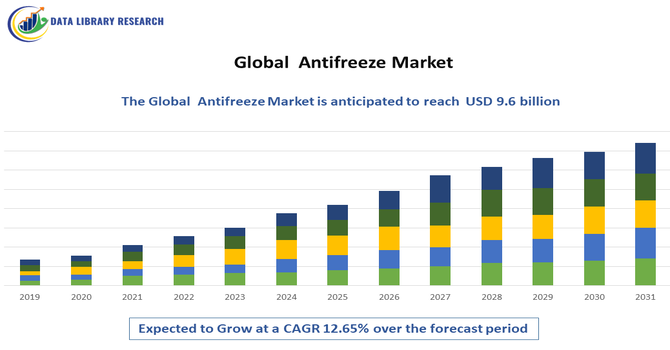
The Global Antifreeze Market refers to the worldwide industry involved in the production, distribution, and sale of antifreeze and engine coolant solutions used to regulate engine temperature and prevent freezing or overheating in vehicles and industrial equipment. Antifreeze typically contains chemicals such as ethylene glycol or propylene glycol combined with corrosion inhibitors and additives. These fluids are essential for maintaining engine efficiency, extending component life, and ensuring reliable vehicle performance in extreme temperature conditions. The market serves multiple sectors, including automotive, transportation, construction, and industrial machinery. Growing vehicle production, rising demand for engine efficiency, and expanding industrialization are key factors contributing to the growth of the antifreeze market globally.
The Global Antifreeze Market is witnessing several notable trends driven by technological advancements and environmental regulations. Manufacturers are increasingly developing long-life and environmentally friendly coolant formulations to meet sustainability requirements and reduce maintenance frequency. The growing adoption of electric and hybrid vehicles has also influenced product innovation, leading to the development of specialized coolants designed for battery thermal management systems. Additionally, extended service intervals and advanced additive technologies are becoming common in modern antifreeze solutions. The expansion of the automotive aftermarket, particularly in emerging economies, is further boosting demand.
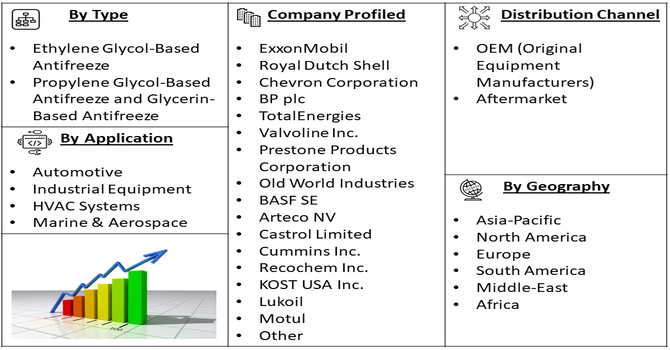
Segmentation: The Global Antifreeze Market is segmented by Product Type (Ethylene Glycol-Based Antifreeze, Propylene Glycol-Based Antifreeze and Glycerin-Based Antifreeze), Technology (Inorganic Acid Technology (IAT), Organic Acid Technology (OAT) and Hybrid Organic Acid Technology (HOAT)), Vehicle Type (Passenger Vehicles, Commercial Vehicles and Off-Highway Vehicles), Application (Automotive, Industrial Equipment, HVAC Systems and Marine & Aerospace), Distribution Channel (OEM (Original Equipment Manufacturers) and Aftermarket), and Geography (North America, Europe, Asia-Pacific, Middle East and Africa, and South America). The report provides the value (in USD million) for the above segments.
For Detailed Market Segmentation - Get a Free Sample PDF
Market Drivers:
The steady growth in global automotive production is a major driver for the antifreeze market. Increasing demand for passenger cars, commercial vehicles, and heavy-duty trucks has significantly raised the consumption of engine coolants and antifreeze solutions. For instance, Tata Motors Ltd. reported domestic MH&ICV sales of 20,474 units in March 2025 versus 19,976 units in March 2024, and Q4 FY25 sales of 51,551 units versus 50,643 units in Q4 FY24. This rising demand for passenger and commercial vehicles increased consumption of engine cooling solutions, including antifreeze, positively impacting growth in the global antifreeze market.
As vehicles require efficient thermal management systems to maintain engine performance and prevent overheating, antifreeze products remain essential for both new vehicles and replacement cycles in the aftermarket. Rapid urbanization, rising disposable incomes, and expanding transportation infrastructure in developing economies are further boosting vehicle ownership. Additionally, the growing logistics and e-commerce sectors are increasing the demand for commercial vehicles, which in turn drives continuous consumption of antifreeze products worldwide.
The increasing demand for high-performance engine cooling solutions is another key driver of the global antifreeze market. Modern engines operate at higher temperatures to achieve improved fuel efficiency and lower emissions, making advanced coolant formulations essential for optimal performance.
Antifreeze products help maintain stable engine temperatures, prevent corrosion, and protect critical components from wear and damage. For instance, in 2022, Siemens Smart Infrastructure enhanced its Intelligent Valve with ethylene glycol compatibility, enabling use in sub-zero hydronic circuits. This innovation expanded application opportunities in HVAC and chiller systems, improved energy efficiency, and drove increased adoption of antifreeze solutions, positively impacting the global antifreeze market.
With the adoption of advanced engine technologies, turbocharging systems, and hybrid powertrains, the need for specialized coolant formulations has increased significantly. In addition, industries such as construction, mining, and agriculture rely on heavy machinery that requires efficient thermal management systems, further contributing to sustained demand for antifreeze solutions globally.
Market Restraints:
Environmental and toxicity concerns associated with certain antifreeze chemicals pose a restraint to market growth. Traditional antifreeze formulations commonly contain ethylene glycol, a substance that can be harmful to humans, animals, and the environment if improperly handled or disposed of. Increasing regulatory scrutiny regarding chemical safety, environmental protection, and waste management has compelled manufacturers to reformulate products and comply with stricter standards. Compliance with these regulations often increases production costs and requires additional investment in research and development. Moreover, improper disposal practices in some regions raise environmental risks, encouraging the development and adoption of less toxic, biodegradable coolant alternatives in the global antifreeze market.
The Global Antifreeze Market plays a significant role in supporting transportation reliability, industrial productivity, and economic development. By ensuring efficient engine performance and preventing mechanical failures, antifreeze products help reduce vehicle downtime and maintenance costs for individuals and businesses. The market also contributes to employment generation across manufacturing, chemical processing, logistics, and automotive service sectors. In developing economies, increasing vehicle ownership and infrastructure development are expanding demand for antifreeze products. Additionally, improved engine cooling technologies support fuel efficiency and environmental sustainability, contributing to lower emissions. As transportation networks expand globally, the antifreeze market continues to support economic mobility and industrial growth.
Segmental Analysis:
The ethylene glycol-based antifreeze segment is expected to witness the highest growth over the forecast period due to its superior heat transfer efficiency, cost-effectiveness, and wide adoption in automotive cooling systems. Ethylene glycol formulations provide excellent protection against freezing, overheating, and corrosion, making them highly suitable for modern internal combustion engines and heavy-duty vehicles. Increasing global vehicle production and the growing need for reliable engine cooling solutions are significantly driving demand for this type of antifreeze. Additionally, its compatibility with a wide range of additives and cooling system materials supports extended engine life and improved performance. Continuous expansion of the automotive industry and aftermarket maintenance activities further contributes to the strong growth of this segment.
The Organic Acid Technology (OAT) segment is expected to witness the highest growth during the forecast period due to its long service life and enhanced corrosion protection capabilities. OAT-based antifreeze formulations use organic corrosion inhibitors that provide extended protection for engine components without forming harmful deposits. These coolants typically last longer than traditional antifreeze types, reducing maintenance frequency and operational costs for vehicle owners. As automotive manufacturers increasingly adopt advanced engine designs requiring efficient thermal management, OAT coolants are becoming the preferred choice for modern vehicles. Growing consumer awareness regarding long-life coolants and improved vehicle performance is further boosting adoption. The rising production of passenger and commercial vehicles worldwide continues to support this segment’s expansion.
The commercial vehicles segment is expected to witness the highest growth over the forecast period due to increasing demand for transportation, logistics, and heavy-duty fleet operations worldwide. Commercial vehicles such as trucks, buses, and delivery vans operate under high engine loads and long operating hours, making efficient cooling systems essential for maintaining performance and preventing overheating. Antifreeze plays a crucial role in protecting engines from extreme temperatures and corrosion, ensuring durability and reduced maintenance costs. Rapid expansion of e-commerce, infrastructure development, and industrial activities has significantly increased the need for freight transportation. As fleet operators prioritize vehicle reliability and operational efficiency, the demand for high-performance antifreeze solutions in commercial vehicles continues to grow steadily.
The OEM (Original Equipment Manufacturers) segment is expected to witness the highest growth over the forecast period as vehicle manufacturers increasingly integrate advanced cooling systems during the production process. OEMs require high-quality antifreeze formulations to ensure optimal engine performance, durability, and compliance with industry standards. With rising global vehicle production and technological advancements in engine design, manufacturers are adopting specialized coolants tailored to specific engine requirements. Additionally, partnerships between antifreeze producers and automotive manufacturers are strengthening supply chains and supporting product innovation. The growing focus on vehicle efficiency, reduced emissions, and longer maintenance intervals further drives demand for high-performance antifreeze solutions at the manufacturing stage, contributing to the rapid growth of the OEM segment.
The Asia-Pacific region is expected to witness the highest growth in the antifreeze market during the forecast period due to rapid industrialization, expanding automotive production, and increasing vehicle ownership.
Countries such as China, India, Japan, and South Korea are major automotive manufacturing hubs, contributing significantly to regional demand for engine cooling solutions. For instance, Government initiatives such as Make in India and the Automotive Mission Plan 2026 have strengthened the Indian automotive sector. The Automotive Mission Plan 2026, a joint vision of India’s automotive industry and government, aims to position the automotive sector as a key driver of the Make in India initiative.
Similarly, in April 2025, Mercedes-Benz India produced its 200,000th locally manufactured car, the EQS SUV, at the Chakan facility in Pune. This milestone boosted vehicle production in India, increasing demand for engine cooling solutions and antifreeze, thereby positively impacting the Asia-Pacific antifreeze market.
Furthermore, the rising urbanization and economic development have increased the need for passenger and commercial vehicles, which in turn drives antifreeze consumption. Additionally, the growth of logistics networks, construction activities, and industrial machinery further supports market expansion. Increasing awareness of vehicle maintenance and the expansion of automotive aftermarket services also contribute to strong regional growth.
To Learn More About This Report - Request a Free Sample Copy
The Global Antifreeze Market is highly competitive, with numerous multinational chemical and energy companies competing through product innovation, distribution networks, and strategic partnerships. Leading companies focus on developing advanced coolant formulations with improved thermal stability, corrosion protection, and extended service life. Many players are expanding their global presence through mergers, acquisitions, and collaborations with automotive manufacturers and distributors. Companies are also investing in research and development to produce environmentally friendly and high-performance antifreeze solutions. Strong brand recognition, technological capabilities, and supply chain efficiency play critical roles in maintaining market leadership. Regional manufacturers also contribute significantly by offering cost-effective products in emerging markets.
The major players are:
Recent Development
Q1. What is the main growth-driving factors for this market?
Market growth is primarily driven by rising global vehicle production and the increasing average age of the existing vehicle fleet, which requires frequent maintenance. Stricter environmental mandates regarding engine efficiency and emissions are pushing the adoption of advanced coolants. Additionally, the expansion of the aerospace and industrial sectors in emerging economies boosts demand for specialized thermal management.
Q2. What are the main restraining factors for this market?
The market is significantly challenged by the rising adoption of electric vehicles (EVs), which eliminate the need for traditional internal combustion engine coolants. Volatile raw material prices, particularly for ethylene and propylene glycol, create pricing instability. Furthermore, stringent environmental regulations regarding the toxicity and disposal of traditional glycol-based fluids increase compliance and manufacturing costs.
Q3. Which segment is expected to witness high growth?
The Organic Acid Technology (OAT) segment is expected to witness the highest growth over the forecast period due to its extended service life, superior corrosion protection, and compatibility with modern engines. Rising adoption of advanced vehicles and growing demand for long-life, low-maintenance coolants are driving the segment’s rapid expansion globally.
Q4. Who are the top major players for this market?
The competitive landscape is dominated by global chemical and energy giants, including BASF SE (Glysantin), Royal Dutch Shell, ExxonMobil, and Chevron Corporation. Other key players driving innovation and distribution include TotalEnergies, Old World Industries (PEAK), Prestone Products Corporation, Valvoline, and specialized firms like Recochem and Sinopec.
Q5. Which country is the largest player?
China is the largest market player, supported by the world's largest vehicle production and a massive domestic consumer base. While the United States maintains a dominant revenue share due to high-value industrial and aftermarket sectors, China leads in terms of both volume and the rapid transition toward specialized coolants for its extensive commercial and electric vehicle fleets.
Data Library Research are conducted by industry experts who offer insight on industry structure, market segmentations technology assessment and competitive landscape (CL), and penetration, as well as on emerging trends. Their analysis is based on primary interviews (~ 80%) and secondary research (~ 20%) as well as years of professional expertise in their respective industries. Adding to this, by analysing historical trends and current market positions, our analysts predict where the market will be headed for the next five years. Furthermore, the varying trends of segment & categories geographically presented are also studied and the estimated based on the primary & secondary research.
In this particular report from the supply side Data Library Research has conducted primary surveys (interviews) with the key level executives (VP, CEO’s, Marketing Director, Business Development Manager and SOFT) of the companies that active & prominent as well as the midsized organization
FIGURE 1: DLR RESEARH PROCESS
Extensive primary research was conducted to gain a deeper insight of the market and industry performance. The analysis is based on both primary and secondary research as well as years of professional expertise in the respective industries.
In addition to analysing current and historical trends, our analysts predict where the market is headed over the next five years.
It varies by segment for these categories geographically presented in the list of market tables. Speaking about this particular report we have conducted primary surveys (interviews) with the key level executives (VP, CEO’s, Marketing Director, Business Development Manager and many more) of the major players active in the market.
Secondary ResearchSecondary research was mainly used to collect and identify information useful for the extensive, technical, market-oriented, and Friend’s study of the Global Extra Neutral Alcohol. It was also used to obtain key information about major players, market classification and segmentation according to the industry trends, geographical markets, and developments related to the market and technology perspectives. For this study, analysts have gathered information from various credible sources, such as annual reports, sec filings, journals, white papers, SOFT presentations, and company web sites.
Market Size EstimationBoth, top-down and bottom-up approaches were used to estimate and validate the size of the Global market and to estimate the size of various other dependent submarkets in the overall Extra Neutral Alcohol. The key players in the market were identified through secondary research and their market contributions in the respective geographies were determined through primary and secondary research.
Forecast Model