
Get Complete Analysis Of The Report - Download Updated Free Sample PDF
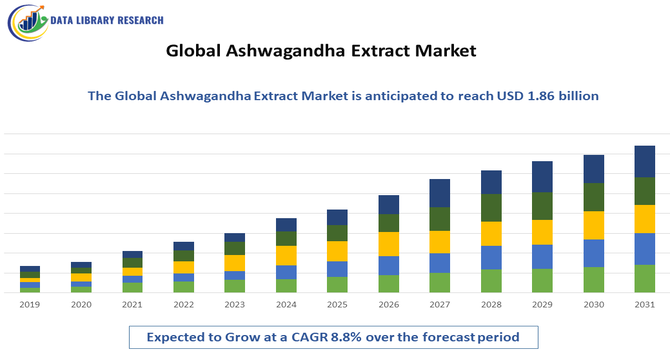
The Global Ashwagandha Extract Market refers to the worldwide commercial ecosystem for standardized extracts derived from Withania somnifera roots and leaves. These extracts are used in dietary supplements, functional foods, beverages, nutraceuticals, cosmetics, and pharmaceuticals due to adaptogenic, stress relieving, immunity boosting, and wellness enhancing properties. Market growth is driven by rising consumer preference for natural plant based health solutions, expanding product formats (capsules, gummies, teas, liquids), and increased distribution via e commerce and retail channels. Asia Pacific, particularly India, dominates production and supply, while North America and Europe are major consumption markets. Innovation around proprietary extracts like KSM 66 and Sensoril bolsters differentiation.
The Global Ashwagandha Extract Market is shaped by growing consumer awareness of adaptogens and holistic wellness, especially among millennials and Gen Z seeking plant based stress and immunity support. Key trends include the expansion of product formats — capsules, gummies, functional beverages, and infused snacks — catering to convenience and lifestyle preferences. Standardized extracts such as KSM 66 and Sensoril are gaining prominence due to verified withanolide content and clinical backing. E commerce and direct to consumer models are increasingly important, enhancing global reach.
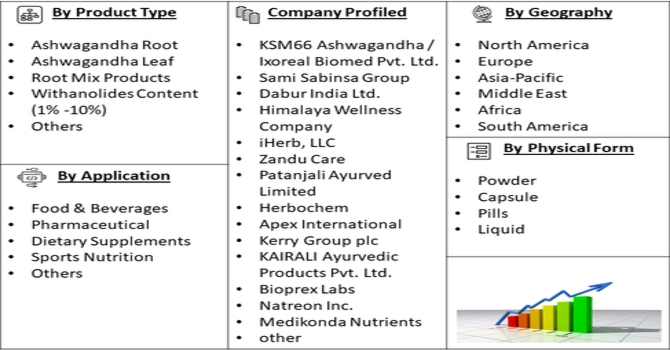
Segmentation: The Global Ashwagandha Extract Market is segmented by Product Type (Ashwagandha Root, Ashwagandha Leaf, Root Mix Products, Withanolides Content (1% -10%), and Others), Category (Regular, and Full Spectrum), Form (Powder, Capsule, Pills, and Liquid), Distribution Channel (Hypermarket/Supermarket, Specialty Stores, Drug Stores & Pharmacies, Convenience Stores, Online Retail Channels, and Others), Application (Food & Beverages, Pharmaceutical, Dietary Supplements, Sports Nutrition, and Others) and Geography (North America, Europe, Asia-Pacific, Middle East and Africa, and South America). The report provides the value (in USD million) for the above segments.
For Detailed Market Segmentation - Get a Free Sample PDF
Market Drivers:
A primary driver of the Global Ashwagandha Extract Market is increasing consumer awareness of natural, plant based wellness solutions that support stress management, immune health, energy levels, and overall well being.
Growing scientific evidence of ashwagandha’s adaptogenic effects and clinical studies validating stress reducing benefits have bolstered consumer trust. Governments and health organizations are also endorsing traditional medicine practices and herb derived supplements, promoting herbal adaptogens in preventive healthcare. This rising preference for botanical ingredients contributes to the expansion of ashwagandha across dietary supplements, functional foods, beverages, and personal care products, feeding robust global demand.
Innovation in product formats and end use applications is a strong driver for the Global Ashwagandha Extract Market. Beyond traditional capsules and powders, producers are incorporating ashwagandha extract into gummies, functional beverages, protein blends, ready to drink teas, and even skincare products. Functional food and beverage trends, especially among younger consumers seeking convenience, are creating new avenues for market penetration. Proprietary extract formulations with standardized withanolide content (e.g., KSM 66, Sensoril) offer differentiated potency claims that appeal to health conscious buyers. This diversification of applications fuels market growth, drives cross industry partnerships, and expands the consumer base.
Market Restraints:
A significant restraint for the Global Ashwagandha Extract Market arises from supply chain limitations and inconsistent quality standards. Global production is heavily reliant on Indian cultivation, which is susceptible to climatic variability, seasonal harvest cycles, and raw material fluctuations, leading to inconsistent yields and extract quality. Additionally, varying regulatory frameworks across regions complicate compliance and standardization, particularly around withanolide concentrations and health claims. Lack of harmonized global standards can erode consumer confidence and hinder international trade. Quality control issues, including potential adulteration or potency variability, increase production costs and dampen scalability for exporters and manufacturers targeting regulated markets.
The Ashwagandha extract market affects economies from cultivation to global distribution. In agrarian regions like India, large scale farming supports rural employment and export revenues, reinforcing traditional agricultural value chains. Rising global demand stimulates investment in extraction facilities, quality certification, and processing infrastructure. Consumer spending on ashwagandha reflects broader shifts toward preventive, natural health care, reducing reliance on synthetic drugs and potentially lowering public health costs. However, quality standardization challenges and supply pressure can impact pricing and accessibility, especially in developing markets. Cultural acceptance of Ayurvedic botanicals across Western markets fosters cross cultural wellness practices. Overall, economic benefits coexist with supply stability challenges.
Segmental Analysis:
The Ashwagandha Root segment is anticipated to register the highest growth over the forecast period as consumer demand shifts toward whole plant, minimally processed botanical products. Root derived extracts are perceived as more traditional and potent due to higher concentrations of active withanolides and associated health benefits, strengthening their appeal in dietary supplements and herbal formulations. Additionally, established cultivation practices in major producing countries like India support scalable root based supply chains. Increased research and product launches highlight the efficacy of root extracts in stress, immunity, and wellbeing applications, driving broader market adoption. Root extract products are also gaining traction within natural health and Ayurvedic consumer segments globally.
The Full Spectrum ashwagandha extract segment is projected to experience the fastest growth across the forecast period as manufacturers and consumers increasingly value standardized extracts that preserve a broad range of phytochemicals. Full spectrum formulations aim to deliver synergistic effects from multiple active constituents, enhancing perceived efficacy in stress management, cognitive support, and overall wellness applications. Extracts such as full spectrum KSM 66 are gaining preference over isolated components due to clinical backing and marketing claims. In parallel, rising consumer interest in clean label, comprehensive botanical products propels full spectrum adoption in nutraceuticals, functional foods, and beverage segments.
The Liquid segment of the ashwagandha extract market is expected to witness the highest growth over the forecast period, fueled by rising consumer preference for convenient, fast absorbing delivery formats. Liquid extracts, tinctures, and ready to drink adaptogen beverages are increasingly incorporated into wellness routines, particularly among younger, health conscious demographics. Their flexibility for inclusion in functional drinks and natural remedies supports broader use beyond traditional capsules or powders. Additionally, product innovation in flavored liquid adaptogen infusions and herbal wellness shots is boosting consumer acceptance. Online retail expansion also facilitates distribution of liquid formulations globally, enabling brands to scale across diverse markets.
The Specialty Stores distribution segment is anticipated to register the fastest growth during the forecast period as health focused retail outlets expand worldwide. Specialty channels such as natural health stores, Ayurvedic shops, and boutique wellness retailers offer curated ashwagandha products and personalized consumer education, strengthening brand trust and product awareness. These channels often spotlight premium, organic, and full spectrum extracts that appeal to discerning shoppers seeking high quality botanical supplements. As consumers increasingly migrate from mass channels to specialty outlets for functional and holistic wellness products, specialty store penetration drives market growth, especially in regions emphasizing natural health and preventive care.
The Dietary Supplements application segment is projected to exhibit the highest growth over the forecast period due to expanding consumer demand for preventive health solutions. Ashwagandha extract’s adaptogenic properties—supporting stress relief, immune function, energy, and cognitive health—make it a popular ingredient in multivitamins, capsules, powders, gummies, and blended wellness formulas. Rising health awareness globally is driving daily supplement use across age groups, particularly among middle aged and older adults seeking natural alternatives. Nutrition research and product innovation continue to integrate ashwagandha into functional supplement portfolios, reinforcing its mainstream adoption across global nutraceutical markets.
The Asia Pacific region is expected to record the highest growth in the global ashwagandha extract market over the forecast period, driven by deeply ingrained traditional use and rapidly expanding modern wellness demand.
Countries such as India and China are major producers and consumers, supported by robust cultivation infrastructure, cultural acceptance of Ayurvedic botanicals, and rising disposable incomes. For instance, Indian government published a recent study that highlited that Ashwagandha (Withania somnifera), widely used in traditional medicine in countries like India, has seen growing scientific recognition, with PubMed studies rising from 95 in 2019 to 201 in 2024—a 111.58% increase. This research surge is boosting demand for standardized extracts and nutraceuticals in the Asia Pacific region. Coupled with cultural acceptance and established cultivation, the rising clinical validation of Ashwagandha is driving APAC’s market growth, positioning the region as a key hub for production and consumption.
Government promotion of herbal medicine and increased export activity further enhance market expansion. Additionally, growing consumer health awareness and rising adoption of nutraceutical and stress relief supplements across urban and rural populations amplify regional growth prospects. Asia Pacific continues to lead global market share while offering strong CAGR potential.
| Report Matrics | Details |
| Market Size Value | USD 1.86 billion |
| Growth Rate | CAGR of 8.8% |
| Forecast | 2026-2033 |
| Historical data | 2021-2024 |
| Base Year | 2025 |
| Report Coverage | Forecasted revenue, company rating, competitive environment, growth drivers, and trends |
| Segment Coverage | Type, Application, End-User, Geography |
| Regional Scope | North America, Europe, Asia Pacific, Middle East |
| Customized scope | Free customization of reports (With 3 months Analysis Support ) |
| To Learn More About This Report | Request a Free Sample Copy |
The competitive landscape of the Global Ashwagandha Extract Market is moderately fragmented, featuring a mix of traditional Ayurvedic firms, global nutraceutical companies, and specialty extract producers. Indian companies leverage deep cultivation supply chains and traditional herbal expertise, while U.S. and European players focus on branded standardized extracts with clinical positioning. Strategic investments in proprietary extraction technologies, certifications (e.g., organic, GRAS), and global distribution partnerships drive market differentiation. Key activities include facility expansion, new product launches, and collaborations across functional food, supplement, and cosmetic segments. E commerce presence and innovation in convenient delivery formats further intensify competition.
The major players are:
Recent Development
Q1. What are the main growth-driving factors for this market?
The market is primarily driven by surging consumer interest in natural stress management and mental well-being solutions. Increasing clinical validation of ashwagandha’s adaptogenic properties has accelerated its adoption in dietary supplements. Furthermore, the shift toward preventive healthcare and clean-label botanical ingredients among health-conscious millennials continues to bolster global demand.
Q2. What are the main restraining factors for this market?
Growth is significantly hampered by stringent regulatory frameworks regarding botanical safety and inconsistent standardization of active withanolide content. Supply chain vulnerabilities and price volatility of raw materials also pose challenges. Additionally, potential side effects and interactions with pharmaceutical medications can deter certain consumer segments from adopting these herbal extracts.
Q3. Which segment is expected to witness high growth?
The Ashwagandha Root segment is projected to witness the highest growth over the forecast period, driven by strong consumer preference for traditional, whole plant extracts. Rich in active withanolides, root-derived products are increasingly used in dietary supplements and nutraceuticals, supporting stress relief, immunity, and overall wellness, especially in APAC markets.
Q4. Who are the top major players for this market?
The market is led by key players including KSM-66 Ashwagandha (Ixoreal Biomed), Sensoril (Natreon, Inc.), and Sabinsa Corporation. Other influential contributors include Herbadiet, Taos Herb Company, and Carrubba Inc. These companies dominate through advanced extraction technologies, extensive clinical research, and strategic partnerships with global health and wellness brands.
Q5. Which country is the largest player?
India is the largest player in the global ashwagandha market, serving as the primary source for cultivation and export. Its dominance stems from favorable agro-climatic conditions and deep-rooted Ayurvedic traditions. While North America is the largest consumer market, India remains the undisputed leader in production, processing, and raw material supply.
Data Library Research are conducted by industry experts who offer insight on industry structure, market segmentations technology assessment and competitive landscape (CL), and penetration, as well as on emerging trends. Their analysis is based on primary interviews (~ 80%) and secondary research (~ 20%) as well as years of professional expertise in their respective industries. Adding to this, by analysing historical trends and current market positions, our analysts predict where the market will be headed for the next five years. Furthermore, the varying trends of segment & categories geographically presented are also studied and the estimated based on the primary & secondary research.
In this particular report from the supply side Data Library Research has conducted primary surveys (interviews) with the key level executives (VP, CEO’s, Marketing Director, Business Development Manager and SOFT) of the companies that active & prominent as well as the midsized organization
FIGURE 1: DLR RESEARH PROCESS
Extensive primary research was conducted to gain a deeper insight of the market and industry performance. The analysis is based on both primary and secondary research as well as years of professional expertise in the respective industries.
In addition to analysing current and historical trends, our analysts predict where the market is headed over the next five years.
It varies by segment for these categories geographically presented in the list of market tables. Speaking about this particular report we have conducted primary surveys (interviews) with the key level executives (VP, CEO’s, Marketing Director, Business Development Manager and many more) of the major players active in the market.
Secondary ResearchSecondary research was mainly used to collect and identify information useful for the extensive, technical, market-oriented, and Friend’s study of the Global Extra Neutral Alcohol. It was also used to obtain key information about major players, market classification and segmentation according to the industry trends, geographical markets, and developments related to the market and technology perspectives. For this study, analysts have gathered information from various credible sources, such as annual reports, sec filings, journals, white papers, SOFT presentations, and company web sites.
Market Size EstimationBoth, top-down and bottom-up approaches were used to estimate and validate the size of the Global market and to estimate the size of various other dependent submarkets in the overall Extra Neutral Alcohol. The key players in the market were identified through secondary research and their market contributions in the respective geographies were determined through primary and secondary research.
Forecast Model